We’ve known vehicles cause 40% of pollution for a decade. While scientists argue semantics and courts demand more studies, millions choke on toxic air that should have cleared weeks ago
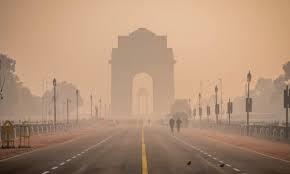
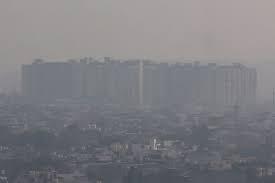
Delhi’s air was supposed to clear by mid-January. It always does. Except this year, it didn’t.
The calendar slipped by ten days, leaving millions gasping through severe air quality episodes precisely when relief typically arrives. November’s pollution peak shifted. Stubble burning schedules advanced. Fog rolled in earlier. Everything about this winter felt off-kilter, and Delhi’s residents paid the price with their lungs.
Scientists point to climate change, ENSO-neutral conditions, and an unusually wet North Indian monsoon. But while researchers debate atmospheric models, the Supreme Court dropped a bombshell: identify the exact scientific source of emissions before implementing solutions.
The problem? We’ve known the answer for over a decade.
The Numbers Don’t Lie-But the Framing Does
Delhi’s apex air-quality body confirmed what the System of Air Quality Forecasting and Research (SAFAR) established back in 2010: vehicular emissions dominate PM2.5 pollution. The 2010 emission inventory showed fossil-fuel transport accounting for roughly 35% of PM2.5. By 2018, that figure climbed to 40%. These peer-reviewed numbers have been sitting on policymakers’ desks for years.
Yet here’s where it gets complicated—and deliberately confusing.
Recent reports claim transport contributes only 23% of PM2.5 emissions, while earlier figures stated 40-45%. Both are technically correct, but only when geography is specified. In Delhi’s core National Capital Territory, transport genuinely contributes 40-45%. Move outward 15-20 kilometers, and that share drops by about 5% as biofuel emissions from residential burning, cow dung, and brick kilns increase. Travel further, and coal-fired power plants absent within Delhi but significant in the wider NCR enter the equation.
When reports omit spatial boundaries, percentages become weapons of confusion rather than tools of clarity.
The Secondary Particle Smokescreen
Another layer of obfuscation comes from classifying 27% of PM2.5 as “secondary particle formation.” While scientifically valid, this framing is policymaking poison. Secondary particles aren’t an emission source—they’re an atmospheric process where gases like sulfur dioxide and nitrogen oxides transform into particulate matter.
Presenting this as if the atmosphere itself “produces” particles risks implying no human responsibility. For policy, the distinction is critical: talk sources, not processes. Scientific mechanisms belong in research papers; emission sources belong at the center of decision-making. Without this clarity, accountability vanishes—and so does time we can’t afford to waste.
The Airshed Solution
The National Institute of Advanced Studies proposes a two-tier framework: the Delhi airshed region (a multi-state domain for long-term planning) and the satellite airshed (Delhi NCT plus immediate peripheries like Noida and Gurugram for near-term action). This aligns with SAFAR’s 40% transport contribution figure and provides the spatial clarity that’s been desperately missing.
What Needs to Happen Now
Policy must accelerate on maximum-impact priorities: faster electric mobility transitions, improved charging infrastructure, better battery recycling, enhanced tire technology to handle 20-30% increased vehicle weight, and reduced rare-earth material dependence. Beyond urban cores, mitigation must explicitly tackle biofuel use and industrial emissions in surrounding rural areas.
Meanwhile, authorities continue chasing visible dust with water sprinklers-a cosmetic solution that wastes enormous amounts of water while ignoring PM2.5, the real public health emergency.
Delhi’s air crisis isn’t waiting for better evidence. It’s drowning in blurred boundaries, fancy nomenclature, and complexity weaponized as inaction. It’s waiting for science-backed action on what we already know.
The question isn’t what to do. It’s whether we’ll act before another winter steals another breath.
About The Author