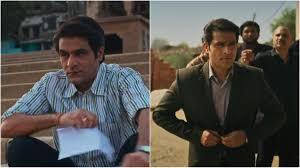

Before Him, There Were Stars. After Him, There Was Only One Sun
It was September 15, 1990. Wembley Stadium pulsed with an energy London had never witnessed. Outside, traffic snarled into paralysis. Inside, 70,000 souls weren’t merely gathered, they were possessed. When the man with the baritone stepped onto that stage, something extraordinary happened. The Head of Security for Queen Elizabeth II, a man whose entire career was built on understanding crowds, controlling chaos, protecting monarchy, stood transfixed. Later, he would confess to reporters with visible bewilderment: “I have never seen such following even for the Queen.”
Even. For. The. Queen.
That sentence didn’t just make headlines. It redrew the boundaries of what human devotion could look like. Because this wasn’t about a Bollywood star performing abroad. This was about a voice that had somehow become inseparable from the heartbeat of a civilization.
But how? How does one man transcend every definition of stardom to become something closer to oxygen, invisible, essential, life-giving?
The Man Who Rewrote the Rulebook by Burning It
Before him, Indian cinema had neat categories. Heroes sang in mustard fields. Villains twirled mustaches. Character artists provided comic relief. The formula was sacred. The boundaries were clear.
Then came Amitabh Bachchan, and suddenly formulas were fossils.
In 1971’s Parwana, he dared to be the anti-hero when heroes were expected to be morally pristine. In Kabhie Kabhie, he aged himself with grey hair when youth was the only currency that mattered. In Silsila, he explored desire and duty with such raw honesty that families kept it from their children, discussing it only in hushed, reverent whispers.
Every single choice was a revolution. Every single risk was a middle finger to convention.
When Zanjeer erupted on May 11, 1973, it earned ₹198 crores adjusted for inflation, but that number is meaningless poetry for what actually happened. Raj Kapoor, the showman who’d defined an entire era, heard Bachchan dubbing in an adjacent studio and whispered a prophecy: “This man will usher in a new era.” It wasn’t praise. It was surrender. The old god recognizes the new deity.
When a Nation Found Its Voice in One Man’s Throat
Then came the Emergency, June 26, 1975. India’s darkest 21 months. Democracy strangled. Dissent crushed. Hope suffocated.
Precisely on Independence Day 1975, at the scorching height of noon, Sholay released. The timing was divine providence. When reality offered no redemption, the silver screen provided a redeemer. When the real world gagged every voice, one baritone roared for an entire nation.
But it was Deewar that completed the alchemy. Picture this: 1979, outside Palladium Cinema in Srinagar, queues snaking for four hours just to buy tickets. Inside, when Vijay declared, “Kyonki main maa ko yeh building tohfey mein dena chahta hoon, jahan us ne kayee din mazdoori ki”—it wasn’t dialogue. It was every son’s manifesto, every dreamer’s rage, every powerless person’s scream weaponized into purpose.
₹396 crores in adjusted box office. But who’s counting? Those numbers measure commerce. The tears streaming down faces in dark theaters measured communion.
The Day India Stopped Breathing
On July 26, 1982. The Coolie accident registered as the seventh largest news story of the century. Worldwide.
Outside his bungalow, named Prateeksha, meaning hope/waiting, a human ocean kept vigil for months. They weren’t fans. He wasn’t an actor. The relationship had evolved past celebrity into something tribal, familial, sacred. He was brother, son, friend, father, ours in a way that defied articulation.
That tradition persists today. Every evening, crowds gather not for autographs but for darshan, a glimpse of the beloved. This isn’t fandom. This is faith. This is religion without temples.
The Enigma That Defied Gravity
While other stars chased accessibility: dancing at birthday parties, inaugurating jewelry stores, hunting headlines, Bachchan cultivated mystery. While they saturated every medium, he remained scarce. That scarcity created hunger. That hunger created mythology.
Then, three decades after his initial conquest, he shattered television with Kaun Banega Crorepati, the highest TRPs in Indian broadcasting history. Age became irrelevant. Time became his ally. While younger stars flamed out, he metamorphosed, reinvented, dominated.
Beyond Every Club, Above Every Metric
Today’s industry obsesses over the ₹100-crore club, ₹300-crore, ₹500-crore. Zeros multiply. Records tumble.
But there stands one man outside all such mathematics, dwarfing every benchmark that may ever be invented.
Why? Because you cannot quantify DNA. You cannot club-ify a voice so woven into our collective consciousness that the phrase “Is awaaz me agar kutta bhi bolega to achcha lagega” has become a meta-commentary on legend itself.
He isn’t a star we admire. He’s the blood we inherited. He isn’t a benchmark others chase. He’s the language in which stardom is discussed.
Other actors have fans. Bachchan has a family,a billion strong, spanning continents, defying generations.
In Afghanistan, he ate meat despite being vegetarian, unwilling to embarrass hosts who’d prepared a feast in love. At Madame Tussauds, he became the first Indian immortalized in wax. Everywhere from France to Pakistan, the adulation followed—not from algorithms or marketing, but from something primal: authentic, inexplicable, total connection.
The Unrepeatable Phenomenon
Perhaps the secret is simple: there is no formula. Perhaps it’s the unrepeatable collision of the right voice meeting the right desperation, when a nation needed heroes and democracy had abandoned them. An artist who understood that mystery births magic. A man who became family without ever being familiar.
The DNA of Indian entertainment doesn’t contain Amitabh Bachchan.
Amitabh Bachchan is the DNA.
You can study it. Marvel at it. But you cannot recreate it.
“Whiskey ko zarurat nahi kisiki.”
Neither, it seems, does legend – Happy Birthday Amitabh Bachchan!
Picture curtsey Dharma Productions
About The Author