The curious saga of Imran Khan’s disappearance!
Guest Author– Anupam Chaturvedi
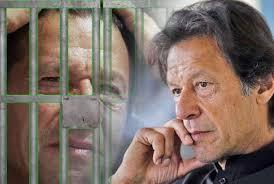


The fate of Imran Khan,Pakistan’s imprisoned former Prime Minister has become more than a domestic political drama. His potential long-term disappearance or death represents a critical inflection point for South Asian stability, with reverberations that could shake the foundations of regional security architecture from Kabul to New Delhi, and test the resilience of China’s signature infrastructure investments.
As speculation intensifies around Khan’s future, the geopolitical calculus centers on a stark reality: Pakistan, a nuclear-armed nation of 240 million people, stands at the precipice of profound internal transformation. The question is no longer whether Khan’s absence would destabilize the country, but rather how far the shockwaves would travel across an already volatile region.
The Powder Keg: Domestic Fracture and Military Confrontation
Khan’s removal from Pakistan’s political landscape would trigger a seismic domestic crisis unprecedented in recent history. His devoted following—particularly among the youth and burgeoning middle class—represents a political force that transcends traditional party loyalties. The immediate aftermath would likely manifest in mass protests and civil unrest far exceeding the demonstrations witnessed during his initial imprisonment, potentially forcing the powerful military establishment into a defensive posture that would consume its attention and resources.
The deeper fissure, however, lies in the civil-military relationship. Khan’s supporters would almost certainly attribute his disappearance to the military establishment, widening a chasm that has defined Pakistani politics for decades. This intensified confrontation would render the nation’s policy-making apparatus fragmented and unpredictable, creating a political vacuum that weak coalition governments would struggle to fill. The resultant paralysis would directly undermine Pakistan’s capacity to address pressing national security challenges and engage coherently in regional diplomacy.
Border Fires: Afghanistan, India, and the Terrorism Resurgence
A politically paralyzed Pakistan would immediately face deteriorating security dynamics along its most sensitive borders. The western frontier with Taliban-controlled Afghanistan would become particularly vulnerable, as a distracted and weakened government struggles to maintain border management protocols. This instability creates optimal conditions for the Tehreek-i-Taliban Pakistan (TTP) and affiliated groups to expand operations, threatening not only Pakistani citizens but regional stability more broadly.
The eastern border presents a different but equally concerning scenario. An unstable Pakistan often translates to unpredictable behavior along the Line of Control with India. A weak government, desperate to shore up nationalist credentials, might adopt hardline positions that increase the risk of military miscalculation between two nuclear-armed adversaries. Paradoxically, if traditional political factions consolidate power in Khan’s absence, there exists a narrow window for diplomatic reset—though the pathway to such détente remains treacherous given the domestic pressures any successor government would face.
The Great Power Dilemma: China’s Investments and Western Recalibration
The international dimension of Khan’s potential disappearance carries profound implications for Pakistan’s key strategic partnerships. The China-Pakistan Economic Corridor (CPEC)—Beijing’s crown jewel in South Asia and a critical component of the Belt and Road Initiative—faces direct jeopardy from sustained internal instability. Violence targeting state infrastructure or Chinese personnel would force Beijing into an uncomfortable position: either accept significant project delays and increased security costs, or deepen its already substantial political and economic leverage to forcibly stabilize its partner nation.
For Western powers, particularly the United States, Khan’s fate presents a complex calculus. His absence might offer the military-backed establishment an opportunity to reset strained relationships, potentially pivoting toward more transactional partnerships focused on economic cooperation and counterterrorism. However, if Khan’s disappearance is perceived as extra-judicial elimination of political opposition, it would trigger international condemnation that complicates Western engagement and potentially restricts vital economic assistance—creating a diplomatic paradox where improved government relations coincide with worsened public perception.
The coming few weeks will reveal whether Pakistan can navigate this potential crisis or whether Khan’s shadow will cast the nation into prolonged instability with far-reaching regional consequences.
Guest author Anupam Chaturvedi, is a geopolitical issues analyst,author and life coach.

About The Author