
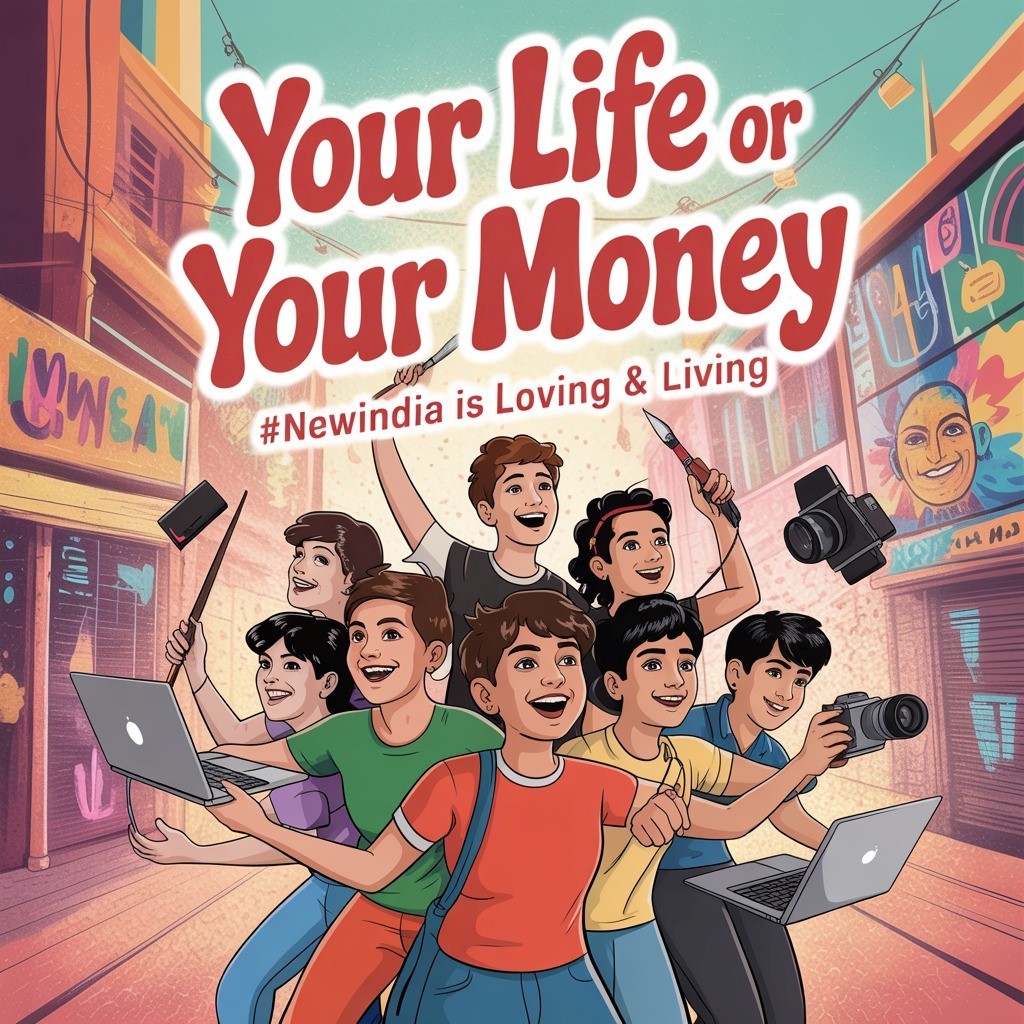
Why India’s youngest generation said “nah” to corporate life and chose to build empires from their bedrooms
It’s 10:30 AM on a Tuesday. While most 24-year-olds are stuck in traffic heading to soul-crushing meetings, Priya from Bangalore is adjusting her ring light, about to create content that’ll earn more than her engineering friends’ monthly salaries. Her parents? Still asking when she’ll get a “real job.” She already has one, and it’s paying better than theirs.
Welcome to India’s Gen Z revolution, where traditional career paths are deader than last season’s memes, and the real question isn’t “What do you want to be when you grow up?” It’s “How many income streams can you juggle before you turn 30?”The New Normal Isn’t So Normal.
The Great Corporate Escape
India’s Gen Z isn’t just job-hopping, they’re straight-up ghosting the entire corporate world. Here’s a mind-blowing stat: 83% of India’s Gen Z calls themselves “creators” (YouTube, 2024), way higher than the global average of 65%. This isn’t weekend hobby territory anymore; this is full-blown identity makeover.
The numbers don’t lie. Over half of Gen Z professionals freelanced in 2023, but here’s the kicker 53% are working full-time hours on these “side” projects. Translation? They’re treating traditional jobs like the actual side hustle.
Think about it: Our parents climbed corporate ladders. Gen Z? They said “ladders are so last century” and built their own elevators, reaching higher floors in half the time.
The Perfect Storm
This shift didn’t happen overnight. The FIRE movement (Financial Independence, Retire Early) planted the seeds, but India’s digital boom was the fertilizer. Jio’s 2016 launch made internet cheaper than chai, bringing millions online. TikTok (RIP) made everyone a potential star. Then COVID hit like a plot twist nobody saw coming.
When traditional jobs became shakier than a auto-rickshaw ride and remote work became normal, Gen Z collectively thought, “If I’m working from my bedroom anyway, why not work for myself?” The pandemic didn’t just change where people worked, it changed why they worked.
The New Money Game
Today’s “unconventional” careers aren’t about struggling artists surviving on ramen. Gen Z is pioneering jobs that didn’t exist five years ago, creating an economic ecosystem that would make their professors’ heads spin.
Content creators are pulling Rs 2-10 lakh per branded reel, while mega-influencers are cashing Rs 1 crore per campaign. India’s gig economy? Projected to hit $455 billion by 2024 with a 17% annual growth rate. That’s not pocket change, that’s generational wealth.
But it goes deeper. They’re monetizing skills universities haven’t even started teaching: AI prompt engineering, no-code development, sustainability consulting. If it can be digitized and sold, Gen Z is already three steps ahead, probably with better graphics.
Retirement at 40? Why Not?
While previous generations planned to work until 65, Gen Z is setting their retirement clocks for 54,some even eyeing 40. Enter the FIRE lifestyle: save 40-60% of income, invest aggressively, build passive income streams. It’s not about company pensions; it’s about making work optional.
“I used to think retirement was for people with grey hair and gold watches,” says 27-year-old marketing consultant Darren Fernandes. “But social media taught me that financial freedom doesn’t have to wait for wrinkles.”
They’re treating careers like video games, level up fast, collect achievements, unlock the ultimate prize: freedom.
The Reality Check
But let’s keep it real, this lifestyle isn’t all sunset workspace shots and viral moments. The challenges hit different.
No health insurance, no paid sick leave, client dependency, algorithm anxiety,72% of influencers stress about constant platform changes, and 78% report burnout. Plus, there’s a privilege check: many gig economy success stories come from families with safety nets.
The stress is different too. Traditional job stress = micromanaging bosses and office politics. Gig stress = irregular income and being “always on.” The difference? Gig stress feels more controllable,you’re stressed about your choices, not someone else’s.
The Cultural Balancing Act
What makes India’s Gen Z movement unique is the cultural juggling act. They’re pursuing engineering or MBAs (for family respect) while building their real dreams on the side. It’s sophisticated: one foot in tradition, one in revolution.
They’re experimenting with identity in ways that would’ve shocked previous generations, showing that self-determination doesn’t have to mean family disappointment.
The Revolution Continues
This isn’t just about rejecting 9-to-5,it’s about creating a paradigm where work serves life, not vice versa. Career counsellors report 6-7 out of 10 students want to become content creators. This isn’t a trend; it’s a fundamental shift.
The new Indian dream isn’t climbing someone else’s ladder; it’s building your own rocket ship to financial freedom. Whether it lands on Mars or crashes spectacularly, at least it’s your crash to own.
The revolution won’t be televised, it’ll be streamed, stories-ed, and monetized across multiple platforms simultaneously. And honestly? That sounds pretty Gen Z to us.
About The Author


Great Read and Nistalgic too! How things and their definitions change! Reminds me of 20 years ago when I started my Radio career! ….and people always asked me’ …But aap kaam kya karti hain?’m!!!🤩