
They came for the nuns first. Then the patients. Then everyone else.
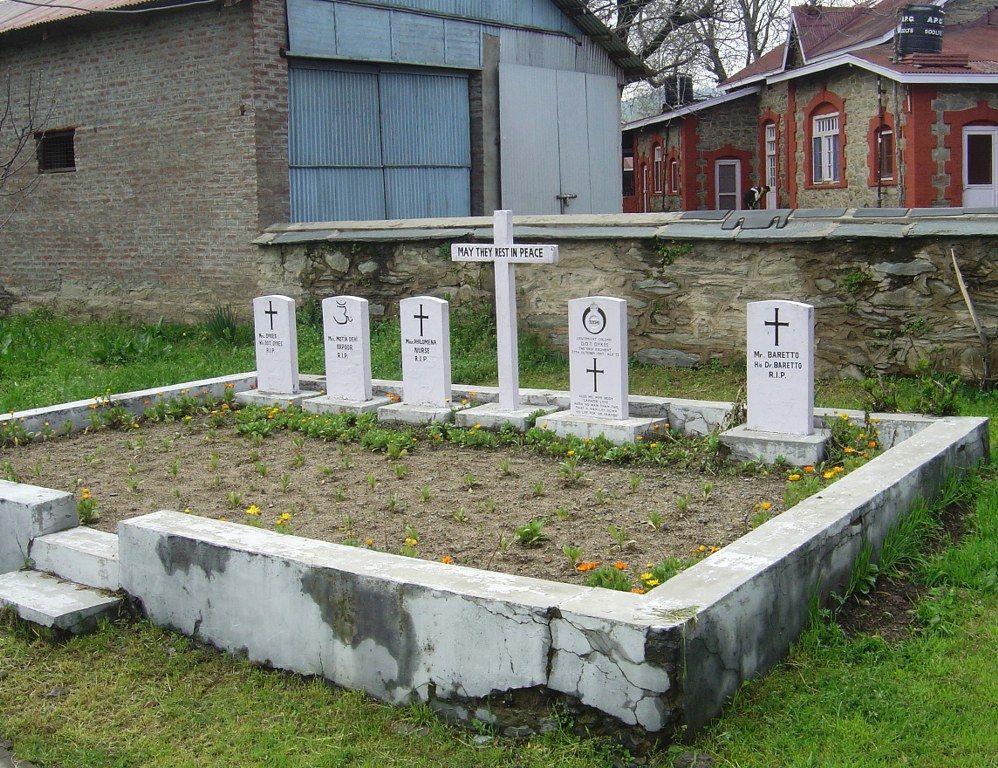
What happened inside St. Joseph’s Convent in Baramulla, Kashmir, on October 27, 1947, defies comprehension, and that’s exactly why it’s been buried. The door didn’t just break; it exploded inward, with splinters flying like shrapnel into the sacred space where healing hands had just delivered a newborn an hour earlier. The tribal Lashkars, battle-hardened Pashtun raiders executing Pakistan’s shadow operation codenamed Gulmarg, poured through like a flood of vengeance, seeking targets that had no names, only labels: infidel, kafir, enemy.
Father José Barretto made his choice in seconds. The Goan missionary doctor knew exactly what they wanted: the nuns, the valuables, the vulnerability hidden behind trembling doors. His refusal wasn’t passive; it was a declaration. They answered by nailing him to a tree like a grotesque mockery of crucifixion, then pumping bullets into his suspended body. For three days, his corpse hung there, a warning, a trophy, a message written in decomposing flesh.
But here’s what haunts the historical record: Sister María Teresalina Sánchez had been in Kashmir for exactly 29 days. Twenty-nine. This 29-year-old Spanish Franciscan nun barely knew the landscape, nor did she speak the language or understand the powder keg she’d walked into. When the rifle barrel swung toward Mother Superior Aldetrude, Sister María didn’t hesitate. She didn’t freeze. She threw her body into the bullet’s path.
“I feel very emotional to be here,” says Doug Dykes, in his article in the BBC, standing yards from the veranda where his mother and father suffered fatal bullet wounds when he was two years old.
“I saw my parents being killed – that’s what I’ve been told. My father tried to stop the attackers approaching the nuns and he was shot. I ran screaming towards my father. My mother ran after me – and then she was also shot.” he writes.
Let that image solidify in your mind.
Nurse Philomena, just 20 years old, barely more than a girl, died shielding a Muslim mother and her newborn. Think about that. A Hindu nurse. A Muslim patient. A Christian hospital. All obliterated in the same coordinated fury.
In the hospital ward, Motia Devi Kapoor, a Hindu woman too ill to escape, was stabbed to death in her bed—the ultimate breach of sanctuary. Lt. Col. Tom Dykes, a British officer, and his wife Biddy Dykes, a new mother still weak from childbirth, died fighting off attackers with their bare hands while their children watched. The children watched.
But St. Joseph’s was just the opening act.
The Suri Gurdwara became an abattoir. Hundreds of Sikhs seeking refuge in their sacred space were butchered systematically, not in chaos, but with method. Sardar Gurcharan Singh, a Sikh political leader, was executed; leadership was decapitated; literally and figuratively. Kashmir Kaur, a community matriarch, died with others clutched in her arms. The massacre followed a sickening pattern: separate the men, execute them in groups, then come for the women.
At the Qazi Hamidullah Bridge spanning the Jhelum River, dozens of Sikh women faced a choice no human should ever face. The raiders were closing in. Violation was certain. Death was certain. The only thing they could control was the manner in which they chose death.
They joined hands. They formed a human chain. And they chose the freezing river over what awaited them on land. The mass suicide wasn’t desperation; it was defiance. Their bodies floated downstream for days, a silent testimony to the choice between horror and horror.
Here’s the ironic, tragic intervention of fate that changed everything: The raiders got drunk on bloodlust. For three full days, they pillaged, raped, murdered, and looted Baramulla instead of pushing toward their real objective, Srinagar, Kashmir’s capital. Those 72 hours of orgiastic violence gave Maharaja Hari Singh just enough time to sign the Instrument of Accession to India on October 26, 1947; the night before the full massacre erupted.
By morning, Indian troops were airlifting into Srinagar. The first shots of the Indo-Pakistani conflict weren’t fired on a battlefield; they were fired over the bodies of nuns, patients, mothers, and children in Baramulla.
When Indian forces retook the town on November 8, 1947, even battle-hardened soldiers vomited at what they found. New York Times correspondent Robert Trumbull wrote of raiders “climbing hospital walls and shooting patients in their beds,” executions so theatrical, so performatively cruel, they seemed designed for psychological warfare.
British diplomatic cables condemned the “systematic brutality.” Pakistan denied everything.
The somber five graves continue to rest in the convent cemetery: Lt. Col. Tom Dykes, Biddy Dykes, Sister María Teresalina Sánchez, Nurse Philomena, Motia Devi Kapoor. Five names. Five religions represented. Five witnesses to what happens when ethnic cleansing wears the mask of liberation.
But here’s what should terrify you: These five graves are famous because they’re in a convent with walls and records and witnesses. How many graves aren’t marked? How many bodies disappeared into the Jhelum? How many Sikh and Hindu families were simply erased, no graves, no records, no witnesses left alive?
The Baramulla Massacre wasn’t sectarian violence. It wasn’t a pogrom. It wasn’t even a massacre in the conventional sense. It was a pilot program, a test run for territorial conquest through demographic obliteration. The message was clear: This land will be cleansed. This population will be replaced. Resistance will be met with extinction. The world saw. Journalists documented it. Diplomats condemned it.
And then silence. Why don’t we talk about this?
Because acknowledging Baramulla means recognising that the Kashmir conflict didn’t begin with geopolitics but with genocide. Because admitting what happened in those 72 hours means confronting uncomfortable truths about how nations are really born, how territories are really claimed, how history is really written.
The ghosts of St. Joseph’s aren’t just Christian. They’re Sikh, Hindu, Muslim mothers who died protecting patients, British officers, Goan doctors, Spanish nuns who’d been in Kashmir less than a month.
They died together. We must remember them together.
The Baramulla Massacre was the world’s window into a genocide it has spent 78 years trying to forget. Should we continue to look away from the lessons?
Image courtesy Andrew Whitehead blog
About The Author


Mind blowing account of an unparallel and a grusome genocide during India partition by (un) Pak Army in guise of Kabalis.
Nation need be reminded of this unknown and possibly unheard truth.But who to blame remains a big question mark?
Unless the muslims of kashmir are wiped out these Jihadis will never learn, tolerance has limits, foolish sanathani’s , without violence peace cannot be established as for bhagwan Shri Krishna in bhagwat gita
More than eleven thousand hindus were killed, women raped,my grandfather Maheshar Nath Razdan patwari was shot at Sopore and my grandmother threw her body on him on second bullet and was left to die othetwise hindu sikh women were camped in Baramulla to rape।