The Geopolitical Chessboard: Reading Between the Tariff Lines
Guest Author : Anupam Chaturvedi
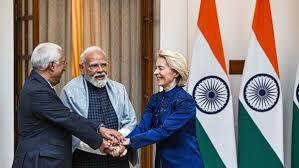
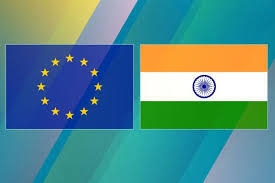
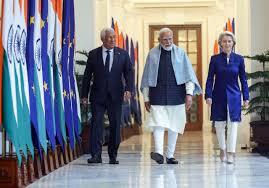
Imagine a chessboard where pawns become queens overnight. January 27, 2026, witnessed exactly that—India and the EU concluded negotiations on what might be the century’s most consequential trade agreement. While America imposed tariffs like hammers, Modi played strategic Go, connecting 2 billion people and 25% of global GDP into one market. The geopolitical landscape just shifted beneath Washington’s feet.
Let’s try and understand the broad points covered under this historic deal. Before I even start highlighting the highlights let me put this across as a masterstroke from P.M. Modi which America did not see coming.
On January 27, 2026, India and the European Union (EU) made history by concluding negotiations for a landmark Free Trade Agreement (FTA). Dubbed the “mother of all trade deals,” this pact connects the world’s most populous nation with a 27-country economic bloc, creating a free trade zone of nearly 2 billion people and roughly 25% of global GDP.The agreement comes after nearly two decades of on-and-off negotiations, signalling a major strategic shift in how both powers view their economic security and geopolitical alignment.
Beyond the “tariff arithmetic,” this deal is a strategic masterstroke in a world where trade is increasingly used as a weapon.
De-risking from Dragon Dependency
For the European Union, the deal is a cornerstone of its “De-risking” policy. By deepening ties with India, Europe secures an alternative manufacturing hub and a massive consumer market, reducing its over-reliance on Chinese supply chains. For India, it cements its position as a “trusted partner” for Western democracies and a viable alternative for global manufacturing.
The American Tariff Shield
The timing is critical. Amidst rising protectionism and significant “tariff shocks” from the Trump-led US administration (including 50% duties on certain Indian goods), New Delhi and Brussels have signaled they will not be sidelined. This pact provides a stable, rules-based trade corridor that cushions both economies against unpredictable shifts in American trade policy.
Rules-Based Order in a Chaotic World
At a time when the WTO faces paralysis, this FTA reinforces a “rules-based international order.” It includes dedicated chapters on:
Sustainability: Includes a €500 million EU support package to help India’s green transition.
Digital Trade: Setting high-level standards for data protection and secure online commerce.
Labor Rights: Binding commitments to ILO principles, including fair wages and gender equality.
The Economic Core: What’s in the Deal?
The FTA aims to drastically reduce trade barriers, offering unprecedented market access for both sides.
Tariff Slashes: India will eliminate duties on roughly 93% of EU imports (by value), while the EU will do so for over 99% of Indian exports.
The “Luxury” Opening: India has made historic concessions in the automotive sector. Tariffs on European cars previously as high as 110% will drop to 40% for premium vehicles (over €15,000), with a roadmap to reach 10% within a specific annual quota of 250,000 units.
Agriculture & Spirits: High duties on European wines (150%) will drop to 20–30%, while spirits will fall to 40%. India successfully protected “sensitive” sectors like dairy, rice, and sugar to safeguard rural livelihoods.
Services & Talent: The EU has opened 144 services subsectors (including IT, engineering, and healthcare) to Indian professionals with improved mobility for “Intra-Corporate Transferees,” while India has opened 102 subsectors to European firms.
Key Challenges and “The Road to 2027”
While the conclusion of negotiations is a breakthrough, the deal requires “legal scrubbing,” translation, and ratification by the European Parliament and Indian authorities. It is expected to enter into force in early 2027.
The CBAM Hurdle: A lingering challenge is the EU’s Carbon Border Adjustment Mechanism (CBAM). While the FTA creates a framework for “constructive engagement,” Indian exporters in carbon-intensive sectors like steel and aluminum must still align with Europe’s green standards to remain competitive.
A Strategic Marriage
The India-EU FTA is more than a commercial contract; it is a strategic marriage born of necessity. It transforms India from a distant trade partner into a central pillar of Europe’s economic future and provides India with the technological and capital infusion needed to fuel its “Viksit Bharat” (Developed India) 2047 vision.
Another vital highlight without which this MOAD can’t be put into right perspective is the recent agreement between Russia and India regarding a $80 Billion sign up on purchase of gas. Let’s hold on the details of this deal and its implications for another day.
History will remember January 2026 not for tariffs imposed, but for bridges built. This FTA isn’t merely about reducing duties it’s about rewriting global power equations. As India stands between Brussels and Moscow, between market access and energy security, one truth emerges: in the chess game of 21st-century geopolitics, patience outlasts bluster. Checkmate isn’t announced; it’s simply inevitable.
Note:Guest author Anupam Chaturvedi, is a geopolitical issues analyst,author and life coach
About The Author