
West Bengal 2026 is not an election , it is the world’s largest live experiment in whether cash beats loyalty, and whether deleted women decide who wins
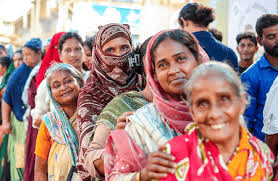
On April 23, 2026, something statistically improbable happened: women who had been systematically erased from electoral rolls turned out to vote at 92.69% outpacing men by nearly two percentage points. West Bengal did not just hold an election. It detonated one.
This is the paradox at the heart of Bengal 2026. The Special Intensive Revision (SIR) deleted 90.83 lakh voters from the rolls between November 2025 and April 2026. Of those, 61.93 lakh — nearly 62% — were women, concentrated overwhelmingly in Murshidabad, Malda, and North Kolkata. In over 190 constituencies, the number of deleted voters exceeded the winner’s margin from 2021. The franchise was not merely trimmed. It was surgically altered.
The TMC calls it targeted disenfranchisement of its own core base. The BJP and Election Commission call it a necessary cleanse of duplicate and deceased entries. What neither side can dispute is the arithmetic: 6.2 million women removed from one side of the equation, while the women who remained voted in record numbers. High turnout, political science tells us, does not predict outcomes , it amplifies them. Whoever wins the swing, wins it louder.
And there is a swing to be won. Mamata Banerjee’s fifteen-year record is not a failure , it is a paradox. Kanyashree educated millions of girls. Swasthya Sathi insured 6.5 crore women. But Bengal’s women’s conviction rate sits at 17%, against a national average of 27% , the lowest among Indian metros. Per capita income is 35% below the national figure. Youth unemployment runs at 9.5%. These are not opposition talking points; they are NCRB data, CMIE figures, and NITI Aayog numbers.
The BJP’s response was surgical. Its Sankalp Patra offered ₹3,000 per month – unconditional, monthly, direct through the Matrishakti Bharosa Card. That is ₹36,000 a year: four to six times Kanyashree’s annual benefit, without the conditionality. Global evidence from Brazil’s Bolsa Família to India’s PM-KISAN consistently shows that direct, visible, unconditional cash transfers can move 5–8% of low-income women voters. In Bengal’s razor-thin constituencies, 5% is not a margin. It is a mandate.
Three scenarios now govern May 4. TMC retains a reduced majority (45–50% probability) if welfare loyalty and Mamata’s 48% CM preference hold. BJP wins narrowly (35–40%) if the cash promise resonates and the SIR deletions prove to have been TMC-leaning. A hung assembly (10–15%) remains alive if the swing is partial and the arithmetic of 148 becomes a negotiation table.
What West Bengal is really testing is a question that haunts democracies from Brasília to Jakarta: when a government delivers welfare but not safety, income, or justice and a challenger offers cash, jobs, and a conviction rate , which promise do women choose to believe?
The answer arrives on May 4.
About The Author



Nice analysis Sir