
That Is Not Irony. That Is Bengal. And May 4 Is When It Answers for Itself.
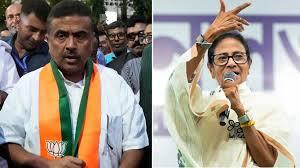
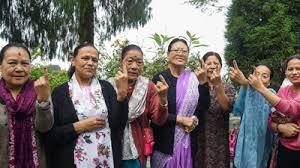
A woman in Bengal can receive government-funded health insurance in the morning and become a crime statistic by evening. That is not hyperbole. That is the ledger.
Rape cases in West Bengal have climbed from approximately 1,800 in 2011 the year Mamata Banerjee swept to power on a promise of poriborton, change to over 3,000 by 2022. The conviction rate stands at 17%. The national average is 27%. That ten-point chasm between Bengal and the rest of India is not a governance footnote. It is the moral indictment at the centre of the May 4 verdict, wrapped inside 294 constituency battles that the world is watching as though they were merely electoral arithmetic.
They are not merely electoral arithmetic.
What Mamata built is real. Let that be stated without equivocation, because analysis that refuses to acknowledge achievement is not analysis , it is propaganda in reverse. Kanyashree reaches 3.5 million girls annually. Swasthya Sathi extends health cover to 65 million women, the largest women-centric welfare architecture in eastern India by any credible measure. A 48% Chief Ministerial preference rating the highest in the state ,does not emerge from air. It emerges from material relief delivered across fifteen years to households that had received nothing before. That is a real political bond, forged in real gratitude.
But governance is not welfare alone. And this is precisely where Bengal’s ledger darkens into something that defies comfortable explanation.
The state that built India’s most ambitious women’s welfare programme simultaneously delivers the worst safety outcomes for women among major eastern Indian states. Bengal registers 34,691 crimes against women annually , the second highest across the region. Women are insured but not secure. Supported but not protected. That is not a policy gap. That is a civilisational contradiction embedded into fifteen years of political power, and contradictions of that magnitude do not dissolve quietly on election day.
The ₹36,000 assault. On April 9, the BJP unveiled a manifesto that reads less like a political document and more like a surgical strike on TMC’s core proposition. The Matrishakti Bharosa Card promises ₹3,000 per month , unconditional, monthly, direct to women. Four to six times the value of Kanyashree. Political science offers a fairly consistent empirical base on what unconditional direct transfers do to voter behaviour: Brazil’s Bolsa Família, India’s PM-KISAN, and a dozen comparable programmes suggest a 5 to 8% beneficiary swing. In a 294-seat contest where dozens of margins are razor-thin, that range translates to 20 to 30 seats changing hands without a single pre-existing allegiance shifting.
TMC’s counter is structurally honest: fifteen years of delivery against fifteen months of promises. That distinction carries weight in a state with long institutional memory. But it is an argument that buckles under the pressure of a safety record it cannot explain and a cash offer it cannot match.
Then came the deletions. Before the first ballot, the electorate itself was transformed. The Special Intensive Revision of late 2025 removed 90.66 lakh voters 11.8% of the entire electorate from Bengal’s rolls. Of those, 61.8% were women. Concentrated in Murshidabad, Malda, and North Kolkata. Districts that historically lean TMC. Deletions that exceed the 2021 winning margins in over 190 constituencies. Whether this was administrative correction or engineered disenfranchisement remains contested. What is uncontested is the scale: structural alterations of this magnitude have never preceded a Bengali election in living memory. It is not a footnote. It is potentially the entire story
Here is what May 4 will actually decide. Not whether Mamata wins or loses — though that matters enormously. It will decide whether welfare, without safety, is a sustainable foundation for democratic dominance in modern India. It will determine whether direct cash transfers can override entrenched political loyalty built across fifteen years. It will answer, with cold electoral finality, a question that political theorists have debated in abstractions: what do voters choose when the state that protected their daughters economically failed to protect them physically?
Bengal’s women built this majority. Bengal’s women are about to render their verdict on it.
The fortress is not yet fallen. But a fortress requiring this much defence against its own crime data, its own economic record, and a cash offer four times its flagship programme is a fortress that has already lost something it may never recover.
Its moral authority.
About The Author