
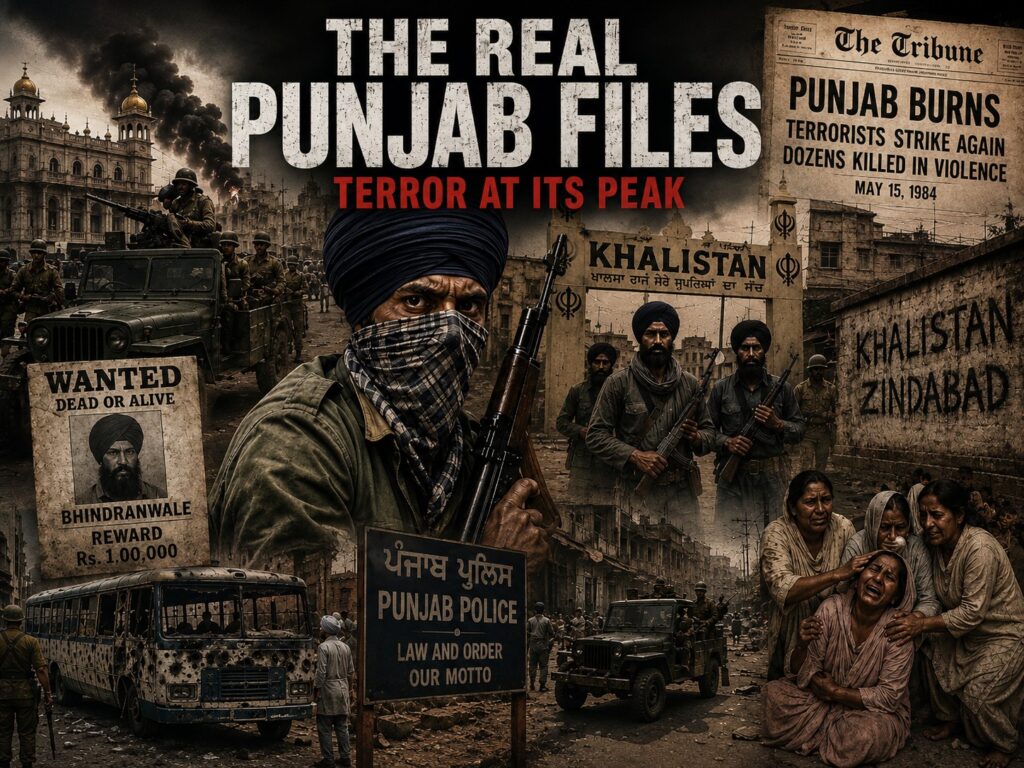
Kashmir forgot its Pandits. Punjab is forgetting its Hindus the same way
Hindus are becoming a footnote in their own massacre. That is the blunt truth sitting underneath three decades of curated remembrance of the Punjab insurgency. A selective narrative : built film by film, op-ed by op-ed, anniversary by anniversary; has quietly, systematically erased the killing, terrorising and displacement of Hindus in Punjab, directly by leaving it out and indirectly by never asking who exactly was being pulled off those buses and shot. Between 1980 and 2000, the Khalistan insurgency killed more than 11,000 people by official count (although actual numbers are manyfold more), over 22,000 by independent estimate. A large share of that toll was Hindu, targeted precisely for being Hindu. That fact does not survive in the version of Punjab’s history that gets told today.
Ask most people what the Punjab insurgency was about, and they will describe Operation Blue Star and the 1984 anti-Sikh riots in Delhi as a single, one-sided story of Sikh suffering at the hands of the state and Hindu mobs. Both events were real, documented, and indefensible. During the action in the Golden Temple, hundreds were killed by official count, and the pogrom that followed Indira Gandhi’s assassination killed thousands of innocent Sikhs. None of that should ever be minimised. But treating 1984 as the beginning, and Sikh suffering as the whole of the story, is itself an act of erasure, because the insurgency did not start in June 1984, and it was never a one-community tragedy. It began years earlier, with a campaign that hunted Hindus by name, by turban check, by identity card — and that campaign is half of the record that has been allowed to quietly vanish.
The pattern is documented, repetitive, and deliberate. In October 1983, militants stopped a bus at Dhilwan, separated the Hindu passengers, and shot six of them dead. The same month, at Gobindgarh, 58 Hindu passengers were massacred. In February 1984, eleven Hindus were pulled off trains and buses and executed. Between January and June 1984 alone, before Blue Star, official records count 298 Hindus killed in Punjab, with unofficial estimates well above 500. In July 1987, Khalistan Commando Force gunmen hijacked a Haryana Roadways bus near Lalru and killed 38 Hindu passengers; the next day, 34 more Hindu passengers were killed near Fatehabad. In June 1989, 27 RSS volunteers were shot dead mid-exercise in a Moga park. In November 1989, 19 students were massacred in their dormitory at Thapar Engineering College, Patiala. On 23 June 1985, Air India Flight 182 was bombed by Khalistani terrorists, killing 329 people, almost all of them Hindu still the deadliest aviation terror attack before 9/11.
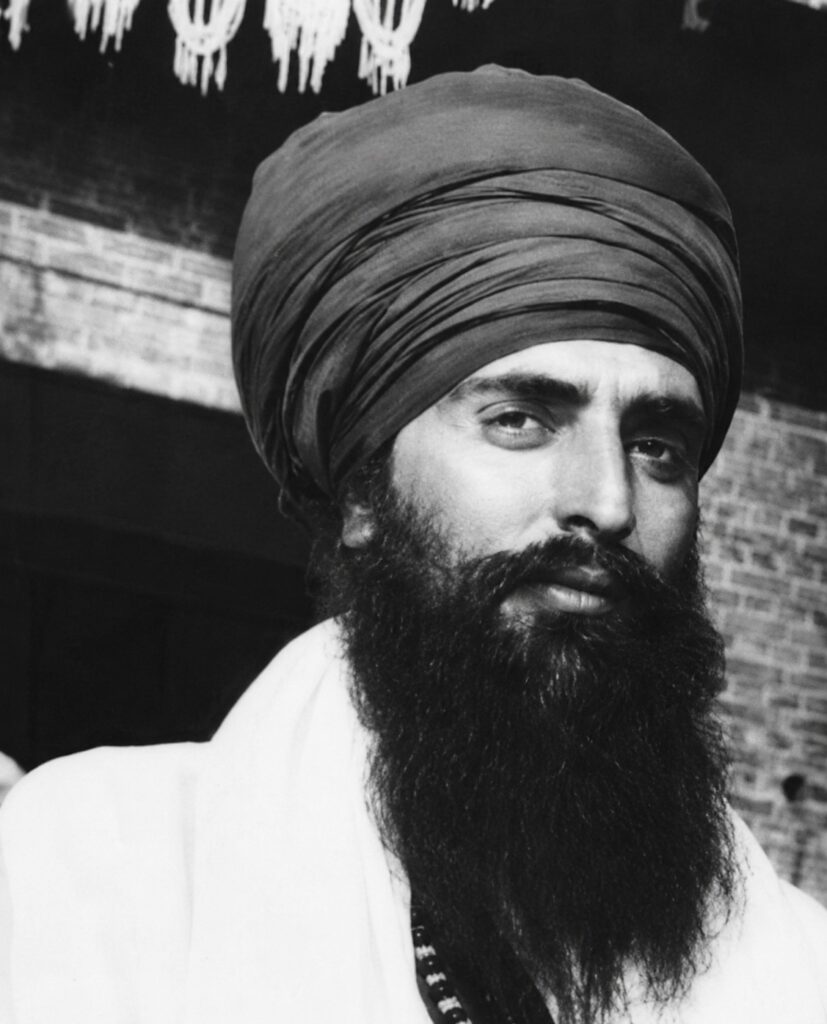
This was not incidental violence. Investigations and later journalistic reconstructions describe militants checking identity by turban, beard, name and accent before deciding who lived and who was shot at the roadside, with Hindu men lined up, ordered off buses, or shot at close range while Sikh passengers were told to step aside. Hit lists naming Hindu leaders in politics and government circulated in Punjabi newspapers through the mid-1980s. Posters warned Hindu families to leave their villages. Thousands did quietly, without a name for their displacement, without a museum, without a film.
Compare that to Kashmir, and the parallel is exact. Kashmiri Pandits, some 90,000 to 100,000(actual numbers are much greater) people out of a valley population of perhaps 140,000, were forced to migrate in a matter of weeks in early 1990 after mosque loudspeakers broadcast threats to convert, leave, or die, with 30 to 80 Pandits killed by insurgents by the time the exodus was largely complete. Longer-run figures put the Pandit death toll above 1,600 by government count, over 2,000 by community estimates. Yet for thirty years, the dominant national and international narrative on Kashmir centred almost exclusively on Muslim victimhood – custodial deaths, disappearances, the Armed Forces Special Powers Act, while an entire community’s forced exile from its own homeland was treated as a footnote, if it was mentioned at all. It took a film, three decades later, to force the exodus into mainstream conversation, and even then it was met with accusations of exaggeration rather than acknowledgement.
Punjab is following the same script. The insurgency’s Sikh victims those killed in Blue Star, in the 1984 riots, in later police excesses documented by Human Rights Watch , deserve every bit of the recognition and legal reckoning still owed to them. That is not in dispute. What is in dispute is why an equally well-documented, equally large body count of Hindu civilians, killed specifically because they were Hindu, has never earned the same institutional memory, the same memorials, the same films, the same political attention.
A conflict’s history is not honestly told by choosing which half of the dead to mourn. Punjab had two sets of victims. So did Kashmir. A country that keeps forgetting one side of its own ledger will keep failing to understand why the ledger existed in the first place.
(image courtesy Flickr and an AI-generated image)
About The Author