Kitagawa, Robson, and Yaghi Honored for Metal–Organic Frameworks That Could Harvest Desert Water and Capture Carbon Dioxide
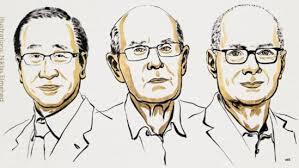
STOCKHOLM, SWEDEN :October 8, 2025The Royal Swedish Academy of Sciences today awarded the 2025 Nobel Prize in Chemistry to Susumu Kitagawa (Kyoto University, Japan), Richard Robson (University of Melbourne, Australia), and Omar M. Yaghi (University of California, Berkeley, USA) for developing metal–organic frameworks (MOFs),a groundbreaking form of molecular construction that creates porous materials with vast potential applications.
What Are Metal–Organic Frameworks?
The laureates created molecular structures where metal ions serve as cornerstones linked by long organic molecules, forming crystals containing large cavities,essentially creating “rooms for chemistry” at the molecular level. By varying the building blocks, scientists can design MOFs to capture specific substances, drive chemical reactions, or conduct electricity.
From Instability to Revolution
The journey began in 1989 when Richard Robson combined positively charged copper ions with four-armed molecules, creating a spacious, diamond-like crystal structure. Though promising, his initial construction was unstable. Between 1992 and 2003, Kitagawa and Yaghi independently made breakthrough discoveries that provided the firm foundation for MOF technology. Kitagawa demonstrated that gases could flow through these structures and predicted their flexibility, while Yaghi created highly stable MOFs that could be modified through rational design.
Real-World Impact
Since these pioneering discoveries, chemists have built tens of thousands of different MOFs. These materials show promise for addressing humanity’s greatest challenges:
- Water harvesting from desert air
- Carbon dioxide capture from the atmosphere
- Environmental cleanup, including removing PFAS from water and breaking down pharmaceutical traces
- Toxic gas storage
- Catalyzing chemical reactions
“Metal–organic frameworks have enormous potential, bringing previously unforeseen opportunities for custom-made materials with new functions,” said Heiner Linke, Chair of the Nobel Committee for Chemistry.
The Prize
The three laureates will share the 11 million Swedish kronor prize equally.
About The Author