
A News Trust India’s tribute to Asha Tai
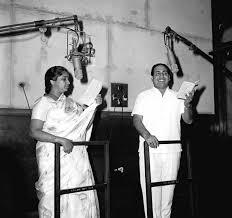

There is a line she once gave an interviewer that sounds less like biography and more like philosophy: “There is a gap between the heart and brain that is where the soundbox lies.” If that is true, then Asha Bhosle Ji has spent over eight decades living entirely inside that gap -breathing into it, shape-shifting within it, and pulling out of it sounds that no one before her had dared to imagine.
She was born in Sangli, Maharashtra, in 1933, the third child of Pandit Dinanath Mangeshkar, a classical vocalist who died when she was just nine. Loss arrived early. So did music , because when there is nothing else left, music becomes everything.
The 1950s – Learning to Be Herself
Her first Hindi playback recording came in 1948, with “Saawan Aaya” from Chunariya. For nearly a decade after, she sang what others discarded assignments rejected by Lata Mangeshkar, Geeta Dutt, and Shamshad Begum. B-grade films. Vamp numbers. Supporting roles. She had recognised the danger early: “I thought to myself, if I will continue to sing in a similar voice to didi, then I will never get work as long as didi is in the business. I won’t have a name and fame of my own. After this incident, I began to change my style of singing.” It was O.P. Nayyar who gave her a door — specifically, through the 1956 film C.I.D. Years later, the music director would say of her: “Now that I am seventy-six, I can say that the most important person in my life was Asha Bhosle. She was the best person I ever met.”
The 1960s – The Rebel Finds Her Stage
The 1960s belonged to the cabaret, and Asha Ji owned it utterly. She became the voice behind dancer Helen in a string of electrifying numbers, most memorably “O Haseena Zulfon Wali” and “Aaja Aaja” from Teesri Manzil (1966), composed by R.D. Burman. When she first heard “Aaja Aaja,” she felt she would not be able to sing this westernised tune. While Burman offered to change the music, she refused, taking it as a challenge. She completed it after ten days of rehearsals. That was Asha Ji in her essential form — not running from difficulty, but running toward it.
The 1970s – Disco, Defiance, and Pancham Da

“The Seventies was a golden period for music, both around the world and in India,” she would later say. Together with R.D. Burman , who became her husband in 1980 , she redefined Hindi film music with hits like “Piya Tu Ab To Aaja,” “Dum Maro Dum,” and “Chura Liya Hai Tumne.” Her voice wrapped itself around the era’s wildness like silk around fire.
The 1980s – The Ghazal That Changed Everything
Then came Umrao Jaan (1981), and composer Khayyam. Her soulful renditions of “Dil Cheez Kya Hai” and “In Ankhon Ki Masti” amazed critics and audiences alike, dispelling any notion that she was limited to cabaret or disco. These ghazals earned Bhosle her first National Film Award. She had, as she once told Scroll.in, “become Umrao Jaan” for those recordings. Then in 1987, for Gulzar’s Ijaazat, she sang “Mera Kuchh Saamaan” — a song written in free verse that R.D. Burman initially refused to set to music. Gulzar later recalled how it was Ashaji, sitting quietly in the studio, who hummed the phrase “Mujhe lauta do,” triggering the melody in Burman’s mind. The composer completed the tune in fifteen minutes. Gulzar recalled: “This time Ashaji and I got National Awards. Poor fellow, he did all the work and we enjoyed the ‘kheer’.” In a 2005 interview with The Fader, Asha Bhosle called the song autobiographical, saying simply: “Mera Kuchh Saamaan…This song is my life.”
The 1990s Onward -Refusing to Be Retired
In 1995, 62-year-old Bhosle sang for actress Urmila Matondkar in Rangeela, with songs like “Tanha Tanha” and “Rangeela Re” composed by A.R. Rahman. She received a Special Filmfare Award for “Tanha Tanha” proof that she had not merely survived reinvention but mastered it as a discipline. As she explained in an interview: “I changed my singing every time. I changed my voice and style.”
In 2011, the Guinness Book of World Records officially acknowledged her as the most recorded artist in music history. She turned 92 in September 2025, and has still, reportedly, never considered stopping. She once explained why, in four words that need no decoration: “You retire, you die.”
Seven decades. Seven moods. One extraordinary, irreplaceable voice.
About The Author