
Smartphone Zombies: The ₹1.5 Lakh Virus
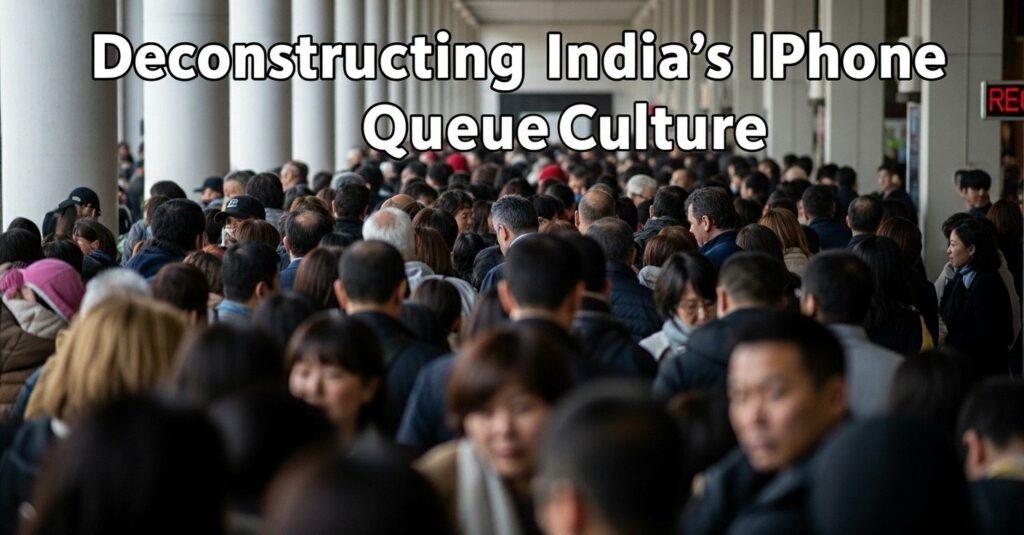
iPhone 17 is finally on sale in India, with Apple Stores opening at 8 a.m. to unprecedented chaos. The spectacle presents a fascinating paradox of modern consumer behavior, young Indians in casual attire engaging in physical confrontations and overnight queuing for devices costing up to Rs 1,49,900. This unnecessary chaos demands analytical scrutiny of what lies beneath India’s iPhone obsession.
The composition of these queues reveals a striking demographic anomaly. Rather than corporate executives, the lines predominantly comprised college students and young professionals willing to sacrifice work attendance and travel interstate for smartphone acquisition. Physical confrontations erupted as queue-jumping became rampant, with security struggling to maintain order.
This demographic presents a financial puzzle: with iPhones priced between Rs 82,900 and Rs 1,49,900, how do these apparently modest-income consumers justify such expenditures? The visual diversity reflects India’s pluralistic society unified by singular consumer aspiration, yet raises questions about the source of purchasing power.
Apple’s iPhone market share in India reached approximately 4.1 percent as of June 2024, a modest figure that belies the cultural impact these devices wield. More significantly, record iPhone sales propelled India into Apple’s fourth-largest market globally, following the US, China, and Japan. This positioning represents a remarkable achievement considering India’s price-sensitive market dynamics.
The financial mechanism enabling this phenomenon lies in India’s expanded credit ecosystem. Research indicates that 70% of iPhone purchasers in the 25-34 age demographic rely on EMI financing, a statistic that transforms our understanding of these queues. Zero-interest EMI plans and trade-in programs boosted affordability, creating artificial accessibility to premium products.
This financing structure raises critical questions about financial literacy and long-term economic impact. Are these young consumers making informed decisions, or are they being systematically encouraged to overextend financially through sophisticated marketing strategies?
The “TamTam Manadi” Strategy: Manufacturing Madness
The iPhone 17 launch exemplifies sophisticated manipulation, creating artificial scarcity through orchestrated chaos. Physical confrontations don’t deter customers; they reinforce product desirability by demonstrating extreme demand. Apple has weaponized India’s aspirational culture, turning product launches into psychological warfare against family financial stability.
The ‘Make in India’ iPhone 16 launch represents a strategic shift, with local manufacturing through Foxconn and Pegatron facilities. This localization reduces costs, improves availability, and aligns with government initiatives, creating a sustainable foundation for market expansion.
Family Destruction Disguised as Consumer Choice
The iPhone 17 launch represents corporate manipulation reaching dangerous extremes. Apple has successfully transformed family financial destruction into cultural celebration, with parents quietly drowning in EMI debt while children get social media validation.
When smartphone acquisition becomes more important than family financial stability, and young consumers engage in violence for devices they cannot afford, we’ve witnessed the complete breakdown of rational consumption. The real victims aren’t the kids fighting in queues,they’re the parents working extra shifts to pay for their children’s digital identity crisis.
This isn’t democratic access to technology; its systematic financial exploitation wrapped in aspirational marketing.
About The Author