How Bihar’s longest-serving Chief Minister defied critics and political uncertainty to secure a historic tenth term through adaptive politics and governance-focused campaigning

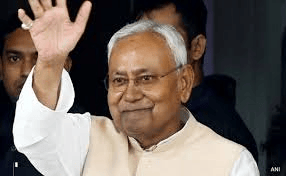
The poster outside Janata Dal (United) headquarters in Patna declares boldly: “Tiger Zinda Hai” – The Tiger Lives. As vote counting for Bihar’s 2025 Assembly elections reveals a decisive mandate for the National Democratic Alliance, Nitish Kumar has not merely survived , he has roared back to power. At 74, Bihar’s longest-serving Chief Minister is poised to assume office for an unprecedented tenth term, silencing critics who had written his political obituary.
From Setback to Comeback
Nitish Kumar’s journey to this moment began with the humbling 2020 Assembly elections, when JDU secured merely 43 seats out of 115 contested a dramatic decline from the 71 seats won in 2015. The BJP, with 74 seats, emerged as the senior partner, fundamentally altering power dynamics within the NDA . For a leader who had dominated Bihar politics since 2005, this diminished performance raised serious questions about his continued relevance.
The subsequent years witnessed unprecedented political volatility. In August 2022, Kumar severed ties with the BJP to forge an alliance with his erstwhile rival Lalu Prasad Yadav’s Rashtriya Janata Dal. However, this alliance proved ephemeral. By January 2024, Kumar executed another political reversal, returning to the NDA fold barely 17 months after leaving it . This was his seventh alliance switch, earning him ridicule from opposition leaders who questioned his political stability.
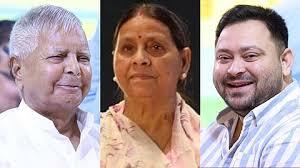
The opposition Mahagathbandhan, led by Tejashwi Yadav, consistently attacked the NDA over the lack of clarity regarding the Chief Ministerial candidate, with Tejashwi claiming that Kumar would not retain the CM position if the NDA won . These attacks, combined with anti-incumbency sentiments after nearly two decades in power, painted a challenging electoral landscape.
The Strategic Architecture of Victory
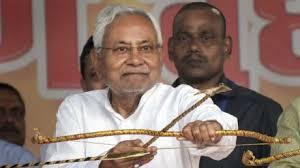
What appeared to be political instability was, retrospectively, calculated maneuvering. Kumar’s strategy for 2025 was multi-dimensional, addressing both coalition arithmetic and grassroots sentiment.
His return to the NDA in January 2024 was strategically timed early enough to allow alliance consolidation before elections, yet recent enough to distance himself from controversies. The NDA fought elections under the slogan “2025, Phir Se Nitish” (Nitish Again in 2025), making Kumar’s leadership central to the campaign, with BJP state president Dilip Jaiswal emphasizing that all NDA leaders from PM Modi to Chirag Paswan to Jitan Ram Manjhi – worked in Kumar’s name .
Kumar leveraged his administrative record effectively. His government’s welfare initiatives formed the campaign’s backbone, creating a network of beneficiaries across caste and community lines. Unlike leaders relying solely on caste arithmetic or charisma, Kumar built a governance-based constituency transcending traditional vote banks.
The caste census issue, championed by Kumar, positioned him as a leader genuinely concerned about social justice – a critical differentiator in Bihar’s caste-conscious polity. This stance allowed him to appeal to backward castes while maintaining his image as a development-oriented administrator.
Electoral Validation and Ground Reality
The 2025 elections witnessed remarkable voter engagement, with the second phase recording 67.14% turnout, significantly higher than 2020’s 55.68% . Exit polls conducted by Dainik Bhaskar projected the NDA securing between 145-160 seats, while Matrize predicted 147-167 seats .
Early counting trends on November 14 showed the ruling NDA surging ahead with leads in 190 assembly seats, compared to just 48 for the opposition INDIA bloc . The BJP was leading in 85 seats and JDU in 76, marking a significant recovery from 2020 .
Union Minister Jitan Ram Manjhi confidently declared: “We were saying from the beginning that NDA will form the government with a thumping majority and Nitish Kumar will be the CM. Going by the trends, we will not be anywhere less than 160 seats” . Hoardings proclaiming “Bihar Ka Matlab Nitish Kumar” (Bihar Means Nitish Kumar) appeared near the Chief Minister’s residence as celebrations erupted across Patna .
The Roar Heard Across Bihar
Nitish Kumar’s 2025 victory represents more than electoral success; it demonstrates the enduring appeal of governance-focused politics. His ability to survive seven alliance switches, recover from electoral setbacks, and navigate Bihar’s complex caste matrix reveals political acumen that critics consistently underestimate.
The tiger metaphor captures this perfectly. Like the apex predator that adapts to changing terrains while retaining its essential strength, Kumar has maintained his core identity as a development-focused administrator while demonstrating remarkable coalition flexibility. His longevity stems not from rigid unchangeability but from adaptive pragmatism – knowing when to switch alliances, when to foreground welfare schemes, and when to address social justice concerns.
As Kumar prepares for his tenth term, the roar echoes clear: in Bihar’s political landscape, this tiger remains not just alive, but dominant.
About The Author