
After twenty years of winning it for others, Prashant Kishor finally wins one for himself in Bankipur
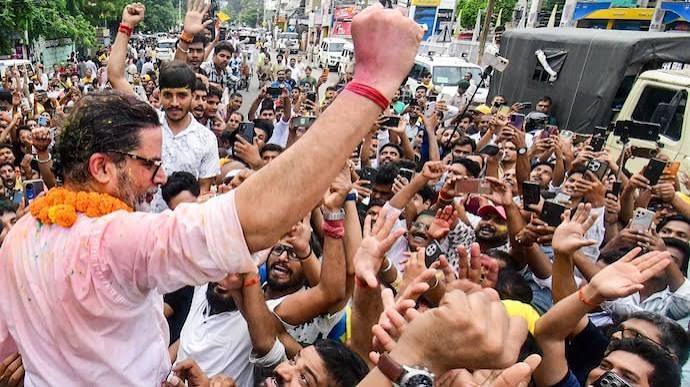
There is a particular kind of silence that falls over a battlefield just before the tide turns — the noise of the crowd fades, and only the footsteps of the man walking forward remain audible. That is roughly what happened in Bankipur on Monday, when Prashant Kishor, the strategist who had spent two decades whispering victory into other men’s ears, finally won one for himself.
The scale of the moment cannot be overstated. The BJP’s winning spree in Bihar’s Bankipur Assembly constituency came to a grinding halt on August 3, when poll strategist-turned-politician Prashant Kishor gave the saffron party a decisive defeat in its bastion , a seat the party had won consecutively since 1995, and one long associated with BJP president Nitin Nabin. Kishor won by 18,953 votes, a margin too wide to be dismissed as an accident of low turnout, though turnout 34.24 percent, over seven points lower than the 2025 assembly polls did matter, favouring the more motivated, better-organised side.
That side, this time, was Jan Suraaj. The lesson here is less about ideology than about method. The BJP stayed overconfident, certain it would retain Bankipur regardless of who was fielded, and Jan Suraaj exploited that complacency, working the ground while the incumbent coasted on reputation. Kishor’s workers stayed connected to voters, highlighted civic neglect, and were even seen cleaning a drain in the constituency to demonstrate presence rather than merely promise it. It is the oldest trick in the strategist’s own playbook, and this time he ran it on himself, for himself.
For those who wrote him off after 2025 ,when Jan Suraaj contested 238 seats and failed to open its account, with most candidates losing their deposits and an overall vote share of barely 2 percent , the correction should be humbling but not total. That defeat was about breadth: an untested party spreading itself across an entire state without local roots. Bankipur was about depth: one seat, one candidate, months of visible groundwork, and Kishor’s own considerable name recognition doing what 237 unknown candidates could not. Unlike 2025, when Jan Suraaj failed to win a single seat despite contesting statewide, this time Kishor personally entered the fray, and his national profile as a strategist gave him visibility that made him the more prominent face in the contest.
What worked, then, was concentration over sprawl, symbolism over scale. Kishor did not try to storm Bihar; he chose one fortress and laid a patient siege. He also chose his framing carefully. He described the win not as a seat won but as a message to the BJP’s central leadership that Bihar wants a chief minister without a criminal background or questionable conduct, one who can deliver on education, employment, and stop the state’s youth from migrating for work.
The lesson for sceptics is not that Kishor has arrived, but that he has finally learned to apply his own craft to himself and that in politics, as in war, one well-chosen battle can undo the memory of many lost ones. Bihar’s 2027 assembly contest will decide whether this was a beachhead or merely a flare in the dark.
About The Author