
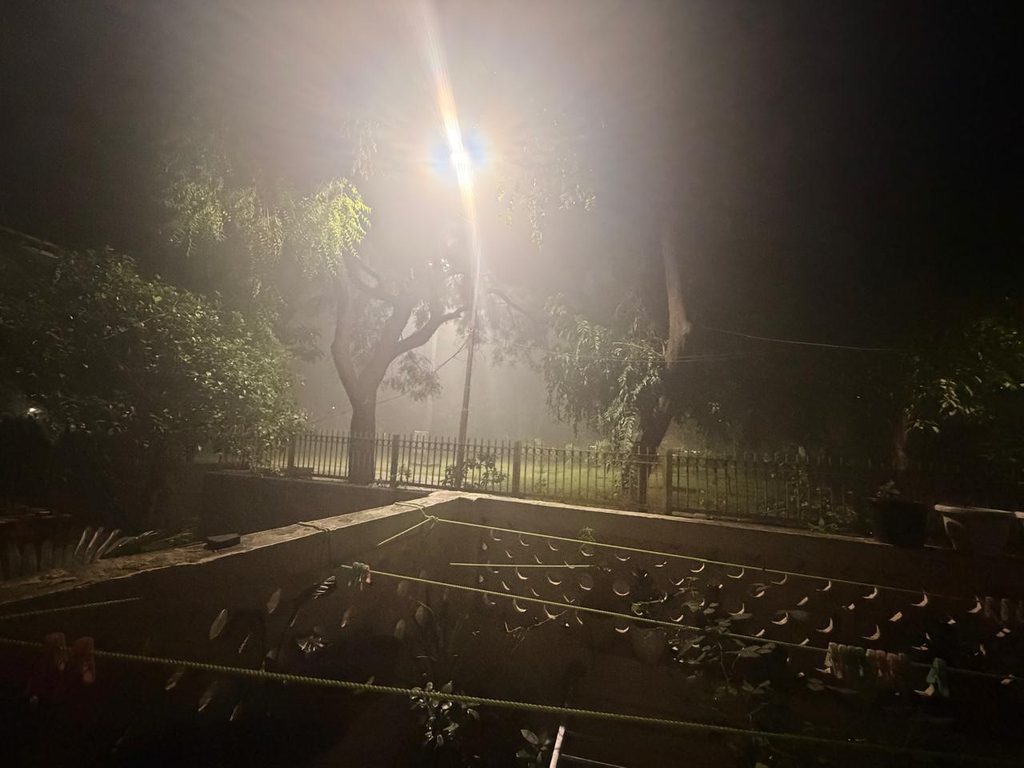
Real-time AQI data suggests South Delhi’s ghostly haze is rain-born, not winter’s early arrival
New Delhi, August 24, 2026 – Delhi slipped into a strange, smoke-tinged haze on Monday night, with large parts of South Delhi appearing to don an early winter coat. Weather monitors, however, caution against calling it the season’s first true smog episode the underlying data points to a monsoon phenomenon rather than a winter-style pollution lock-in.
What the Numbers Show
Real-time monitoring places Delhi’s overall Air Quality Index (AQI) at 155 as of Monday afternoon, driven almost entirely by fine particulate matter PM2.5 alone registered an AQI of 155, while PM10 stood at 77. Gaseous pollutants remained low: NO₂ at 13, SO₂ at 3, and O₃ at 6, according to real-time station data (aqicn.org, August 24, 2026).
US-standard readings for New Delhi told a similar story: the AQI (US) index stood at 100 (“Moderate”) by early afternoon, after peaking at a 24-hour high of 164 (“Unhealthy”) around 8:00 AM and dipping to a low of 95 near midday (aqi.in, August 24, 2026). For the wider city, the swing was comparable from a morning high of 164 down to 103 by noon.
Pollution levels sat in the moderate-to-poor band, not the severe-to-hazardous range (AQI 300+) that defines Delhi’s classic winter smog crises. For comparison, Delhi’s Central Pollution Control Board recorded AQI readings above 350–430 during peak winter smog episodes in November and December 2024 , roughly two to three times Monday’s levels (Central Pollution Control Board, via News on Air, Nov–Dec 2024).
Weather Behind the Veil
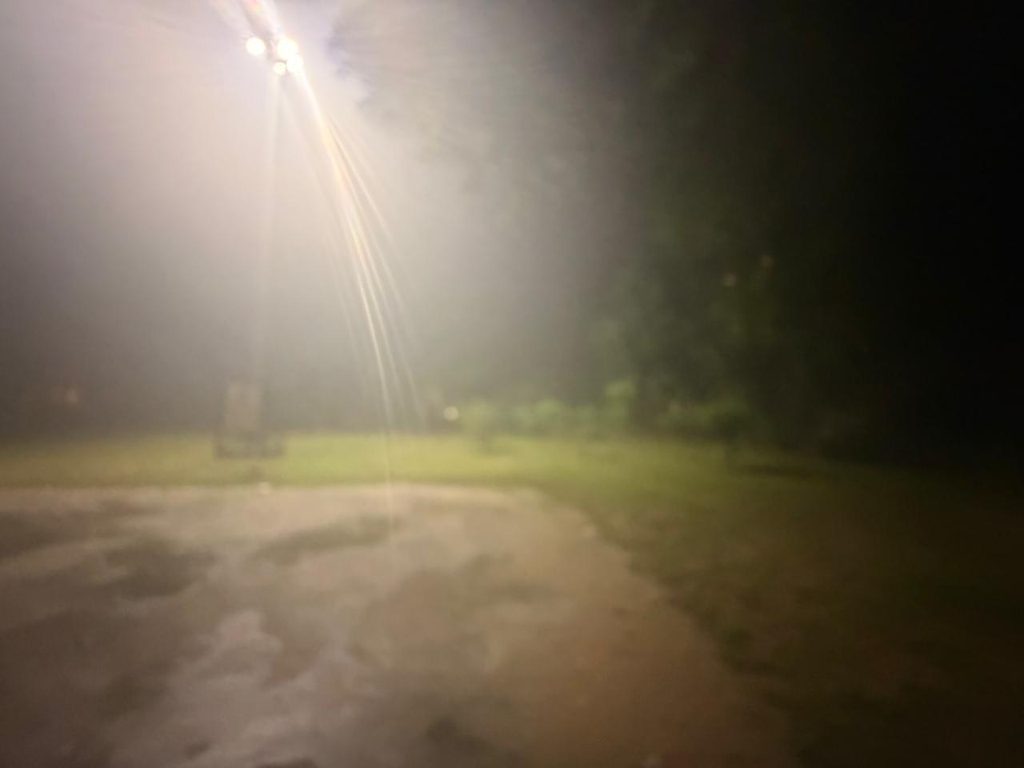
Monday brought overcast conditions with humidity around 45%, following a day of rain and thunderstorms across the capital, particularly in South Delhi’s Chhatarpur belt and the southern ridge. Forecast data for Tuesday, August 25, explicitly labels conditions as “smoky haze”, with humidity easing to 37% and temperatures climbing toward 36°C (aqi.in weather forecast, accessed August 24–25, 2026).
Meteorologists note that calm winds, high humidity, and rain-cooled surfaces trap pollutants near the ground even outside winter – the same mechanism, just without the deep temperature inversion and prolonged stagnation that produces Delhi’s characteristic November–December smog (aqi.in, “How does weather affect AQI in Delhi,” 2026).
Reading the Data
The data supports the article’s central claim: this is monsoon haze or localized pollution mist, not the onset of winter smog. Winter-grade episodes require sustained cold, still air and inversion layers that have not yet set in. Until winds strengthen or fresh rain clears the air, residents with asthma or respiratory sensitivity are advised to limit prolonged outdoor exposure, especially near traffic corridors and construction sites , a precaution consistent with the “Moderate to Unhealthy for Sensitive Groups” advisory issued for Monday (aqi.in, August 24, 2026).
About The Author