
Do you spend money to “look” wealthy, or do you possess genuine wealth and style?
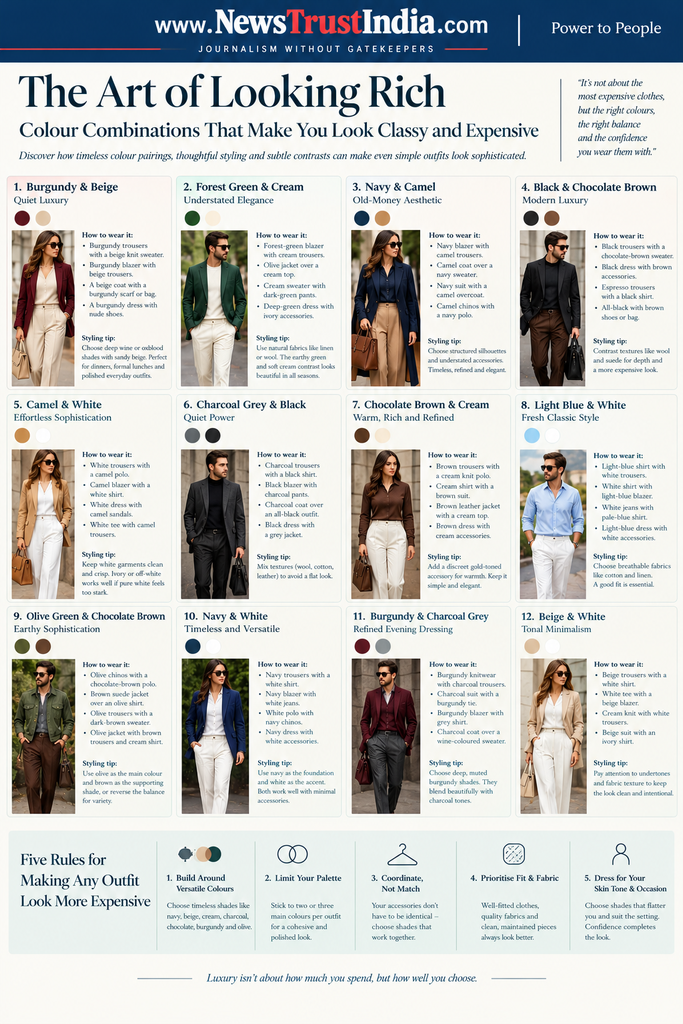
12 Colour Combinations That Elevate Class Over Commonality
The ability to afford designer clothing does not automatically translate into a refined image. If your sartorial choices lack a discerning eye, then even the most exorbitant expenditures will fail to enhance your personal brand.
Beyond price tags, the colours you select play a pivotal role in shaping your aesthetic, capable of creating either a high-end or an overtly cheap impression. Master the art of colour combination (as detailed below), and you can cultivate an expensive look without significant financial outlay. Conversely, incorrect colour pairings will diminish the perceived value of even the highest quality garments.
The Hidden Code of
Expensive Style
Have you ever observed individuals who appear impeccably dressed in everyday attire, while others, despite wearing expensive brands, lack a similar polish?
Often, the answer lies in colour. Colour communicates messages long before words are spoken. It can project elegance, confidence, and timelessness, or conversely, appear loud, disorganised, and forgettable. The perfect colour combination can transform a simple shirt and trousers into a meticulously curated ensemble.
“Expensive” does not solely refer to head-to-toe designer labels. It embodies a sense of proportion, the selection of complementary colours, and the
astute judgment of when to embrace boldness and when to exercise restraint.
Good News: You Don’t Need a
New Wardrobe!
You may simply need to optimise the use of your existing garments.
Below are 12 distinct colour combinations designed to enhance your style, lending it a more refined, sophisticated, and elegantly luxurious appearance.
1. Burgundy & Beige –
Understated Luxury
Burgundy imparts depth and richness, while beige tempers its intensity, providing a beautiful, high-end finish to the entire outfit. Together, these two colours strike a sophisticated balance without appearing staid.
How to Style: Pair a burgundy shirt or fine-knit sweater with beige trousers. For women, a burgundy blouse with beige trousers or a beige skirt creates a similarly polished look.
Style Rule: Utilise burgundy as the focal point, allowing beige to provide balance. Exercise caution against introducing too many conflicting colours.
2. Forest Green & Cream –
Quiet Confidence
Forest green exudes solidity, confidence, and timelessness. Introducing cream creates warmth and refinement, making this combination more thoughtful than forest green paired with black.
How to Style: Combine a forest green polo shirt with cream chinos. Layer a forest green blazer over a cream top, or pair a cream knit with dark green trousers.
Style Rule: Opt for rich, deep greens over very bright shades. Pair deep greens with warm cream rather than stark white for a softer finish.
3. Navy Blue & Camel –
Classic “Old Money”
Navy blue offers the neutrality of a dark hue without the starkness of black. Camel provides warmth and evokes images of classic tailoring and understated sophistication.
How to Style: Try a navy blazer with camel trousers. Pair a navy sweater with camel chinos, or wear a camel coat over a navy outfit.
Style Rule: Ensure an excellent fit and clean lines. This combination is particularly effective when garments possess structure and are free of excessive logos.
4. Black & White – Timeless But Not Automatic
Black and white
offer sharp contrast, visual clarity, and a clean silhouette. Its simplicity, versatility, and enduring appeal make this a classic combination.
How to Style: A crisp white shirt with black trousers is a reliable choice. A black dress with unobtrusive accessories, or a white top with a sharply tailored black jacket, can look equally striking.
Style Rule: Attention to detail elevates simplicity. Ill-fitting clothes, creased fabrics, or worn-out footwear can undermine even the most well-intentioned monochrome outfits.
5. Chocolate Brown & Ivory –
Modern Sophistication
Chocolate brown carries a warm, luxurious weight. Ivory adds lightness without the harshness of pure white. Together, they offer a softer, contemporary alternative to black and white.
How to Style: Combine chocolate brown shirts with ivory trousers. Alternatively, wear an ivory blouse with brown tailored trousers. Chocolate leather shoes or a matching belt complete the look.
Style Rule: Maintain harmonious shades. Rich chocolate and warm ivory generally work better together than brown with a disparate array of other neutrals.
6. Charcoal Grey & Pale Blue –
Effortless Authority
Charcoal provides a serious structure, while pale blue introduces freshness. This combination is highly effective in professional settings, appearing polished without being severe.
How to Style: Pale blue shirts with charcoal trousers form a dependable office combination. For a more formal option, pair charcoal suits with pale blue shirts.
Style Rule: Keep the blue clean and undramatic. Subtle colour contrast generally provides a cleaner finish than multiple competing patterns.
7. Olive Green & Tan – Relaxed, Refined &
Versatile
Olive and tan draw on earthy tones, feeling natural, balanced, and easy to wear. This combination transitions seamlessly across casual, smart-casual, and travel wardrobes.
How to Style: Layer an olive overshirt over tan chinos. Pair an olive shirt with camel trousers, or wear a tan jacket with a muted green top.
Style Rule: Texture adds interest. Cotton, suede, linen, and knitwear can enrich an earthy palette without introducing additional colours.
8. Burgundy & Navy –
Confident Without Being Loud
Burgundy adds personality, character, and refinement, while navy grounds the ensemble, ensuring an elegant overall appearance.
How to Style: Pair burgundy sweaters over navy trousers. Wear navy blazers over burgundy tops, or use burgundy accessories to complement navy outfits.
Style Rule: One colour should dominate the outfit. Too many strong elements can lead to a loss of elegance amidst visual chaos.
9. Camel & White –
Minimalist Luxury
Camel provides warmth, while white offers brightness and clarity. Together, they deliver an understated, polished appearance, particularly effective during daylight hours and in warmer weather.
How to Style: Pair white shirts with camel trousers. Wear camel blazers over white tops, or simply accessorise a white dress with camel shoes and bags.
Style Rule: Pay close attention to the quality and condition of fabrics. White shows stains more readily than camel and looks its best when its tone integrates seamlessly with the rest of the outfit.
10. Tonal Beige – The Art of
Effortless Wealth
Dressing in various shades of a single colour creates visual continuity. Beige, sand, oatmeal, and taupe can form an outfit that appears thoughtful and intentional, transcending fleeting trends.
How to Style: Combine beige trousers with a cream shirt and a camel jacket, or pair a sand-coloured knit with taupe trousers.
Style Rule: Avoid identical shades for each piece. Introducing subtle differences in shade and/or texture between elements of your tonal outfit will prevent it from appearing flat.
11. Black & Camel –
Dramatic Elegance
Black provides a solid foundation for dramatic elegance, while camel adds warmth and a sense of classic luxury. This combination is particularly effective for outerwear, evening wear, and smart-casual attire.
How to Style: Try a black top with camel trousers, or wear a camel coat over black separates. Accessorise black dresses with camel shoes and bags.
Style Rule: Allow camel to stand out against black. A clean silhouette and restrained accessories will enhance this effect.
12. Navy & Cream –
Classic Elegance Without Effort
Navy and cream offer a polished, neutral palette. Unlike the stark contrast of navy and white, this combination provides a softer, more relaxed finish, suitable for both professional and weekend wear.
How to Style: Combine cream shirts with navy trousers, or wear navy blazers with cream chinos. Pair cream knits with navy skirts.
Style Rule: Maintain overall cleanliness, including simple cuts, matched footwear, and minimal accessories. This combination remains timeless, regardless of season or weather.
Five Rules That Distinguish Polished Style From Expensive Clutter
Understanding which colours complement each other is only half the equation; how those colours are worn is equally crucial.
1. Stop Treating Visible Labels as a Substitute for Style.
A beautifully fitted, unbranded item can appear more sophisticated than a collection of conspicuous designer labels.
2.
Understand Your Neutrals.
Navy, cream, beige, camel, brown, charcoal, and white form the foundation of a versatile wardrobe. Mastering their combination simplifies the dressing process.
3. Limit the Number of
Competing Colours.
Typically, two main colours plus a restrained neutral or accessory suffice to project style without appearing to try too hard. More colour does not automatically equate to more style.
4.
Respect Fit, Fabric, and Grooming.
Colour cannot salvage ill-fitting items, poor footwear, or worn-out fabrics. Clean lines and well-maintained garments significantly enhance your overall image.
5. Wear Colours – Don’t
Let Them Wear You.
Choose shades that complement your skin tone, the occasion, and your confidence. No single palette works equally well for everyone.
Final
Word:
Rich styling is not necessarily about acquiring expensive
items. The most stylish individuals are rarely those who wear the most brands or chase every passing trend. They understand restraint. They recognise that a deep burgundy against beige, forest green against cream, or navy against camel will create a greater impact than an entire wardrobe of expensive yet disjointed clothing. What truly matters in fashion is not what you buy, but what you select, what you combine, and what you choose to omit.
Before your next shopping trip, take inventory of the clothes already in your wardrobe. Experiment with these 12 combinations. You may discover that the upgrade you sought was unnecessary, requiring only a more discerning eye. Because true style is not about proving how much you spent; true style is about making every choice appear intentional.
About The Author