With only three navigation satellites working, India’s homegrown GPS alternative can’t pinpoint a location on its own. Friday’s GSLV-F18 launch aims to change that
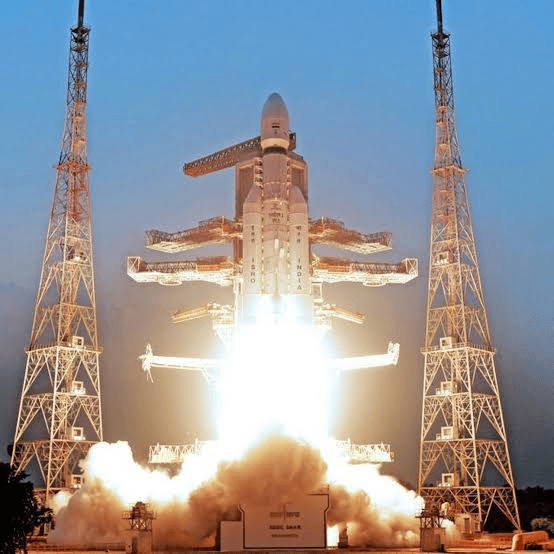
India’s space agency will try to rescue its struggling navigation network late Friday night, when a GSLV rocket carrying the NVS-03 satellite lifts off from the Satish Dhawan Space Centre in Sriharikota at 11:51 pm.
The stakes are high. Since March, NavIC (Navigation with Indian Constellation) has been unable to fix a user’s position without relying on foreign systems. A position fix needs signals from at least four satellites, but the government told Parliament in July that only three are currently sending navigation signals. The constellation can still provide accurate time, but that is only part of what it was built to do.
NavIC was conceived as a strategic safeguard. The world’s main navigation services, America’s GPS, Russia’s Glonass, Europe’s Galileo and China’s BeiDou, cover the whole globe, while Japan runs its own regional system, QZSS. Because GPS and Glonass are controlled by military agencies, Indian officials have long warned that civilian access could be restricted or switched off during a conflict. NavIC, by contrast, is designed to operate entirely under the Indian government’s control across India and the surrounding region.
The programme was approved in May 2006 with the aim of building an independent, indigenous satellite navigation capability, according to the Comptroller and Auditor General. Its progress since then has been uneven. Atomic clocks on several satellites have failed, one spacecraft was lost at launch, and another never reached its working orbit.
Timekeeping is central to the mission. Banks, stock exchanges and the armed forces depend on precise time signals, and even small discrepancies can disrupt their operations. Separately, the government announced in June 2025 that Indian Standard Time would stop relying on GPS. It will instead use a ground network of atomic clocks in Guwahati, Bengaluru, Ahmedabad, Faridabad and Bhubaneswar.
If NVS-03 reaches orbit and works as planned, NavIC could once again provide positions on its own.
About The Author