10 min read · Updated 28 November 2026
Outstanding reporters, fearless editors and one founder already running her own newsroom: these are the ten journalists most likely to become the managing editors and news chiefs of tomorrow. Who made our year-ender list? Read on to find out.
Every newsroom has a corner office. Sooner or later, someone who once stood in floodwater, in a riot-hit street or outside a ministry gate at midnight will sit in it. The people who end up running Indian news are rarely the loudest voices of their generation. More often they are the ones with the most reporting behind them, the most dependable judgement and the longest list of contacts who still take their calls.
2026 made that clear. Palki Sharma walked out of a major network and set up her own company. Manogya Loiwal rose from new arrival to Executive Editor at NDTV in about fifteen months. Ashutosh Mishra went from reporting in Manipur, for which he won his second Goenka, to covering Nepal’s worst floods in years. Across the industry, people who report are steadily moving into the jobs that run newsrooms, and a younger generation of reporters is close behind them.
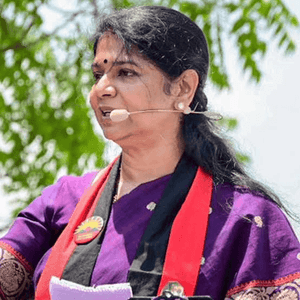
Also read: DMK’s Kanimozhi rejects BJP alliance buzz, defends support for Delimitation Bill
This countdown names the ten journalists to watch in 2027, each a potential managing editor or news chief. We judged each journalist on four things: reporting from ground zero, editorial integrity, contacts and the credibility they hold with audiences. It is an editorial judgement, not a ratings chart. Some of the ten already hold senior titles, one already owns a company, and several are still early in their rise. All of them have the background that leadership requires.
10. Milan Sharma
India Today Group | Senior Special Correspondent | The reporter who checks the follow-up
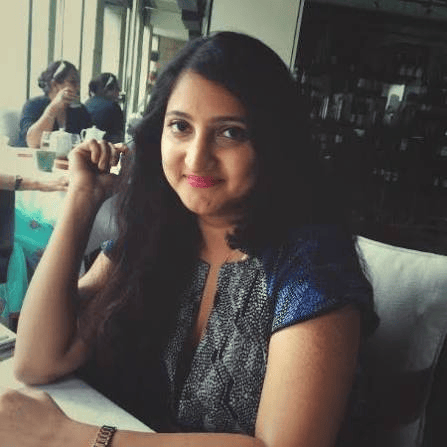
Milan Sharma is a senior special correspondent who works across languages and media. Her beats are where government policy meets daily life: pressure on the public health system and changes to the examination system. She tells these stories through the patient waiting for treatment and the student waiting for results, not just the minister announcing the policy.
Newsrooms promote reporters like her because they are good at telling viewers what an announcement means for them. Her 2027 test is follow-through: going back to see whether a promised reform reached the people it was meant for, and whether the official figures hold up.
9. Vasudha Venugopal
NDTV | Anchor and Political Editor | From the print desk to the studio
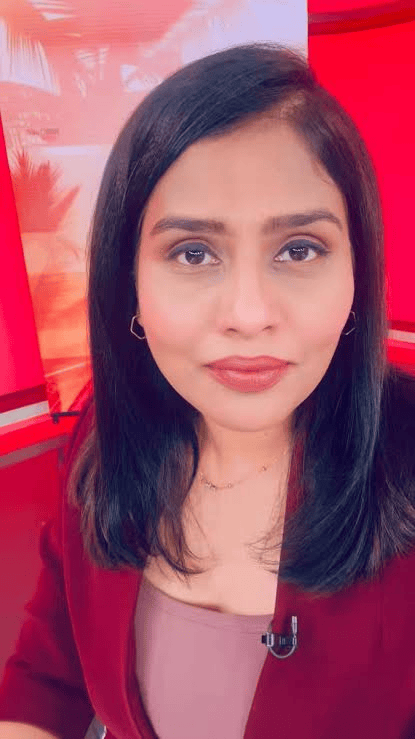
Vasudha Venugopal moved from political reporting at The Economic Times to a dual role at NDTV as anchor and political editor. In her commentary she has gone beyond party statements to subjects such as women’s safety and its economic consequences.
Political editors often become editors-in-chief, because the job requires both contacts and judgement. In 2027 the measure will be how hard she follows up in interviews, so that viewers learn what a politician’s position is, what evidence supports it and what was left unanswered.
8. Shivani Sharma
India Today Group | Deputy Editor, Defence | The specialist who knows the hardware
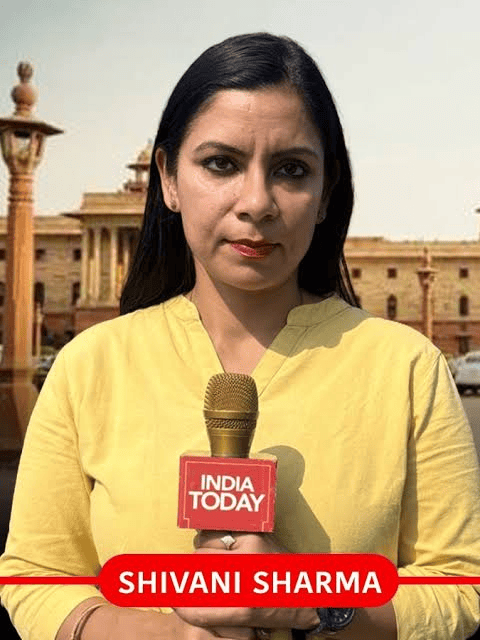
Defence is the beat where television is most tempted to put on a show, and where a specialist is most valuable. Shivani Sharma, a deputy editor at the India Today Group, covers military procurement, armed-forces policy, strategic infrastructure and security developments. Building that knowledge takes years, and so do the contacts that come with it.
Future editors-in-chief need judgement as well as access, and that is what 2027 will test. The strongest defence reporting keeps three things separate: what the reporter saw, what officials claimed and what nobody has confirmed yet. Being close to a base is an advantage, but being precise about what that access actually proves is what makes a reporter trustworthy enough to lead a newsroom.
7. Aishwarya Paliwal
India Today Group | Finance Ministry and Election Commission | The rulebook reporter
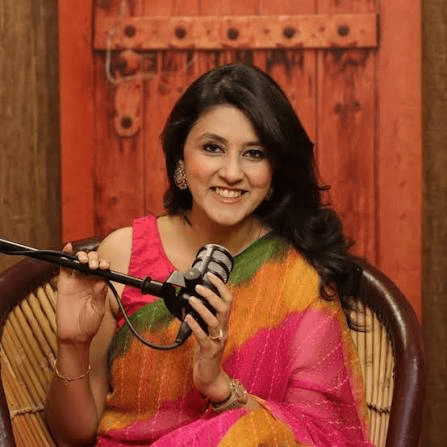
Some reporters chase the noise and Aishwarya Paliwal follows the files. Her main beats are the Finance Ministry and the Election Commission, and she has earlier covered the Maharashtra government, the Enforcement Directorate and the Income Tax authorities. Her recent reporting on electoral-roll processes and Election Commission action came in a year when the poll body was seldom out of the headlines.
Editors who understand how institutions work tend to become editors whom institutions take seriously. Her 2027 challenge is to explain the impact of each circular, roll revision or fiscal announcement: who gains, who loses and how ordinary viewers can check the official version.
6. Akshita Nandagopal
India Today TV | Executive Editor, Output | The architect of the bulletin
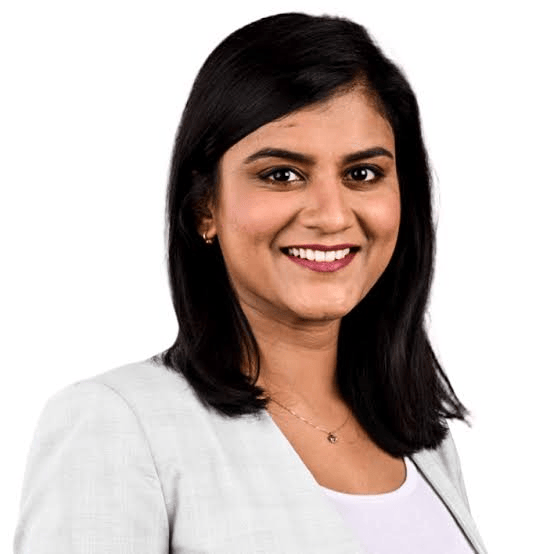
Akshita Nandagopal has already moved from presenting to managing. Her 6 PM Prime won gold for Best Early Prime Show in English at ENBA 2024. In September 2026 she was promoted to Executive Editor, Output, which makes her responsible for newsroom operations, editorial planning and coordination with production.
On television, the anchor presents the bulletin and the output desk builds it. Output leadership is a common route to the editor’s office because that is where decisions get made about which stories lead, which get dropped and how a breaking event becomes a coherent hour of television. In 2027 the measure of her work will be how much airtime goes to original reporting rather than studio filler.
5. Sreya Chatterjee
India Today | Investigations and civic reporting | Two Goenkas in one night
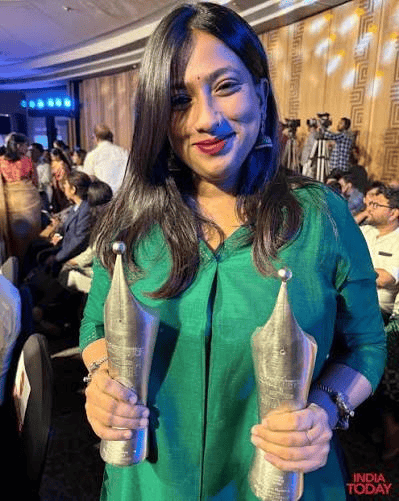
In March 2026, Sreya Chatterjee won the Ramnath Goenka award for Investigative Reporting in broadcast and shared the Civic Journalism honour with Arvind Ojha. The work behind the awards included an investigation into infiltration along the India–Bangladesh border and a report on unregulated groundwater extraction in Delhi’s Bawana Industrial Area.
Her work connects large investigations with everyday civic problems such as pollution, women’s safety and public administration, so audiences can see how institutional failure affects them directly. Newsroom leaders are often chosen from people like her, whose work holds up under scrutiny. In 2027 the test is follow-through: whether her stories produce official action and whether she goes back to check.
4. Ashutosh Mishra
Aaj Tak and India Today TV, TV Today Network | Editor | Twice a Ramnath Goenka awardee
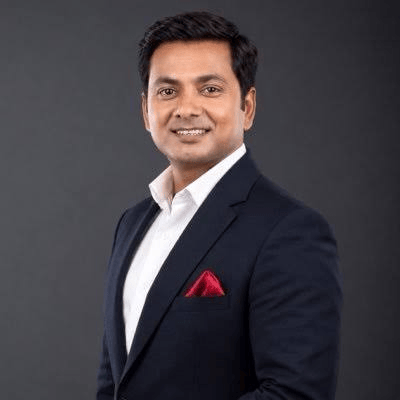
If the list had a prize for the most kilometres covered, Ashutosh Mishra would be a strong contender. The Aaj Tak and India Today TV editor has won the Ramnath Goenka award twice in three years. The first, presented in March 2023, recognised his reporting on bodies floating in the Ganga during the second wave of the pandemic in May 2021, a story that brought home the scale of the tragedy. The second, presented by President Droupadi Murmu in March 2025, was in the Politics and Government category and recognised his sustained ground reporting from violence-hit Manipur.
In 2026 his reporting took him to Nepal. During the devastating floods there he reported from Nuwakot and the Nepal–Tibet border along the Bhotekoshi, and from the Trishuli river valley as fresh flood warnings forced evacuations. The disaster was the country’s worst in years and killed more than 1,340 people.
He describes his approach on his public profile as no opinion and only news with facts, which suits a future editor well. Two Goenkas, a record of reporting from conflict and disaster zones and steady work across Aaj Tak and India Today give him what newsroom leadership requires: credibility earned on the ground. In 2027 the question is whether he can build a team of reporters who work the same way.
3. Manogya Loiwal
NDTV India | Executive Editor and Anchor | The fastest climb of 2026
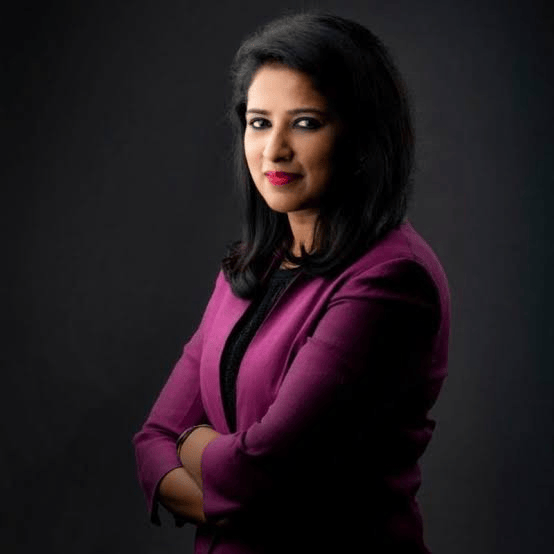
Fifteen months from arrival to Executive Editor is quick by any standard. Manogya Loiwal joined NDTV in April 2025 as Senior Editor and Anchor after more than four years as Editor and Anchor at ABP Network. On 5 May 2025 she launched X-Ray Report, an in-depth prime-time show at 10 PM on weekdays. In July 2026 NDTV promoted her to Executive Editor, and she continues to anchor key programmes while leading major editorial assignments.
Her background is in field reporting. At ABP she covered the Prime Minister’s Office, the BJP, defence and the North-East. Before that she was Editor–East for Aaj Tak and India Today Television in Kolkata, reporting on eastern and north-eastern India and Bangladesh, a region where knowing the languages and the people matters. She has worked in multimedia journalism since 2002 and has received a Ramnath Goenka award.
She combines ground reporting, editorial authority and a prime-time audience, which is the usual profile of a future channel head. X-Ray Report promises to look beneath the surface, and in 2027 she needs to deliver that consistently, with original documents, field reporting and findings that hold up.
2. Palki Sharma
Founder, India Global Review | Already the boss
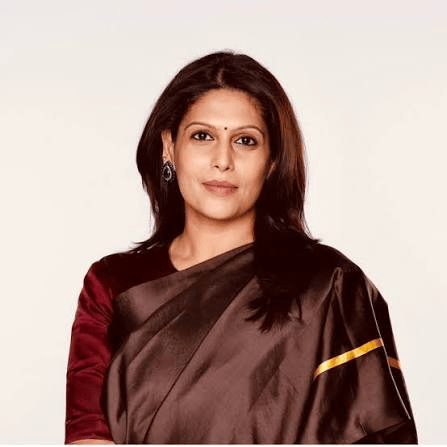
Palki Sharma is not waiting to be appointed to a top job; she has created her own. On 29 January 2026 she resigned as Managing Editor of Firstpost, leaving behind Vantage, the global-affairs monologue she launched there in January 2023. By early 2026 the platform had about 9.2 million YouTube subscribers. In April a post titled India Global Review appeared on her X account, followed by a call for storytellers to join a global newsroom based in India.
On 7 May 2026 she formally launched India Global Review, or IGR, a digital-first media company headquartered in India that covers world affairs from an Indian perspective. Institutional investors have backed it, though their names and the amounts have not been disclosed. The plans are ambitious: expansion into the United States, Europe, West Asia, South Asia and Africa through internet platforms and connected television, with international bureaus and a network of reporters. A soft launch on YouTube tested formats, and a flagship show, most likely at 9 PM, was reported to be in development. In her own words, “India is no longer just part of the global conversation; it is shaping it.”
She created Gravitas at WION and Vantage at Firstpost, and IGR is the first venture she owns. That makes her the clearest example on this list of the editor-turned-entrepreneur. Running a company is harder than presenting a show. An anchor needs an audience, while a founder also needs revenue, bureaus, a strong team and independence from investors. The editorial test for 2027 is whether IGR’s Indian perspective can include facts that are inconvenient for India.
1. Mausami Singh
India Today Group / Aaj Tak | Senior Editor, National Bureau | The reporter who goes there
This countdown values the ground beneath a reporter’s feet above everything else, and Mausami Singh has covered more of it than anyone else here. She is a deputy editor in the India Today Group’s national bureau. Her record spans elections, social issues and investigations, including the Thai cave rescue, the dispute over women’s entry into Sabarimala, and investigations into the exploitation of tribal schoolgirls in Chhattisgarh and minors in Bundelkhand.
Her work brings together the qualities that matter in a future newsroom leader. She has done ground-zero reporting on sensitive stories, shown the editorial integrity to protect vulnerable subjects, and built the contacts to reach places other reporters cannot. The credibility she has earned is the hardest of these to build and the easiest to lose. She stays with stories long after the studio has moved on.
Her 2027 test is the one every future editor faces: keeping speed and verification in balance under live pressure. Viewers should come away knowing what is confirmed, whose version is still untested and what happened to the people in the story after the cameras left.
What it takes to lead
A founder, a debate anchor, a defence specialist and a digital investigator do very different jobs. The ten names here still have something in common: each has earned standing through reporting, rather than borrowing it from the studio lights.
The corner office will test them in new ways. They will have to defend the independence of the newsroom against owners and advertisers, put evidence ahead of assertion, and choose the stubborn reporter over the convenient one. Those who manage it will become managing editors and managing directors. Those who don’t will remain well-known faces on screen.
We will check again next December to see who has moved up.
About The Author

The day’s verified news, in your inbox
One short email every morning with our original reporting. Free, and you can unsubscribe at any time.
Prefer WhatsApp? Get our top stories on our channel.
Follow us on WhatsApp