From Khamenei’s killing to a broken truce over the Strait of Hormuz, the conflict keeps finding new triggers even as both sides claim to want peace
Guest Author: Anupam Chaturvedi
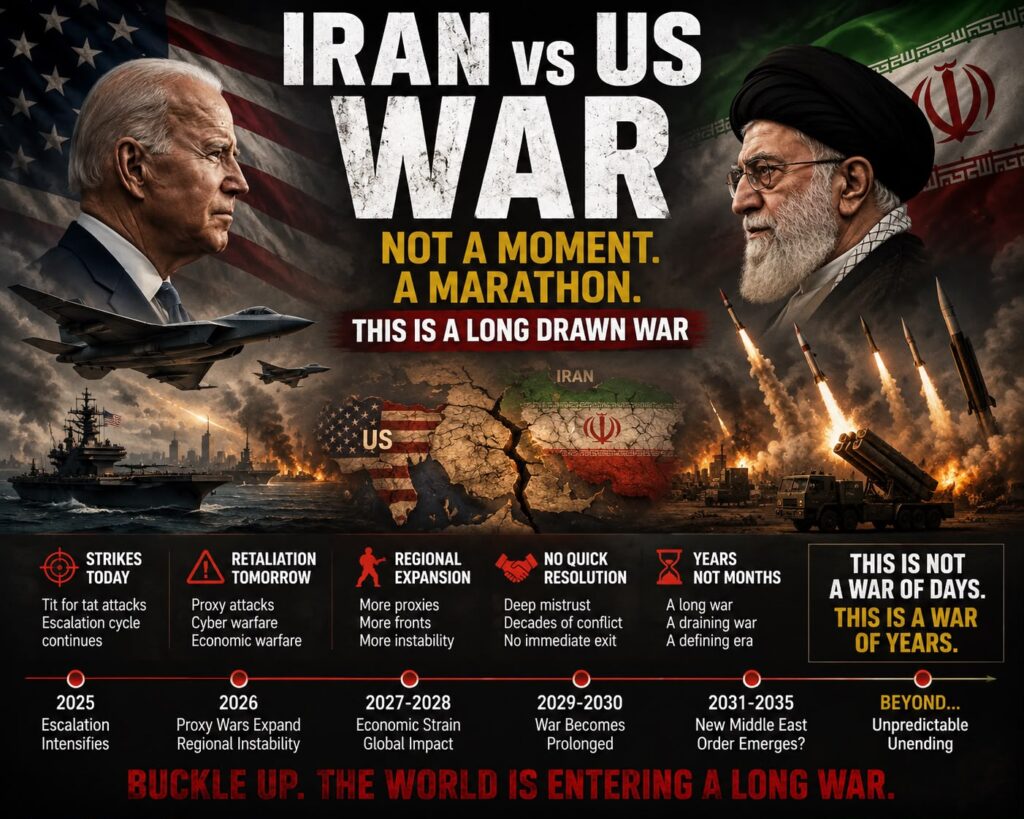
The Iran US war did not begin with a slow build-up of statements and sanctions it began with an assassination. Since 28 February 2026, the United States and Israel have been at war with Iran and its regional allies, after US Israeli airstrikes killed several Iranian officials, including Supreme Leader Ali Khamenei. Those strikes came amid ongoing US–Iran negotiations that had begun in April 2025 toward a nuclear peace deal. Iran responded with missile and drone attacks on Israel, US-aligned Arab states and American bases, while blocking the Strait of Hormuz and within two days Hezbollah had joined in, opening a second front in Lebanon.
What followed has been less a single war than a cycle: strike, ceasefire, collapse, repeat. The two sides agreed to a two-week ceasefire beginning April 8, which came under strain after Israel attacked Lebanon and Iran refused to reopen the Strait of Hormuz. After peace talks in Islamabad failed in mid-April, the US imposed a naval blockade, and it took until mid-June for a formal memorandum ending the war to be signed by Trump in Versailles and Iranian President Masoud Pezeshkian in Tehran.
That memorandum barely held. Despite further clashes, the US and Iran agreed on June 28 to stop exchanging attacks only for the interim ceasefire to collapse again on July 8, with Trump declaring it “over.” The immediate trigger was maritime: Iranian attacks on three commercial ships on July 6–7 provoked a sharp escalation, with the US “stepping up strikes against Iranian assets.” In one round alone, US Central Command said it had hit more than 80 Iranian targets air defense systems, command networks, coastal radar sites and dozens of Revolutionary Guard patrol boats. Iran, in turn, warned of a “crushing response” and struck US bases in Bahrain and Kuwait.
The Strait of Hormuz sits at the center of why this keeps escalating. Iran wants to force commercial vessels to follow routes and protocols it sets, effectively asserting control over the waterway and collecting transit fees something the June memorandum was meant to prevent. Traffic through the strait, which carried roughly 110 ships a day before the war, has cratered, and GPS spoofing around it has surged again. Every attempt to reopen it becomes a fresh flashpoint.
Underlying the tactical exchanges is a leadership vacuum. Khamenei was buried in Mashhad on July 9 after a days-long funeral, but his son and successor, Mojtaba, has not appeared publicly since taking over a silence experts attribute to fears that any appearance could make him a target, given Iran’s intelligence failures during the war. Meanwhile, Israel has reportedly shared intelligence with Washington that Tehran has devised a new plot to assassinate Trump.
Diplomacy hasn’t disappeared entirely. Pakistan and Qatar are reportedly working behind the scenes to bring both sides back to the table, and US officials say strikes are being paused deliberately to give negotiators room. But the pattern so far is unmistakable: talks produce a truce, a maritime incident or a base attack breaks it, and both sides escalate to avoid looking weak before returning eventually to the table.
The strategic logic trapping both sides is the same one that has defined this war since February: neither Washington nor Tehran can afford to be seen backing down, so every ceasefire is provisional by design. Until that changes, the fighting will likely keep pausing rather than ending with the Strait of Hormuz remaining the fuse most likely to relight it.
Note: Guest author Anupam Chaturvedi is a geopolitical analyst, author and life coach.

About The Author