
How a documented campaign to kill Hindu civilians and the Sikhs, who resisted it, was reduced to a footnote
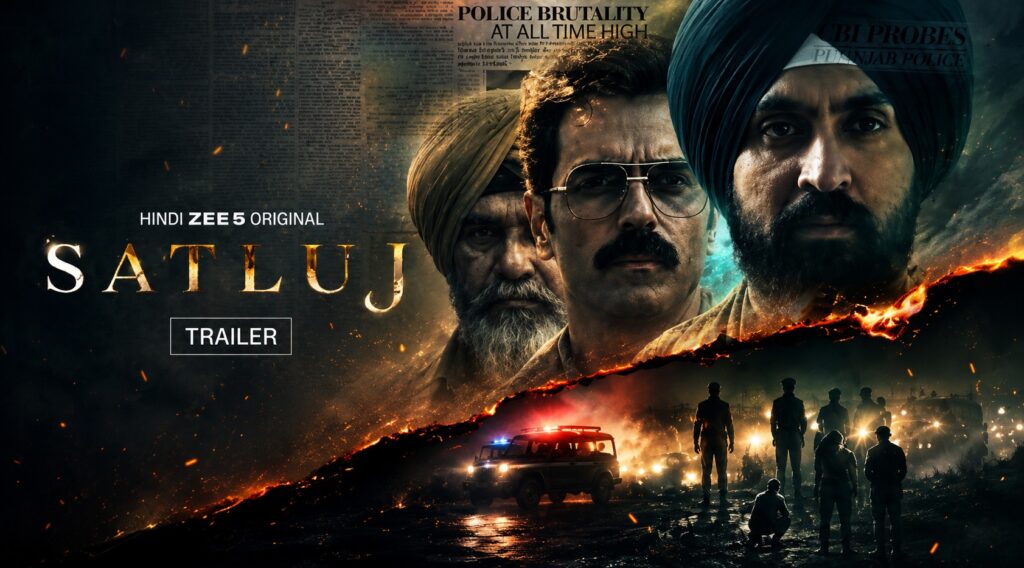
The 1986 Muktsar bus massacre in which gunmen boarded a bus, ordered Sikh passengers and women and children off, and then shot the remaining Hindu passengers where they sat is one among numerous cold-blooded massacres that threatens to resurface if the record is not set straight. The time to do that is now.
No single government ledger records the religion of every civilian killed during the Punjab insurgency. What exists instead is a mosaic: the Government of India’s White Paper on the Punjab Agitation, state police and court records, contemporaneous reporting by The Tribune, Indian Express, The Hindu, The New York Times, The Washington Post, Los Angeles Times, Associated Press and UPI, the South Asia Terrorism Portal (SATP) database compiled under former Punjab DGP K.P.S. Gill, Human Rights Watch/Asia Watch reporting, and survivor testimony gathered by later researchers. This account draws on that combined record. Where sources disagree, the disagreement is noted, not smoothed over.
The Numbers
The insurgency killed roughly 25,000 people by the mid-1990s, across security forces, militants, and civilians. SATP records 11,694 civilians killed by Sikh militant groups, of whom about 61 percent , roughly 7,100 were Sikh, and around 4,500 were Hindu. Other tallies put total non-combatant deaths at 11,690–11,698 for 1981–1995, alongside 1,714 security personnel and roughly 7,946 militants killed.
These numbers puncture convenient myths on both sides. Sikh civilians , sarpanches, moderate Akali politicians, Nirankaris, police officers, ordinary villagers who refused to fund militants were the single largest group of civilian dead. But Hindus, a demographic minority in Punjab, were killed in numbers wildly disproportionate to their share of the population. That was not incidental. In a documented number of major incidents, it was the stated objective.
An Explicit Strategy, Not Collateral Damage
Muktsar was reported at the time as part of a documented militant objective: drive Punjab’s Hindus out and replace them with Sikhs relocating from elsewhere, manufacturing the demographic basis for a Sikh-majority Khalistan. Border districts, especially Faridkot, saw the most intense intimidation campaigns, producing a documented exodus of Hindu refugees to Delhi and beyond. This was ethnic-cleansing logic, applied again and again through the same instrument: the intercity bus.
The Bus and Train Massacres: A Chronicle
October 1983, Dhilwan: Hindu bus passengers shot; a linked train attack brought the toll to 20 in two weeks. February 1984: eleven Hindus killed, reported by The New York Times. July 1986, Muktsar: fourteen Hindus and one Sikh shot after riders were separated by religion. November 1986, Khudda: 22–24 Hindu passengers killed by the Khalistan Liberation Force then the worst massacre in five years. July 1987: 38 killed on a bus at Lalru, followed a day later by 34 more at Fatehabad a 72-death, two-day operation AP called deliberately timed. May 1988, Majat village: thirty canal-construction laborers killed. December 1988: five more bus riders shot. June 1989: 27 killed in Punjab in two days of attacks targeting Hindus specifically. August 1989, Kabarwala station: eighteen train passengers killed. November 1989, Thapar Engineering College: nineteen sleeping students killed in a night raid. March 1990, Abohar: 22 shot dead in a marketplace. April 1990, Batala: 36 killed and about 100 wounded by a bicycle bomb at a Ram Navami procession; the attacker, still alive today, publicly claimed his men hunted survivors inside relief camps. November 1991, Basarke village: eighteen wedding guests shot. December 1992, Sidhwan Khurd: a hijacked bus, sixteen Hindu passengers separated out and killed.
Behind these named massacres lie hundreds of smaller, targeted killings shopkeepers, priests, whole families documented mainly in local police files and Punjabi-language press rather than any single database.
Sikhs Killed by Militants
The same movement turned on Sikhs who wouldn’t fall in line: Nirankaris, moderate Akali politicians, Sikh police officers killed in the hundreds, and villagers who refused extortion. By 1990, several sources note the militancy was killing proportionately more Sikhs than Hindus, as factional and reprisal violence intensified.
The State’s Own Record – Acknowledged, Not Equated
Indian security forces committed real abuses in this period arbitrary detention, custodial killings, extrajudicial encounters, and mass unauthorized cremations, documented by Human Rights Watch/Asia Watch. That belongs in the record too. But acknowledging state excess is not the same as equating it with the deliberate, religiously-motivated killing of unarmed civilians on buses and in markets. Both happened. Neither cancels the other out.
Why This Matters Now
The dead of Lalru, Fatehabad, Muktsar, Khudda, Batala and Abohar were bus passengers, shoppers, sleeping students, wedding guests. Thirty to forty years on, as Khalistani politics resurfaces in diaspora spaces, naming the dead, the dates, and the organizations responsible Khalistan Commando Force, Khalistan Liberation Force, Babbar Khalsa isn’t score-settling. It’s the minimum owed to those murdered for being in the wrong seat on the wrong bus.
( Image courtesy Zee 5 )
About The Author


Bold articulation to be taken note of.