
Decades of encroachment, pollution and unplanned urbanization have reshaped the Valley’s ecology yet a seven-week pilgrimage keeps absorbing the blame.
Guest Author: Mahraj Shah
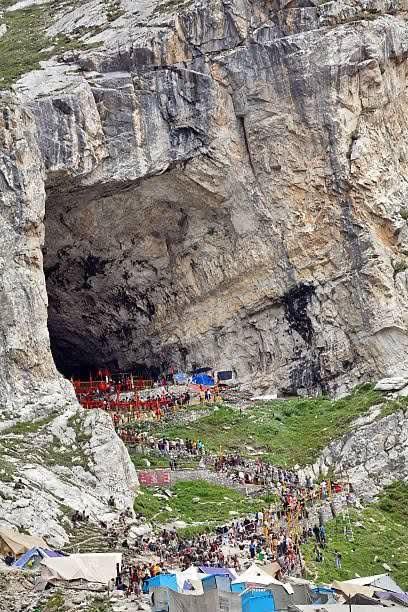
Every year, as the Shri Amarnath Ji Yatra approaches, so does a familiar ritual of its own: warnings about its impact on the fragile ecology of the Kashmir Valley. Environmental protection deserves to be taken seriously, and any large gathering in a Himalayan ecosystem warrants scrutiny. But when a seasonal pilgrimage becomes the headline explanation for a crisis decades in the making, the convenient villain starts to look less like an environmental argument and more like a selective one.
Kashmir’s ecological decline did not begin with the Yatra, and it cannot be understood by isolating the pilgrimage from everything else happening around it. The Valley has spent decades absorbing damage that a few weeks of pilgrim traffic simply cannot account for: unplanned urbanization, illegal encroachment on lakes, wetlands and riverbanks, shrinking forest cover, and waste management systems that haven’t kept pace with growth.
The evidence is visible everywhere except in the debate. The banks of the Jhelum have been reshaped by unauthorized construction. Wetlands that once buffered the Valley against floods have steadily vanished. Dal Lake , Kashmir’s most recognizable landmark has suffered from pollution, encroachment and untreated sewage for years, despite the Government of India pouring hundreds of crores of rupees into restoration efforts. The structural causes behind that decline persist precisely because they are harder to fix, and far less visible in a single news cycle, than a pilgrimage.
Then there is the cost that almost never makes it into the conversation at all: decades of terrorism and instability that gutted tourism, disrupted conservation work, and redirected public resources toward security instead of environmental restoration. Any environmental accounting of Kashmir that leaves this out isn’t really an accounting it’s a narrative.
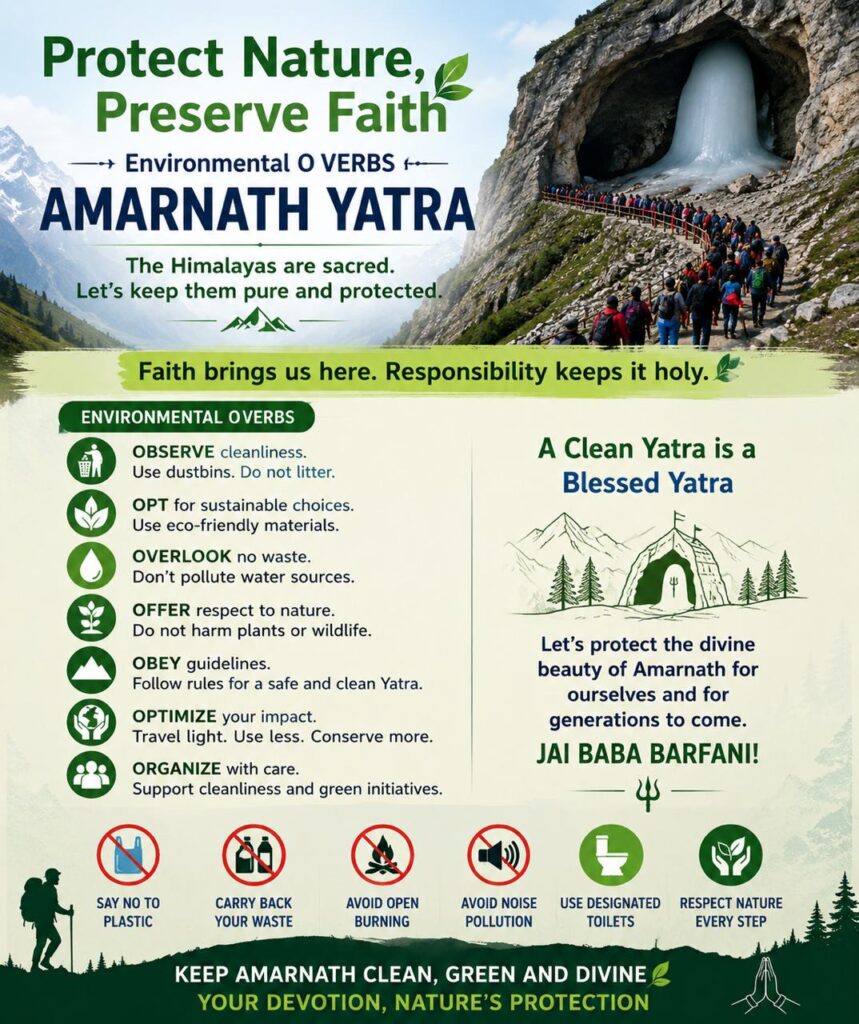
So why does the Yatra keep becoming the story? The pilgrimage operates under heavy administrative supervision , waste collection, sanitation, medical infrastructure, regulated movement and like any mass gathering, it can and should keep improving. But treating it as the principal driver of ecological damage, while decades of illegal occupation of government land go under-scrutinized or are periodically debated for legalization rather than removal, inverts the scale of the problem. It lets the seasonal and visible stand in for the permanent and structural.
For the Kashmiri Pandit community, this pattern carries an additional weight. The Yatra represents one of the oldest living threads of the community’s civilizational connection to the Valley , a connection made sharper by the 1990 exodus, when terrorism forced thousands of families from homes, temples and livelihoods many still haven’t recovered. Seen against that history, some in the community read the recurring environmental criticism of the pilgrimage as something more than an ecological argument as discomfort, however unstated, with the visible return of Hindu pilgrims to the Valley. That perception may be contested, but it is part of the public discourse and deserves acknowledgment rather than dismissal.
None of this is an argument against environmental accountability , it’s an argument for consistency. If wetlands matter, encroachment on them should draw the same scrutiny whether the structure is a hotel, a housing colony, or a pilgrim camp. If Dal Lake matters, untreated sewage and unregulated construction deserve the same year-round attention that a seven-week pilgrimage receives every summer.
Kashmir’s rivers, forests and lakes are a shared national inheritance, and protecting them will take sustained enforcement, not selective outrage. The Yatra should keep raising its environmental standards , better waste management, eco-sensitive infrastructure, scientifically calibrated pilgrim numbers where needed. But it should be one accountable actor among many, not the designated villain in a story with far older and far larger authors. Kashmir’s environmental debate will only earn public trust when it is guided by evidence applied equally, not by which activity is easiest to photograph.

Note:The Author, Mr Maharaj Shah, is a senior academician, writer, Producer, and Director who has held several distinguished faculty positions in media at leading educational Institutions and Universities. Views are personal
About The Author



Rational and logical account which supports the Truth.
One wonders how the J&K administration over the several decades has thought through the facilitation of Yatris to make the journey comfortable and pleasant.
Knowing about the train travel in high mountains of Austria and Switzerland and the infrastructure built to support a traveller is worth consideration for future, instead. Also, an example of how a balance is struck between ecological preservation and public expectation.
Fault lines somewhere else should not be used by those with a dominant voice or in power against a select set of Pilgrims and the minorities who inherently believe in non-violence and respect the Nature.