
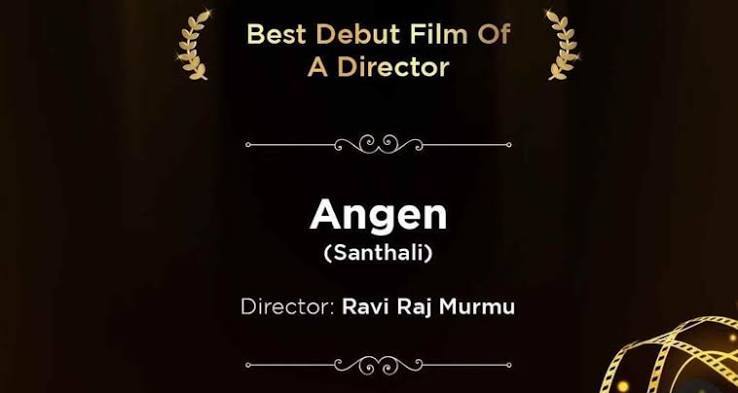
A 12-minute Santhali short film has won the 72nd National Film Award for Best Debut Film of a Director – here’s the journey behind it
The lights came on. A name was read out. And somewhere in that moment, a language that has survived British colonisers, land dispossession, and decades of being called “just a dialect” walked up to receive India’s highest cinematic honour.
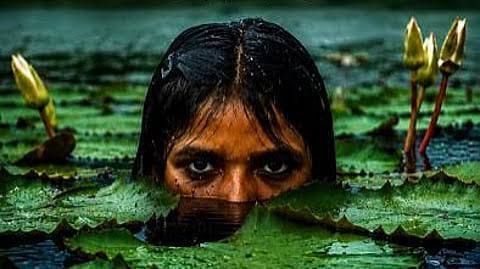
Angen – meaning “Invisible” is only 12 minutes and 10 seconds long. But like a seed carrying an entire forest inside it, this short Santhali film, inspired by a mystical Jharkhand folktale, has just been named Best Debut Film of a Director at the 72nd National Film Awards. Its maker, Ravi Raj Murmu, is a 33-year-old Santhal from Jadugora in Jharkhand’s Potka block.
Now rewind the reel.
Before the trophy, before the applause, there was a young boy in a tribal household who fell in love with stories the way rivers fall in love with the sea inevitably, completely. He studied mass communication, then travelled to one of the country’s most respected film institutes, working quietly on other people’s sets as editor, as cinematographer building craft the way a mason builds a wall, brick by unglamorous brick. When it came time to tell his own story, in his own tongue, the doors that had opened for others stayed shut for him. No producer wanted to bet on a language most boardrooms couldn’t even pronounce.
He funded it anyway. Because some stories refuse to wait for permission.
This is where the real significance lives. For every filmmaker sitting in a small town in Jharkhand, Odisha, or Chhattisgarh for every storyteller in a tier-2 or tier-3 city who has been told their language is “not commercial enough” , Murmu’s win is proof that the camera does not ask which pin code or which community you come from. It only asks whether you have something true to say.
Indian cinema has long been an echo chamber of a few dominant languages and urban gazes. Every Adivasi story that reaches a national stage cracks that mirror a little wider, letting in folktales, forest deities, and ways of seeing the world that mainstream cinema rarely bothers to translate.
Angen was invisible. It isn’t anymore. And somewhere in a village few people have heard of, a child is now watching this story, and quietly deciding to pick up a camera too.
About The Author