
50,000+ Indian techies face uncertain future as visa costs skyrocket
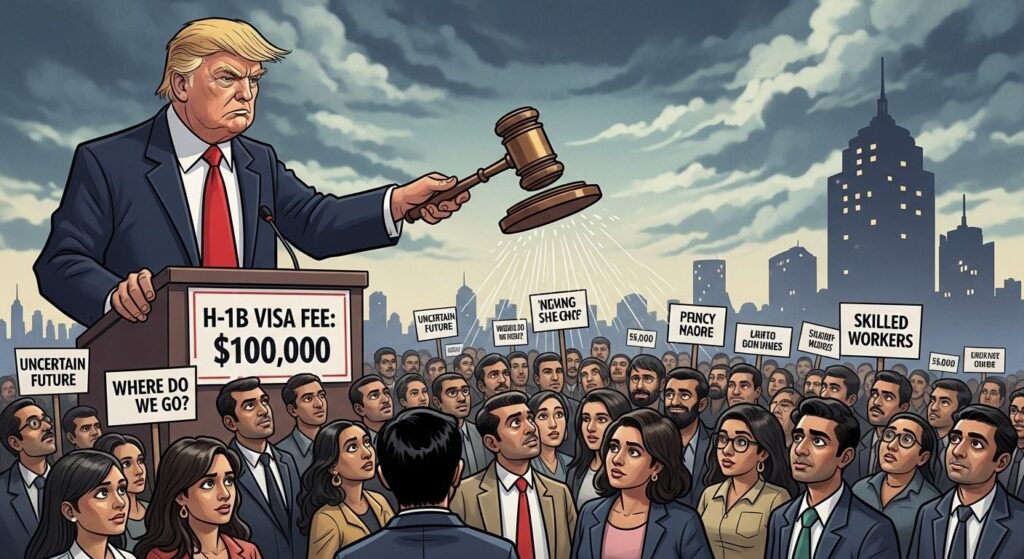
American President Donald Trump on Friday signed a proclamation imposing a staggering $100,000 annual fee on H-1B visa applications, delivering a severe blow to Indian technology companies and skilled professionals who have long depended on this pathway to American employment.
Indian IT Sector Faces Massive Disruption
Indian IT majors, who dominate the program and account for more than 70% of all H-1B visas, face an unprecedented cost shock. The impact numbers are sobering: the top seven Indian IT companies collectively saw only 7,299 H-1B visa petitions approved in fiscal 2024, down from 14,792 approvals previously.
Conservative estimates suggest approximately 50,000-60,000 Indian professionals currently working on H-1B visas could face employment uncertainties, with new applications becoming prohibitively expensive for many employers. The ripple effects extend beyond current visa holders to prospective applicants, essentially pricing out mid-tier companies from accessing this talent pool.
Wall Street immediately punished Indian IT stocks, with Infosys and Wipro ADRs sinking as investors absorbed the implications. Leading companies like TCS, Infosys, Wipro, and HCL Technologies have consistently ranked among top H-1B employers, making them particularly vulnerable to this policy shift.
While Indian firms have already decreased H-1B usage by 56% in recent years, this fee structure could accelerate their pivot toward local hiring and offshore delivery models, fundamentally altering their US market strategies.
Trump’s Strategic Rationale
The executive action, which takes effect from September 21, requires companies to pay the hefty fee for each H-1B worker visa they sponsor, fundamentally reshaping a program that has been the cornerstone of US-India tech collaboration for decades.
The Trump administration justified the move as necessary to prevent abuse of the H-1B program, claiming it has displaced American workers. Commerce Secretary Howard Lutnick indicated that the administration arrived at the $100,000 figure after careful consideration, positioning it as a deterrent against what officials term “overuse” of the skilled worker program.
The geopolitical undercurrents are unmistakable. This represents Trump’s broader “America First” immigration philosophy, targeting legal immigration pathways that have traditionally benefited high-skilled workers from countries like India and China. The timing suggests a calculated move to reshape the skilled workforce landscape before the 2026 midterm elections.
Industry Reactions Pour In
Initial responses from Indian IT majors remain guarded, with companies likely assessing the full financial implications before issuing formal statements. Industry analysts predict emergency board meetings and strategic reviews across major outsourcing firms.
The move comes as additional threats loom, including proposed outsourcing taxes that could deliver a double blow to Indian IT giants, forcing them to reconsider their entire US operational framework.
This policy shift marks a decisive moment in US-India economic relations, potentially reshaping the $150 billion Indian IT outsourcing industry’s American ambitions while forcing a fundamental recalibration of skilled immigration pathways
About The Author