
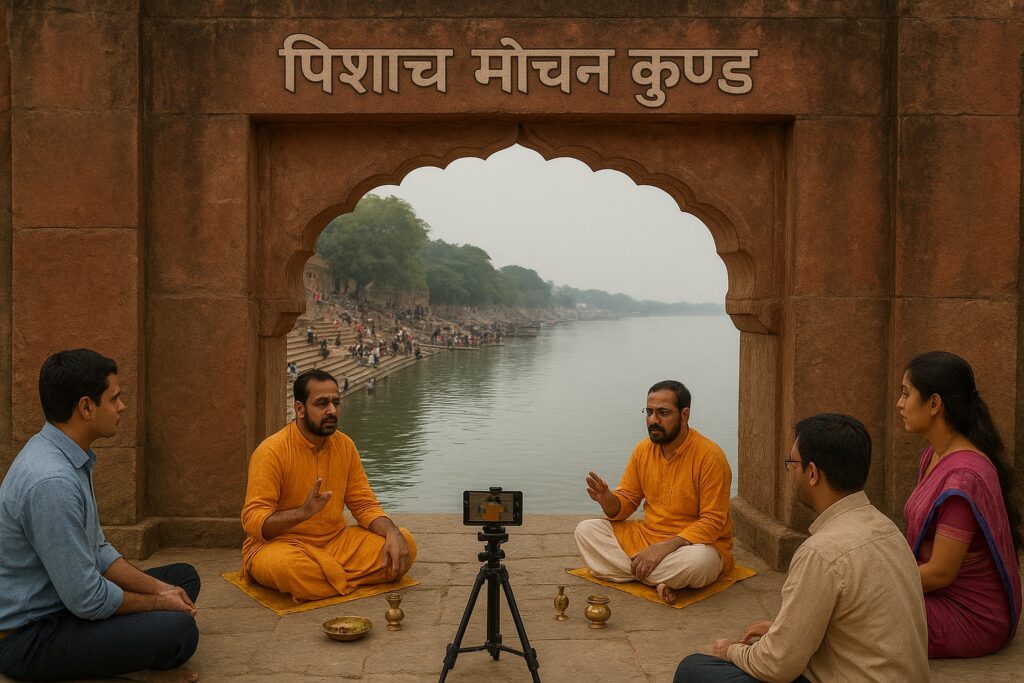
‘E Shraddh’ is the new global trend
Along the ancient ghats of Varanasi’s Pishach Mochan Kund, pandits sit cross-legged beside the sacred waters, but their setup resembles a modern broadcasting studio more than a traditional ritual space. Tripod-mounted smartphones capture every mudra and mantra, while tech-savvy assistants manage multiple camera angles. Hindi-to-English translators position themselves strategically, bridging linguistic gaps for devotees watching from silicon valleys to London suburbs. This is the new face of ancestral worship, where thousand-year-old Vedic traditions meet fibre-optic cables, and spiritual liberation gets delivered through broadband connections.
The Virtual Rush: When Faith Goes Digital
Since September 7th, as Pitri Paksha commenced, Pishach Mochan Kund has transformed into a spiritual broadcasting hub. What was once exclusively accessible to those who could physically travel to Varanasi now streams live to global audiences hungry for authentic ritual experiences. The numbers tell a compelling story: over 150 people who converted to Sanatana Dharma have already conducted virtual Pinddan ceremonies, while more than 5,000 traditional Tripindi Shraddh rituals have been completed online during just the first week.
The kund’s unique positioning as the sole location worldwide for Tripindi Shraddh has created unprecedented demand. Devotees from Australia, London, and America—many of Indian origin who left India but couldn’t leave their faith behind,are now connecting virtually with their ancestral traditions. The convenience factor is undeniable: families facing health issues, travel restrictions, or elderly members unable to undertake arduous journeys can now participate meaningfully in these crucial rituals.
The Tech-Savvy Pandit: Premium Pricing for Digital Devotion
The digital transformation has created a new breed of spiritual entrepreneurs. Technologically adept pandits command premium fees, with virtual ritual packages ranging from ₹2,100 upward. These modern spiritual guides don’t just chant mantras,they manage live streams, coordinate with international time zones, and provide multilingual services to cater to a global clientele.
Acharya Mohit Upadhyay exemplifies this evolution. When asked about managing international devotees, he explains their systematic approach: “We’ve developed a temple app to connect with people. Through this, we conduct proper ritualistic ceremonies that include all traditional elements.” The process is meticulous—devotees provide complete details including gotra (lineage), vamsha (ancestry), and names, enabling pandits to perform personalized ceremonies while streaming live footage to participants worldwide.
The economic impact is substantial. One pandit mentioned conducting 5-6 people’s pujas simultaneously, while another noted that group ceremonies can accommodate multiple families, making the rituals both cost-effective and spiritually potent. The pandemic initially forced this digital adaptation, but the convenience and authenticity have sustained its growth far beyond necessity.
Beyond Boundaries: The Global Pinda Revolution
The transformation extends beyond mere technological adoption—it represents a fundamental shift in how spiritual practices adapt to modern realities. During the six-day period of intensive rituals, over 2 lakh people have participated in virtual ceremonies at Pishach Mochan Kund, Ganga Ghats, and associated temples. The daily influx of 15,000-20,000 people for Shraddh ceremonies has created a spiritual ecosystem that operates 24/7, accommodating different international time zones.
The sight of deceased relatives’ photographs placed beside the Kund while pandits perform rites via video call has become commonplace. What seemed impossible just a decade ago, conducting deeply personal, sacred rituals through digital mediums, has not only become acceptable but preferred by many. The process is remarkably systematic: devotees watch live streams from Australia, cameras capture every ritual detail, and QR codes facilitate instant payments across continents.
The success of virtual Pitri Paksha at Pishach Mochan Kund demonstrates how ancient traditions can evolve without losing their essential character. As one participating pandit noted, technology simply enables devotees who cannot physically be present to maintain their spiritual connections. This digital devotion represents more than convenience; it’s the democratization of sacred access, ensuring that geographical boundaries cannot separate families from their ancestral obligations or spiritual heritage.
The revolution at Pishach Mochan Kund proves that faith, when combined with technology, knows no borders, and neither do blessings
About The Author