
2 min read
The experimental road converts used milk packaging into an asphalt surface, highlighting the potential of plastic recycling while raising questions about long-term durability and microplastic pollution.
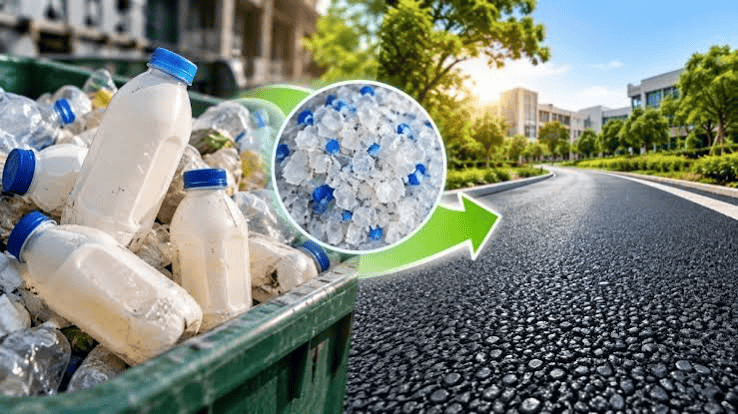
Shanghai has turned more than 6,000 discarded milk bottles into a 300-metre stretch of road, offering an innovative approach to reusing plastic waste in infrastructure.
Unveiled on April 22, 2021, the project was developed through a collaboration between chemical company Dow, dairy business Shiny Meadow and East China University of Science and Technology. The recycled plastic was processed and incorporated into the asphalt mixture to create what the partners described as China’s first plastic road.
Also read: Chhattisgarh: Maoist hideout yields 3.84 kg gold worth ₹4.29 crore, ₹24 lakh cash
The initiative used Dow’s ELVALOY RET asphalt additive to help incorporate the processed plastic into the road material. The stretch, located on a university campus, is used by students for walking and cycling.
The project addresses a common challenge in plastic recycling. Milk residue left inside containers can affect the quality of recovered plastic, while some recycling facilities lack the infrastructure to process contaminated packaging. As a result, potentially reusable plastic often ends up in landfills or is incinerated.
Plastic-modified asphalt is also attracting attention beyond China. A 2025 Virginia Transportation Research Council report, commissioned by the Virginia Department of Transportation and the Federal Highway Administration, examined recycled plastic-modified asphalt mixtures and pavement performance. Its findings indicated that some of these materials performed comparably to, and in certain tests better than, conventional asphalt in resisting cracking and deformation.
However, questions remain about the environmental impact of plastic roads, particularly the release of microplastics through traffic and weather exposure.
A study published in the Journal of Cleaner Production in October 2026, led by researchers associated with Penn State University, examined microplastic emissions from recycled plastic-modified asphalt. Laboratory findings suggested that the modified asphalt released fewer microplastics than conventional asphalt under the tested conditions.
While such projects offer a possible route to divert plastic waste from landfills, researchers say further long-term assessment is essential to establish their durability and environmental safety.
About The Author

The day’s verified news, in your inbox
One short email every morning with our original reporting. Free, and you can unsubscribe at any time.
Prefer WhatsApp? Get our top stories on our channel.
Follow us on WhatsApp