For a girl from Korba, Teejan Bai and Bhilai were the only ID card the world ever needed
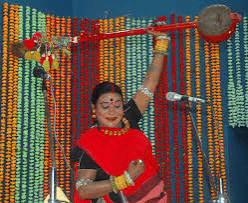
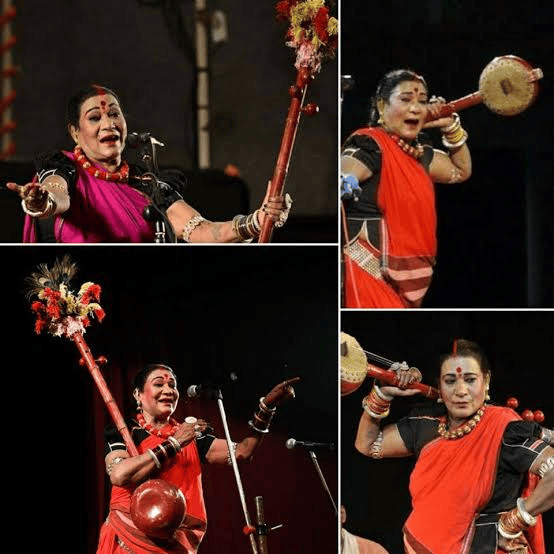
There was a word that made me sit up as a five-year-old glued to the television “Achha.” Not spoken, almost thrown, by her teammates every time Teejan Bai paused mid-verse, eyes widening, voice dropping to a hush before it rose again like a wave finding the shore. I didn’t understand Pandwani then. I didn’t know the Mahabharata was being unspooled in front of me in a language of gesture, taal, and thunder. But I understood that “achha” it was the hook, the applause before the applause, the sound of a whole folk tradition holding its breath.
That was Teejan Bai’s genius. She didn’t perform kissagoyi ( storytelling ) she conducted it, like a folk symphony where the audience was the orchestra and she was the single unbroken note running through it. Her big eyes carried conviction the way a lamp carries flame you didn’t just watch her, you were pulled into the circle, made complicit in Bhima’s rage and Draupadi’s grief. On stage, in a saree, with an ektara in hand, she made an ancient epic feel like gossip from the next village urgent, personal, alive.
When I left Chhattisgarh for Delhi twenty-five years ago, I discovered something odd: people confused it with Jharkhand, blurred it into “some state up there.” So I built my own shorthand. “Bhilai,” I’d say, “the steel town.” And then, almost like a password that unlocked recognition, “Teejan Bai the Padma Vibhushan lady, the Pandwani singer.” One name was industrial muscle, the other was folk soul, and remarkably, both lived on the same soil. Together they were my identity card to a country that didn’t always know where I came from.
Today, that card feels incomplete. Teejan Bai passed away this morning at AIIMS Raipur, after a prolonged illness, at the age of 70 a woman born in a small village near Bhilai in 1956, who rose to receive the Padma Shri, the Padma Bhushan, and finally the Padma Vibhushan, India’s second-highest civilian honour, for turning a village art form into a national treasure. Tributes are pouring in from the Prime Minister to the President to chief ministers across party lines. And rightly so. But I suspect very few of today’s tribute-writers ever sat, restless and wide-eyed, watching her live on a dusty stage the way I did as a child in Korba.
That’s the quieter grief in this loss. Losing Teejan Bai is losing a living, breathing strand of “lok” the folk because so few have trained to carry her particular fire forward. Pandwani will survive on paper and in archives. But that specific tremor in her voice, that instinctive command over an audience, that “achha” landing exactly on cue that may have left with her.
For a girl from Chhattisgarh, this isn’t just a cultural obituary. It’s personal. My identity card is missing a signature today. I only hope some young voice out there is watching an old video of her right now, feeling that same pull I felt at five, and deciding to pick up the ektara.
About The Author