Once made of simple thread, Rakhi has travelled a long way,from neighbourhood shops and handmade beads to personalised boxes, cartoon characters and online deliveries.
There was a time when Rakhi was a small thing.
Really small.
A few coloured threads tied together. Perhaps a tiny golden bead in the middle. Sometimes a little piece of zari. Sometimes nothing more than red and yellow cotton twisted into a simple pattern.
Yet, for a child, that little thread seemed to hold the whole world.
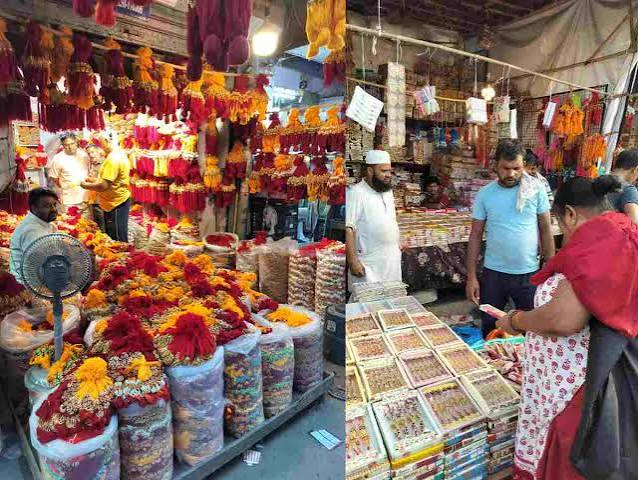
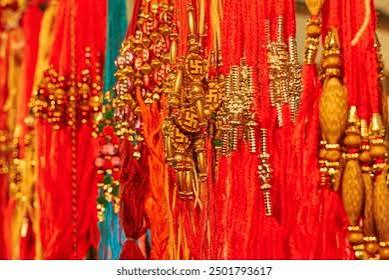
In the weeks before Raksha Bandhan, neighbourhood shops would suddenly become colourful. Rakhis hung from strings outside small stationery and gift shops. There were dozens of them-red, orange, yellow, pink and green. Some had tiny beads. Some had little mirrors. Some had a simple “Om” or “Swastik” charm.
You picked one by touching it.
You held it against your wrist.
You asked your mother, “Ye wali achhi hai?”
And after much debate, you chose.
The rakhi was usually inexpensive. But its value was never measured in rupees.
The Rakhi in a small paper packet
For many families, Rakhi morning had its own rhythm.
A new dress. Oil in the hair. A small puja thali. Roli, rice grains, sweets and a diya.
The sister applied tilak, placed a few grains of rice on her brother’s forehead and tied the rakhi carefully. The brother sat unusually still because the knot had to be perfect.
Then came the mithai.
And finally, the envelope.
Sometimes there was money inside. Sometimes a small gift. Sometimes nothing.
The real gift was simply the feeling that, for a few minutes, everyone had stopped whatever they were doing.
Then globalisation arrived
The 1990s changed the Indian marketplace,and eventually changed Rakhi too.
As shopping malls, branded stores, television advertising and later e-commerce entered everyday life, the humble thread began acquiring new identities.
Rakhis became larger.
Then brighter.
Then more elaborate.
Plastic charms appeared. Cartoon characters arrived. Metallic bands, stones, beads, pearls and embroidered designs followed.
There were Rakhis for children, teenagers, brothers working abroad and even “Bhaiya-Bhabhi” combinations.
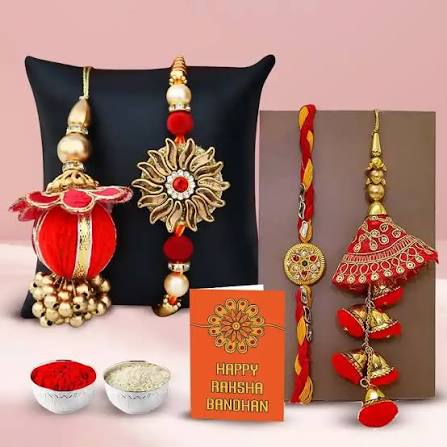
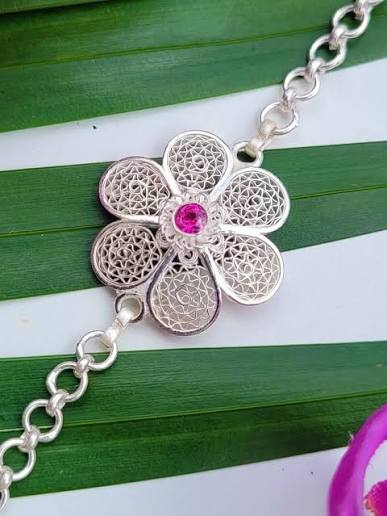
Today, some Rakhis resemble miniature pieces of jewellery.
There are personalised Rakhis with names and photographs. There are wooden Rakhis, eco-friendly Rakhis, silver Rakhis and handmade artisan versions. Some arrive in beautifully designed gift boxes accompanied by chocolates, dry fruits and personalised messages.
The Rakhi has moved from the small neighbourhood counter to the digital shopping cart.
And the ritual changed too
Earlier, Rakhi meant being physically present.
You travelled.
You waited for trains.
You arrived at your sister’s house with sweets.
If a brother lived in another city, the rakhi went into an envelope. The sister wrote a few lines on a postcard or inland letter.
Today, geography has become less powerful.
A Rakhi can be ordered online and delivered to a brother thousands of kilometres away. A sister can perform the ceremony over a video call. The tilak may be virtual, the photograph may be a screenshot, but the emotion remains real.
Yet something has been lost in the convenience.
Earlier, choosing a Rakhi itself was an experience. You walked through a market, compared colours, argued over prices and carried home a tiny packet.
Today, we scroll.
Swipe.
Click.
Pay.
And wait for the delivery notification.
Perhaps this is what globalisation has done to Rakhi. It has made the festival bigger, faster and more personalised.
But somewhere beneath the designer beads, online orders and elaborate gift hampers, the old Rakhi is still alive.
A simple thread.
A trembling hand.
A forehead marked with tilak.
A brother trying not to move.
A sister smiling as she ties the knot.
And for one quiet moment, childhood comes back.
The Rakhi may have changed its shape. The thread has not forgotten what it was meant to hold together.
About The Author