3 min read · Updated 24 November 2026
The march stopped 200 metres short of the Supreme Court. The petition got inside. What happened next is the story.
New Delhi: The INDIA bloc never reached the gates of the Supreme Court on 12 October. Police put up barricades about 200 metres short, near Bhagwan Das Road. By evening, though, Rahul Gandhi, Mallikarjun Kharge and other leaders were inside the building with their lawyers, filing a writ petition against Chief Election Commissioner Gyanesh Kumar and the Special Intensive Revision (SIR) of electoral rolls.
This report was first published on the morning of 12 October, as the bloc announced its plans. We have rewritten it with what followed.
Also read: L-G Tells BGSBU: Teach Skills, Meet Every Six Months
A march with a destination, and a lawyer’s deadline
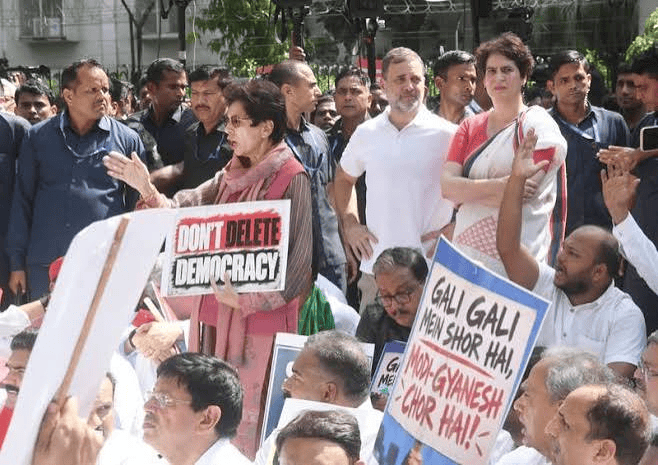
Billed as “Chalo Dilli – March for Democracy”, the procession set off from Constitution Club on Rafi Marg, moved through Barakhamba Road in Connaught Place and went on towards Mandi House. The Delhi Metro closed six stations near the route. After days of heavy restrictions in the capital, police largely stood aside on Monday and let the march go ahead.
At Mandi House, Gandhi, Priyanka Gandhi Vadra and other leaders moved into an open vehicle. When barricades stopped the procession, the protest ended at around 6 pm, and the leaders went on to the court to file the petition. It was filed under the title Rahul Gandhi vs Election Commission of India by an advocate-on-record shortly before the filing counter closed. Nine other INDIA bloc leaders joined Gandhi and Kharge as petitioners, and Priyanka Gandhi Vadra and Akhilesh Yadav were among those who accompanied them to the court.
What the petition asks for
The petitioners want the court to suspend the SIR and to order an inquiry into voter deletions. Among their most far-reaching demands is that the court scrap every decision Kumar has taken since he became CEC. Whether the bench will entertain a request that broad is an open question. Courts rarely undo an official’s entire record on one petition.
The Chief Justice’s answer
Before the march, Gandhi and Kharge had written to Chief Justice Surya Kant asking for a meeting. He declined, saying the issues were already before the court. The court indicated that it could take up the petition on 13 October together with the pending SIR matters.
Three days later, on 15 October, the Supreme Court sought responses from the Congress, Gandhi and other INDIA bloc leaders on a separate plea asking for curbs on political protests inside court premises. According to a report from that day, the Chief Justice said nobody can browbeat the judiciary. The opposition says it was exercising a democratic right. Its critics say a march to the apex court was pressure by another name.
The claim nobody has checked
At the press conference that morning, Gandhi told the Prime Minister that about 200 officers in the government were in touch with the opposition and passing on information. He offered no names or evidence, and we have not been able to verify the claim. It remains an assertion, and readers should weigh it as one.
Why it matters
The petition moved the fight from the street to the one forum where a ruling can bind the Election Commission. A procession can show numbers, but only a court can order a revision paused. The opposition’s case will now be tested on documents, not slogans. It stands or falls on whether it can show that eligible voters were struck off the rolls.
About The Author

The day’s verified news, in your inbox
One short email every morning with our original reporting. Free, and you can unsubscribe at any time.
Prefer WhatsApp? Get our top stories on our channel.
Follow us on WhatsApp