
You Can Now Hire Someone to Hold You. And That Should Break Your Heart a Little
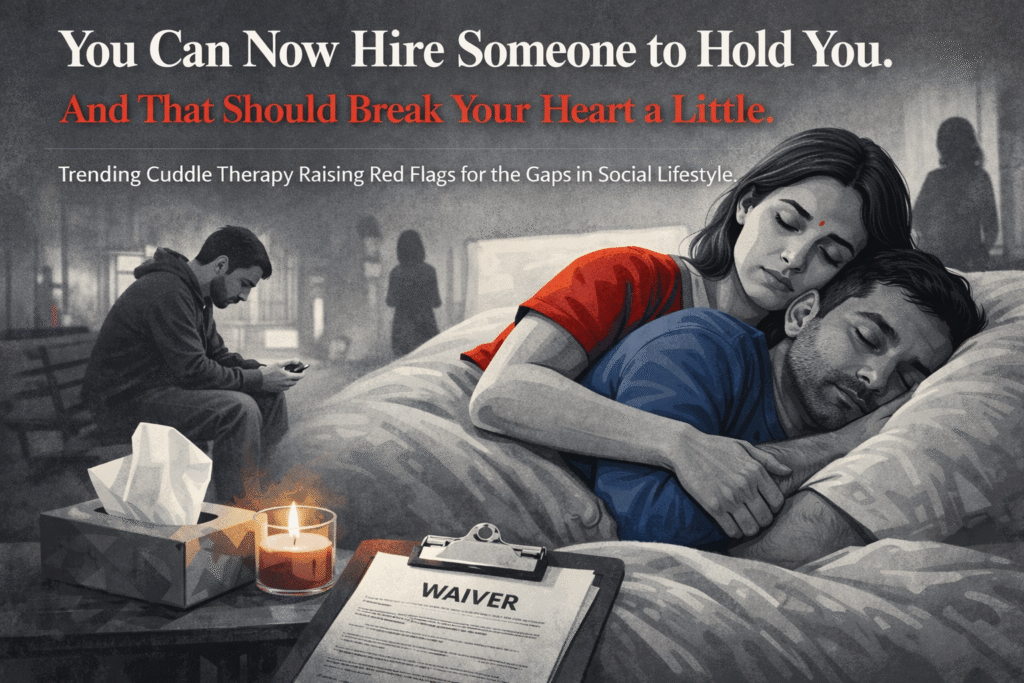
It was winter 2017. My friend Neha, freshly enrolled at Harvard, was back home for a few weeks. Over tea that kept going cold because we kept talking, she mentioned that some of her classmates were offering paid cuddle services to the lonely and the elderly and charging handsomely for it. I laughed. Fully, disbelievingly, this-is-peak-America laughed. Neha didn’t. She looked at me with quiet certainty and said, “Give it ten years. India will be there too.”
Eight years. That’s all it took.
By 2025, cuddle therapy had arrived in Indian newspapers, wellness columns, and urban conversations with the calm confidence of a trend that knows it belongs. In Delhi-NCR, certified cuddlers charge ₹3,000 to ₹5,000 per session. In Mumbai and Gurugram, premium studios billing “non-sexual therapeutic touch” go well past ₹20,000 for an evening. What Neha’s classmates did for beer money in Boston is now a profession in India with practitioners, pricing, and something resembling a code of ethics.
The Science Is Real. The Sadness Behind It, More So.
Human touch releases oxytocin, reduces cortisol, lowers blood pressure, and restores the quiet sense that someone, somewhere, gives a damn. A 2024 Ipsos survey found that 53% of urban Indians report stress that meaningfully disrupts their daily lives. Therapists across cities are now regularly seeing patients with what clinicians call “touch starvation” people who have gone months without a single, unremarkable human embrace. Priya, a Mumbai professional who works fourteen-hour days, put it simply: “I don’t want conversation. I just want someone to sit next to me and not leave.” She is not an outlier. She is a generation.
Warm Hands, Murky Waters
The concern is not the concept , it is the chaos around it. Unlike the West, India has no regulatory framework, no standardised certification, no legal scaffolding for this practice. Psychiatrist Dr. Shalini Mehra warns, “Without accountability, what is marketed as healing can quickly become exploitation.” In a country still navigating consent and power imbalances in deeply personal spaces, that is not a footnote. That is the headline within the headline.
What We Really Broke
Cuddle therapy is not a wellness trend. It is a receipt , proof of what we lost when we optimised our lives and accidentally evicted warmth from them. The neighbour who once sat with you. The friend who didn’t need words. The ordinary, unremarkable, irreplaceable act of just being there. We built gleaming, connected, efficient lives and somehow ended up profoundly alone in all of them.
When the market supplies what community once gave freely, something fundamental has fractured. Neha was right. And the saddest part isn’t that people are paying to be held.
It’s that they had to.
About The Author