Guest Writer: Seema Pandey
As Indian cities fill their walls and flyovers with colour, an artist asks whether we are creating lasting visual memory or just adding to the clutter and why the answer may lie in how little we teach ourselves to see.
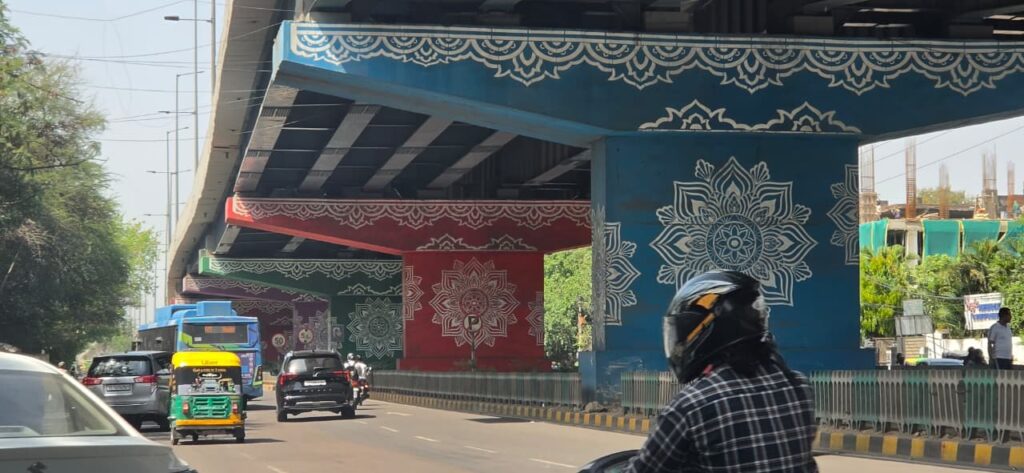
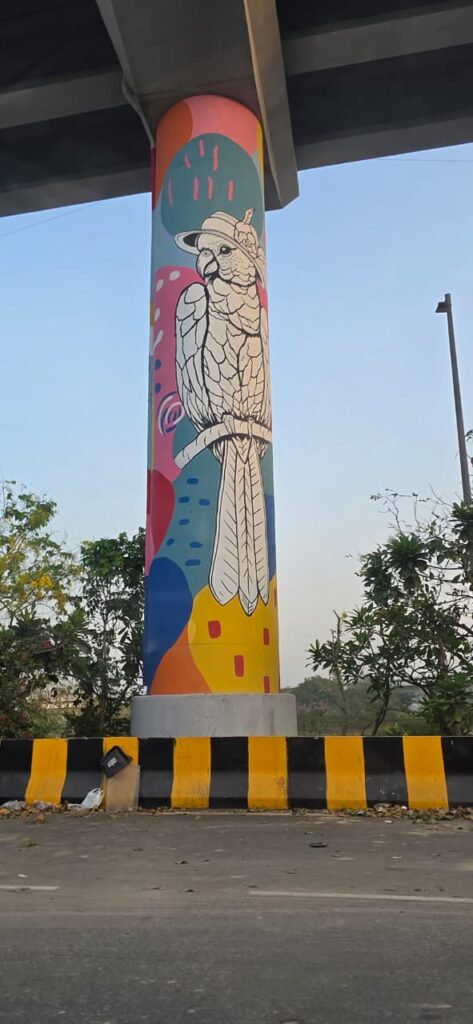
Driving through Delhi these days, one cannot help but notice painted walls, brightly coloured flyovers, decorative pillars and installations appearing at roundabouts across the city. Every few months there seems to be another addition. Much of it is presented as city beautification and art promotion.
Yet each time I encounter one of these projects, I find myself returning to the same question, Who is choosing what we see? This is not a question about budgets. Nor is it a question about whether our cities should have public art. They absolutely should.
The real question is what understanding of art guides these decisions? Perhaps we are asking the wrong question altogether. Instead of asking whether something qualifies as art, we should be asking something far more important. Does it create a visual experience, or does it create visual noise?
A visual experience stays with us. It alters the way we see a place. It becomes part of memory. It invites reflection, engagement and repeated viewing.
Visual noise does something very different. It occupies space. It demands attention for a moment and is then forgotten. It decorates a surface without enriching perception. It makes a place busier without necessarily making it more meaningful or beautiful.
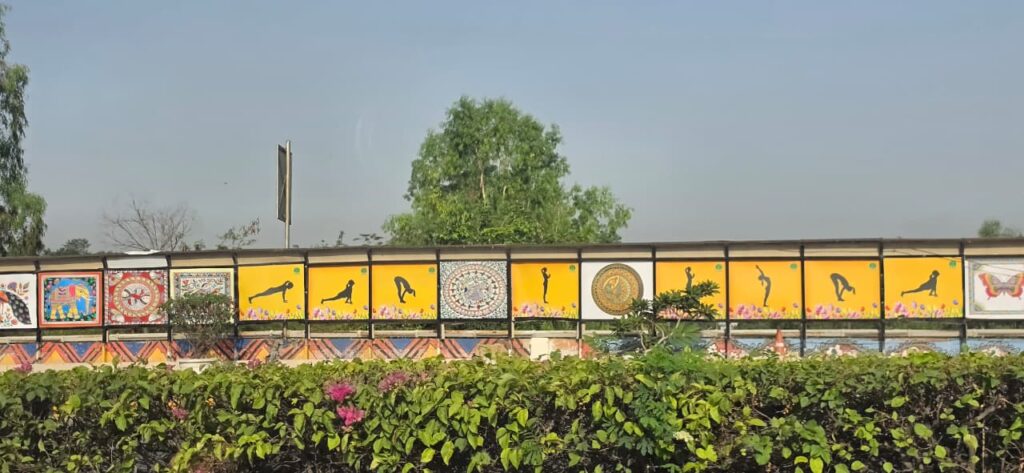
This distinction matters because public spaces shape the visual environment of millions of people every day.
If the purpose is genuinely to bring art into public life and promote artists, why are more opportunities not being created for artists to contribute to public spaces in substantive ways? And if commissioning new works is not always possible, why are we not making greater use of the vast collections that already belong to the public?
Institutions such as the Lalit Kala Akademi, the National Gallery of Modern Art and museums across the country hold thousands of artworks. Much of this art remains unseen by the very people who, through public funding, have helped preserve it. Why should these works remain confined to storage rooms and institutional walls? Why can they not be brought into public spaces through reproductions, rotating displays, digital exhibitions, curated outdoor installations and other innovative forms of access?
We often speak about taking art to the people. Public spaces offer exactly that possibility. Public art need not always mean creating something new. It can also mean creating access. It can mean allowing people to encounter art in their everyday lives rather than expecting them to visit museums and galleries. It can mean bringing collections to the public instead of waiting for the public to come to the collections.
For many people, public spaces may be the only galleries they ever experience. What we place there matters. A city does not become culturally rich simply because every available surface has been covered with colour.
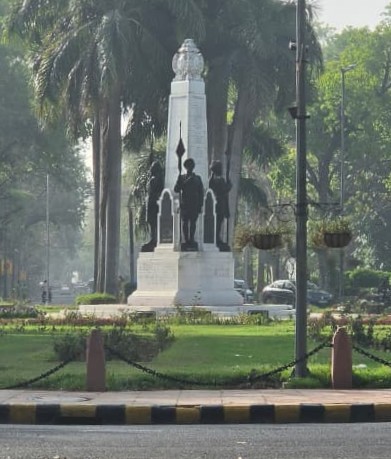
As an artist, I understand that what is left untouched is often as important as what is added. Empty space allows the eye to rest. It allows architecture, trees, light, shadows and the natural character of a place to perform their own role. When every surface demands attention, nothing truly holds attention. A city, like a painting, needs areas of rest. Through this article I am trying to make an argument for better public encounters with art. Ironically, we do not need to look elsewhere for examples of meaningful public art. India already has a rich tradition of it. We have simply stopped paying attention.
Ramkinkar Baij’s Yaksha and Yakshi outside the Reserve Bank of India continue to stand with dignity decades after they were installed. They are monumental without being loud. They belong to the site. They engage with labour, prosperity, history and the human condition in ways that reward repeated viewing.
Debi Prasad Roy Chowdhury’s Triumph of Labour in Chennai remains one of the most powerful public sculptures in the country. It does not depend on spectacle. Its strength comes from artistic conviction. One does not need to know art history to feel the force of those labouring bodies pushing against resistance.
Then there is Gyarah Murti in Delhi. Generations have passed by it. Many may not know the sculptor’s name, but they know the work. It has become part of the city’s collective memory.
That is what successful public art does.
It becomes part of how a city remembers itself.
Satish Gujral’s mural at the Delhi High Court reminds us of a time when artists were invited to contribute meaningfully to institutions and public buildings. The artwork is not an afterthought attached to a structure. It is part of the building’s identity.
Another work that remains vivid in my memory is the vast mosaic mural on the façade of the Children’s Book Trust building, which houses Shankar’s International Dolls Museum in New Delhi. Designed by the distinguished modernist artist K. S. Kulkarni and installed in the mid-1960s, the mural transformed an ordinary building façade into a work of public art. I still remember seeing it decades ago while visiting the museum as a schoolgirl. At the time, I knew nothing about art history, public art or modernism. Yet the mural stayed with me. That, perhaps, is the true measure of successful public art. It enters memory before it enters scholarship. Long before I knew the artist’s name or understood its significance, I remembered the mural. Its presence had already become part of my memory.
I would also mention Amarnath Sehgal’s monumental mural created for Vigyan Bhavan. Whether one likes a particular artwork is beside the point. The important thing is that there was a time when artists were considered essential contributors to public life rather than decorative service providers.
These works were not created because someone wanted to fill an empty wall or occupy an unused corner. They emerged from a belief that art possesses value beyond utility. More importantly, they emerged from a belief that artists have something meaningful to contribute to public life.
Somewhere along the way, we seem to have become more concerned with filling spaces than understanding them. The question is not whether every intervention succeeds or fails.
The question is whether the collective effect enriches our visual environment or simply adds another layer of noise.
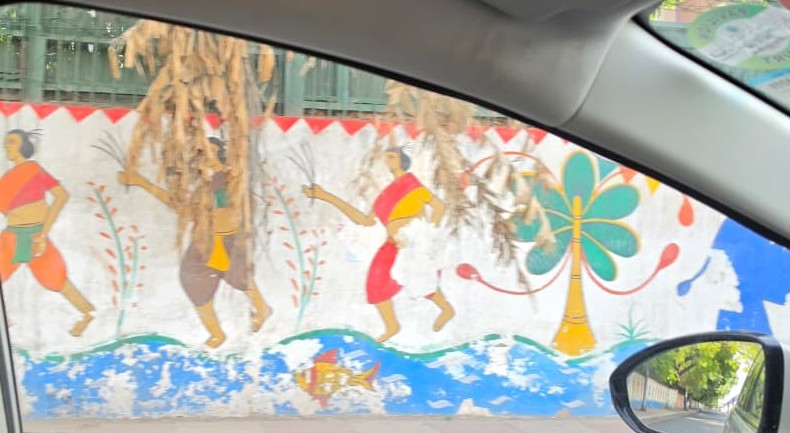
The problem, I believe, begins much earlier than public projects.
It begins with education.
We constantly speak about creativity, innovation, culture and heritage. Yet remarkably little attention is given to art history, aesthetics and visual literacy.
Every child studies history regardless of whether they become a historian.
Every child studies science regardless of whether they become a scientist.
Every child studies mathematics regardless of whether they become a mathematician.
Then why is art history treated as specialised knowledge meant only for artists?
Learning about art is not simply learning how to draw or paint. It is learning how human beings have thought, imagined, questioned and expressed themselves across centuries. It is learning how to observe. How to compare. How to recognise nuance. How to distinguish between what is meaningful and what is merely attention grabbing.
Art history should not be reserved for art students alone. Just as history helps us understand the world we inherited, art history helps us understand the visual world we inhabit. Much of what we know about human civilisation itself has come through visual culture seen in cave paintings, murals, monuments, miniatures, manuscripts, textiles and countless other artistic expressions.
Art education is meant to produce people who can observe, interpret, engage and question thoughtfully with the visual world around them.
And perhaps that is what is missing.
When I compare much of what is being called public art today with what was created in ancient India, medieval India or even during the decades immediately following Independence, I cannot help wondering what changed.
Perhaps the problem is not always a lack of intention. Perhaps it is a lack of understanding. The people making these decisions may genuinely want cities to look better. They may genuinely want to promote culture. But if one has never studied art history, aesthetics or visual culture in any meaningful way, how does one decide what belongs in a public space? How does one judge what genuinely enriches a public space? This is not a criticism of individuals. It is a criticism of a system that expects people to make cultural decisions without cultural education. Many children in India complete twelve years of schooling without ever entering a museum, a gallery or an artist’s studio. For them public spaces may be the only place where they encounter art outside textbooks. If that encounter is reduced to what is emerging on city walls these days, we should not be surprised when society develops a limited understanding of art.
Public art is not only about beautifying a city. It is also about shaping public imagination. We often describe India as a culturally rich country. But culture does not survive through speeches, slogans and annual celebrations alone. Culture reveals itself in everyday life. It reveals itself in schools, institutions, roads, parks, neighbourhoods and public buildings. All one has to do is look around. Look at our streets. Look at our neighbourhoods. Look at our public spaces. Look at what we have learned to accept as our visual environment. Then ask what we mean when we say we are culturally rich. India has artists. It has art schools. It has museums. It has academies. It has collections. It has a long and remarkable artistic history. What we seem to lack is the will to connect these resources to public life.
There is another question that often comes to mind. Why do major public commissions so frequently return to the same names? India is not lacking in artists. It is not lacking in sculptors, painters, photographers, printmakers, installation artists or public art practitioners. Every generation produces artists with distinct visual languages and ways of thinking. Yet when a new airport, public building or civic project is announced, one often encounters the same names being commissioned repeatedly. It is not against any individual artist. An artist may fully deserve every commission they receive. The question is about the process. Shouldn’t public projects expose people to a wider range of artistic voices? Shouldn’t new sites invite new conversations? Shouldn’t different cities, buildings and contexts generate different artistic responses? The reasons may vary…favouritism, institutional comfort, lack of imagination or administrative convenience. Whatever the reason, the outcome is the same. The public receives a narrower visual experience than it could.
A healthy artistic ecosystem should be constantly discovering, commissioning and presenting new voices alongside established ones. Public art should expand our visual horizons, not narrow them. The purpose of public art is not merely to place an object in a public space. It is to create a relationship between people, place and ideas. That relationship becomes richer when multiple artistic voices are allowed to participate in shaping it. It is equally important that our children encounter the works of artists who have helped shape the artistic and cultural identity of this nation. Architects, curators, art historians and urban planners should be included in selection committees. Art colleges should be invited into these conversations.
Why is public art so often treated as a contractor’s assignment rather than a cultural project?
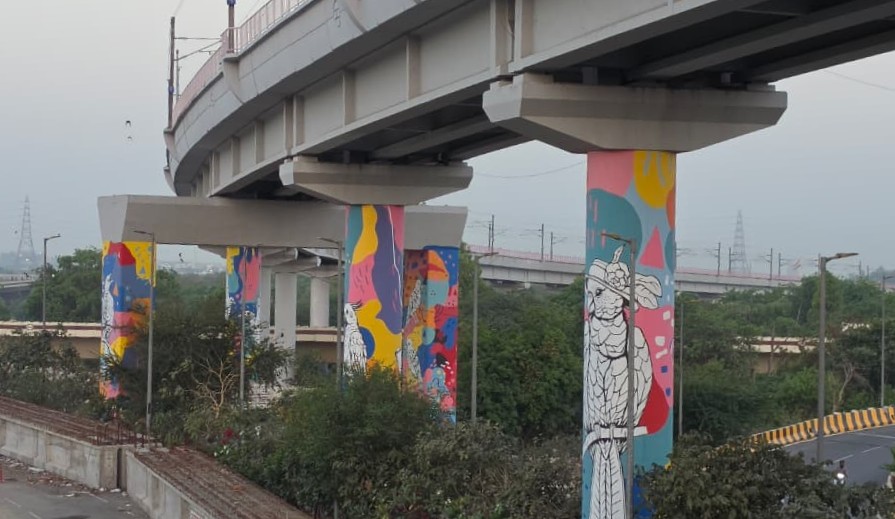
These are not accusations.
They are questions.
Questions about how we define art, how we understand culture and whether we are willing to educate ourselves before deciding what millions of people will see every day. Because the visual environment of a city eventually influences how a society sees itself.
This article is not really about painted walls, decorative sculptures or beautification drives. It is about visual literacy. It is about public culture. It is about access to art. And it is about the responsibility of those who shape the visual environment of millions of people.
For years, I have argued that art education is not about producing artists. It is about developing the ability to observe, question, compare, interpret and make thoughtful choices. The same principle applies to our public spaces. Before deciding what should fill our walls, roads, parks and public buildings, we must first learn how to see.
And perhaps that is the question at the heart of all this
Have we forgotten how to see?
Note: Writer , Seema Pandey is a visual artist, art educator, writer. Her art practice explores the complex relationships between human nature, emotions, memory, and the environment
About The Author