The Social Media Ban That Triggered a Revolution; and Why Beijing Is Watching With Interest
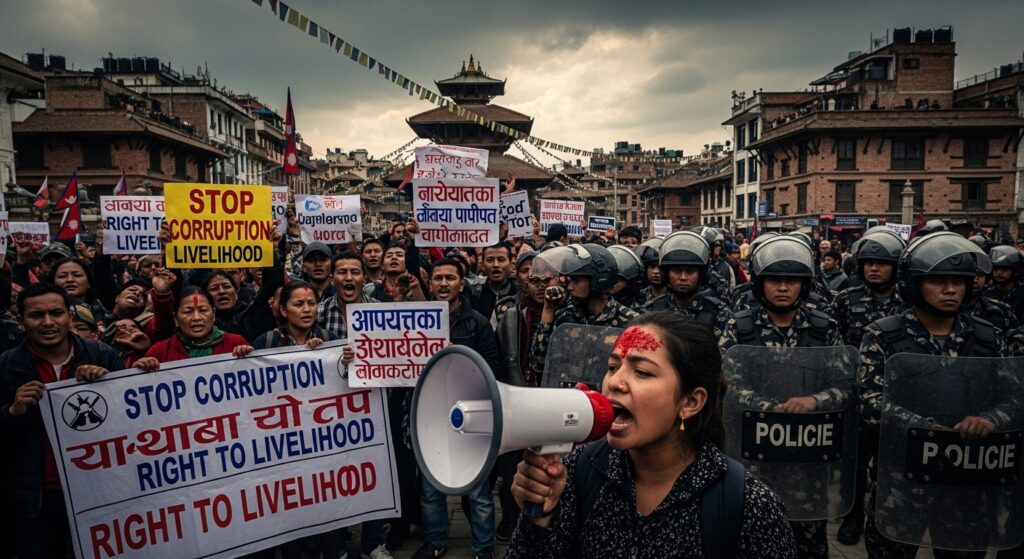
In the space of 72 hours, what began as teenage frustration over banned Instagram stories has exploded into Nepal’s deadliest political crisis in decades. At least 19 people have been killed and over 100 injured during violent protests against the government’s social media ban, turning the streets of Kathmandu into a battlefield between riot police and digitally native protesters demanding more than just restored WiFi access.
The immediate casualty count tells only part of the story. This is Nepal’s Generation Z making a violent statement about their future, one that could reshape the strategic balance of South Asia while offering China an unprecedented opportunity to expand its influence right at India’s doorstep.
The Spark: When Governments Underestimate Digital Dependency
The KP Oli government blocked 26 social media platforms, including Facebook, Twitter, WhatsApp, and YouTube, for failing to register with the Ministry of Communications and Information Technology on September 4. The decision wasn’t arbitrary, global tech giants had ignored Nepal’s sovereignty demands, refusing to comply with local registration requirements that dozens of other countries have successfully implemented.
But timing is everything in politics. The social media blackout came amid a corruption scandal that had already undermined public trust. For Nepal’s youth; facing unemployment rates exceeding 20% and limited economic opportunities, these platforms weren’t luxury entertainment but essential infrastructure for employment, education, and political expression.
Prime Minister KP Sharma Oli defended the ban, stating “Nation Being Undermined Cannot Be Tolerated”, but his government fundamentally miscalculated the depth of digital dependency among Nepal’s 30 million citizens. In a country where over 750,000 people seek jobs abroad annually, social media platforms serve as lifelines connecting families, enabling remittances, and creating the few economic opportunities available to young Nepalis.
The Response: When Digital Natives Fight Back
What happened on September 8 shocked even seasoned observers of South Asian politics. Police in Kathmandu opened fire on protesters demonstrating against the government ban, killing at least 17 people and wounding 145. Police responded with water cannons, tear gas, rubber bullets and live ammunition, leaving at least nineteen dead and hundreds injured.
The violence wasn’t spontaneous teenage rebellion but organized resistance by digitally sophisticated protesters who understand the power of global connectivity. These aren’t traditional political demonstrations, they represent a generational clash between aging political elites and young Nepalis who’ve grown up expecting digital rights as fundamental freedoms.
The protests reflect the widespread frustration of young people with government efforts to tackle corruption and boost economic opportunities. The social media ban became the final trigger for deeper grievances about institutional corruption, economic stagnation, and political systems that seem designed to benefit the same rotating cast of leaders who have dominated Nepali politics since the end of the monarchy.
The Deeper Crisis: Beyond Digital Access
The casualty count from Monday’s violence, the highest in a single day since Nepal’s civil war ended in 2006—reveals fractures that extend far beyond internet policy. Nepal has experienced 13 different government formations in just 17 years since abolishing the monarchy, creating a political instability that makes effective governance nearly impossible.
The same aging politicians, Oli, Sher Bahadur Deuba, and Pushpa Kamal Dahal “Prachanda”; have rotated power repeatedly without delivering meaningful reforms. For a generation watching their peers flee en masse (more than 7 million Nepalis now live abroad, representing 23% of the total population), the social media ban felt like yet another barrier imposed by leaders who don’t understand contemporary realities.
The economic backdrop is particularly grim. Youth unemployment exceeds 20%, formal sector job creation remains minimal, and traditional industries offer limited opportunities for educated young people. In this context, digital platforms aren’t entertainment—they’re essential economic infrastructure.
The Geopolitical Wild Card: China’s Strategic Opportunity
While Nepal burns, Beijing has been positioning itself with remarkable strategic patience. Just months before this crisis, in December 2024, China and Nepal signed a comprehensive Belt and Road Initiative framework agreement. Significantly, this made China the first destination for Prime Minister Oli’s foreign visits, breaking the traditional pattern of Nepali leaders visiting India first.
The timing appears almost orchestrated. As young Nepalis rage against their government’s authoritarian tendencies, China offers an alternative model: economic development without democratic conditionalities. The BRI framework includes ambitious infrastructure projects worth hundreds of millions of dollars, creating the kind of employment opportunities that Nepal’s traditional political system has failed to deliver.
Even more concerning for regional stability, China-Nepal military cooperation has deepened dramatically. The “Sagarmatha Friendship-2025” joint military exercise began on September 6; just two days before the deadly protests. This represents the fourth edition of China-Nepal military drills, with China having already supplied $77.3 million worth of military equipment since 2017.
Beijing’s patient investment strategy is paying dividends. Bilateral trade more than doubled to $709 million in fiscal year 2023-24, though the structure reveals Nepal’s growing dependence: imports from China totalled $696 million while exports were just $12.3 million. This isn’t trade partnership, it’s economic integration that creates political leverage.
India’s Strategic Nightmare: Losing the Himalayas
For India, Nepal’s crisis represents a fundamental challenge to its Himalayan security doctrine. The 1,751-kilometer open border with Nepal becomes a massive vulnerability if Kathmandu aligns strategically with Beijing. Six million Nepalese nationals working in India create deep economic interdependencies that political tensions increasingly threaten.
India’s past attempts at economic coercion, particularly the devastating 2015 border blockade, backfired spectacularly by strengthening anti-Indian nationalism. The current crisis demonstrates how quickly Nepal’s democratic institutions can collapse, potentially creating opportunities for authoritarian solutions, whether homegrown or Chinese-backed.
Most alarmingly, the generational dimension of this crisis suggests deeper structural problems. Nepal’s Gen-Z protesters aren’t just angry about current conditions; they’re rejecting the entire post-monarchy political settlement. Their willingness to face live ammunition for digital rights and anti-corruption causes suggests profound alienation from traditional politics.
The Question That Will Define South Asia’s Future
As smoke clears from Kathmandu’s streets and families mourn their dead, a fundamental question emerges: Can Nepal’s political system adapt to contemporary realities, or will the failure of democratic governance create opportunities for alternative models, including Chinese-backed authoritarianism that prioritizes economic development over political freedoms?
The international response will be crucial. The UN has expressed readiness to assist Nepal following the deadly protests, while Amnesty International has called for accountability, stating the use of lethal force against protesters not posing an imminent threat is a grave violation of international law.
But diplomatic statements won’t solve the underlying crisis. Nepal needs economic opportunities for its young population, political systems that deliver effective governance, and leaders who understand that digital connectivity isn’t a privilege but essential infrastructure for 21st-century development.
The digital revolution that began with banned Instagram accounts has become a geopolitical earthquake. In the rubble of Nepal’s democratic experiment, competing models for development and governance are emerging. Whether Nepal’s next chapter is written in Kathmandu, New Delhi, or Beijing may depend on which power best understands what Nepal’s young protesters died trying to achieve: a future worthy of their sacrifices.
The stakes couldn’t be higher. In the Himalayas, where great powers have competed for centuries, a new generation is demanding its voice be heard. How that voice is answered will echo through South Asian geopolitics for decades to come.
About The Author