
Indian Tamil-origin jurist honoured for advancing international law, prosecuting atrocities and strengthening accountability for victims of violence
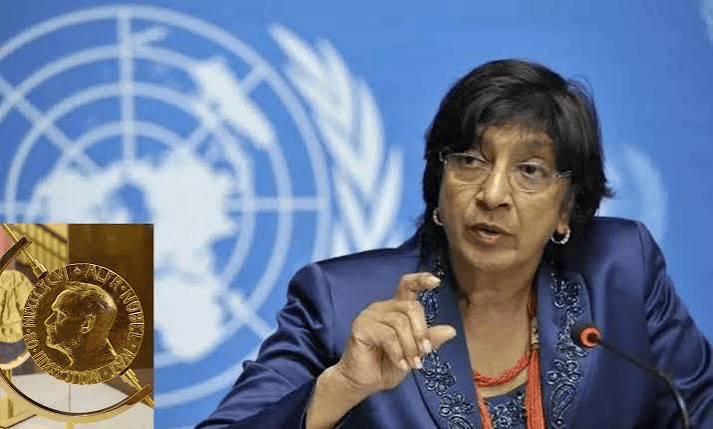
The 2026 Nobel Peace Prize awarded to Navanethem “Navi” Pillay carries a powerful message for India and the wider world: lasting peace cannot be built without justice, and no individual or state should be above the law.
The Norwegian Nobel Committee announced the award on October 9, recognising Pillay for her efforts to promote peace and international law. Born into a family of Indian Tamil origin in Durban, South Africa, during apartheid, Pillay’s journey from confronting racial discrimination to serving at the highest levels of international justice makes her achievement particularly significant for India, whose diaspora has played a long-standing role in struggles for equality and human rights.
Her Indian connection is through her ancestry, rather than Indian nationality. Her life and career reflect how the experience of discrimination can shape a commitment to universal human dignity and legal equality.
Pillay’s nomination and eventual selection for the prize reflect her decades-long contribution to ensuring that war crimes, crimes against humanity and genocide are subject to prosecution. The Nobel Committee highlighted her independence, moral courage and role in strengthening institutions that hold perpetrators accountable.
Her career spans the South African High Court, the International Criminal Tribunal for Rwanda and the International Criminal Court. She also served as the United Nations High Commissioner for Human Rights. Until recently, she chaired the UN Independent International Commission of Inquiry on the Occupied Palestinian Territory. She is currently a judge at the International Court of Justice in the case concerning allegations of genocide against Myanmar.
One of her most consequential contributions came during the Rwanda tribunal proceedings. Her influence helped establish that rape and sexual violence could constitute crimes against humanity and acts of genocide. She also played an important role in a landmark case involving incitement to genocide through propaganda.
For India, Pillay’s recognition resonates beyond her Tamil heritage. Her grandparents’ migration from India to South Africa reflects the history of Indian communities that built new lives abroad while confronting racial and social barriers. Her achievement also highlights the global contribution of people of Indian origin to law, public service and human rights.
The award comes at a time when international institutions face growing pressure from geopolitical rivalries and conflicts. For India, which has historically emphasised multilateralism and peaceful dispute resolution, Pillay’s work offers an opportunity to reflect on the importance of credible international institutions, equal application of the law and accountability for grave human rights violations.
The Nobel Committee has not publicly identified individual nominators. The prize announcement explains why Pillay was selected, rather than establishing who nominated her. Its central message is that justice is not separate from peace: it is one of its essential foundations.
Pillay’s Nobel is therefore more than recognition of an accomplished jurist. It honours the principle that even in a world divided by power and politics, the pursuit of justice must remain universal
About The Author