Serve, Save and Starve: India’s Constabulary Conundrum
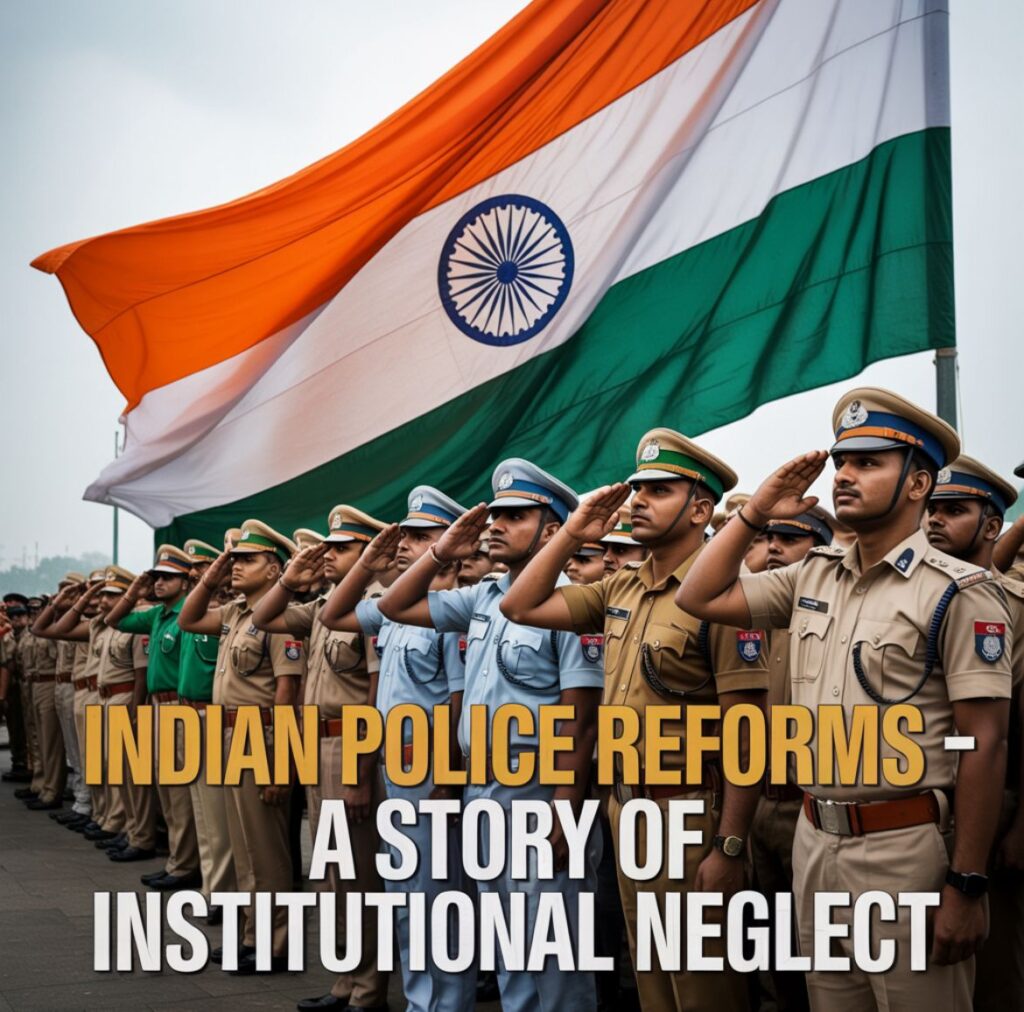
A Chinese police constable lives in subsidized modern housing near work. An American officer earns twenty times more with housing allowances. An Indian constable spends half his salary on a distant slum rental. Same job, same dangers, vastly different dignity. India’s police welfare isn’t broken; it’s criminal.
A constable earning ₹25,000 monthly, forced to spend nearly half his salary on a cramped rental far from his posting, returns home after a 14-hour shift to find his family squeezed into a single room. His counterpart in China lives in a subsidized modern complex , while his American peer receives housing allowances worth more than our constable’s entire salary. This isn’t just inequality,it’s institutional betrayal. When a nation that asks its police to protect 1.4 billion citizens provides worse welfare than authoritarian regimes and developing peers, it reveals a systemic failure that breeds corruption, destroys morale, and ultimately endangers public safety. India’s police welfare system isn’t broken; it’s non-existent.
Guarding the Guards: The Welfare Wasteland
India’s approach to police welfare represents one of the most glaring administrative failures in modern governance. While the nation demands unwavering service from its 1.6 million constables and head constables, the backbone of law enforcement,it allocates a mere 15-25% of police budgets to their welfare, the lowest among comparable nations.
This stark reality becomes even more disturbing when viewed against international benchmarks. China dedicates 50-65% of its police budget to welfare, ensuring near-universal housing and comprehensive benefits. The United States allocates 65-80%, providing patrol officers with salaries equivalent to ₹5 lakh monthly and substantial housing allowances. Even Brazil, despite its own challenges, commits 35-50% to police welfare, while Indonesia manages 20-35%,still significantly higher than India’s allocation.
The human cost of this neglect manifests in devastating statistics. Constables face suicide rates 1.5 times the national average, a direct consequence of financial stress, poor living conditions, and absent mental health support. When those sworn to protect society cannot protect themselves from economic distress, the entire social contract crumbles.
The salary disparity tells its own story. Indian constables earn approximately ₹25,000 monthly (PPP-adjusted), while their Chinese counterparts receive ₹50,000, Brazilians ₹40,000, and Indonesians ₹30,000. American patrol officers command ₹5 lakh monthly, twenty times an Indian constable’s salary. These aren’t mere numbers; they represent quality of life, family security, and professional dignity.
Shelter Skelter: The Housing Catastrophe
The housing crisis facing India’s constabulary exposes the most visceral aspect of welfare neglect. Only 30% of constables have access to official quarters, compared to 70% for senior officers,a disparity that reeks of institutional classism. Those “fortunate” enough to receive quarters often find themselves in dilapidated structures lacking basic amenities like running water, electricity, or proper sanitation.
The remaining 70% over one million constables,must navigate the private rental market on salaries that barely sustain basic family needs. Spending 20-40% of their income on housing, often located far from their postings due to affordability constraints, these officers face additional commuting costs and stress that compound their already challenging working conditions.
International comparisons reveal the depth of India’s housing failure. China provides near-universal subsidized housing in modern complexes, ensuring constabulary-equivalent ranks live close to duty stations. American patrol officers receive housing allowances ranging from $1,000-2,000 monthly in high-cost cities, with 60% accessing affordable housing through various support mechanisms. Brazil’s wealthier states provide quarters to 50% of constabulary, while even Indonesia manages 40% coverage with basic but functional accommodations.
The socio-economic ramifications extend far beyond individual hardship. Housing insecurity disrupts family stability, creates additional financial burdens, and generates stress that affects job performance. When constables struggle to provide basic shelter for their families, the temptation for corruption increases exponentially. A 2019 Transparency International study directly linked poor police welfare to higher corruption rates, creating a vicious cycle that undermines both officer integrity and public trust.
Pension Peril: Securing Tomorrow, Sabotaging Today
India’s transition from the Old Pension Scheme (OPS) to the New Pension Scheme (NPS) represents perhaps the most shortsighted reform in recent administrative history. While marketed as modernization, the NPS exposes retirees to market volatility, potentially reducing returns by 30-50% compared to the guaranteed benefits of OPS. For constables already struggling with low salaries and poor working conditions, this pension uncertainty adds another layer of anxiety about their post-service financial security.
The contrast with international pension systems is stark. China maintains a secure defined benefit system that provides predictable retirement income. The United States offers a multi-pillar approach combining defined benefit pensions, 401k/457 plans, and Social Security, creating multiple safety nets for retirees. Brazil’s generous defined benefit system, though under reform pressure, still offers more security than India’s market-linked approach. Even Indonesia’s modest defined benefit system provides greater predictability than the NPS.
This pension insecurity has immediate consequences for serving officers. Knowing that their post-service years may be marked by financial struggle, constables lose motivation and professional commitment. The psychological impact of uncertain retirement prospects affects current performance, creating a workforce focused on survival rather than service excellence.
Healthcare provisions further compound the welfare crisis. The Central Government Health Scheme (CGHS) is chronically overburdened, with constables facing limited access to quality medical care. While China provides comprehensive state healthcare coverage and American officers receive employer-subsidized health plans, Indian constables often resort to expensive private healthcare or suffer with inadequate treatment.
Mental health support, critical for a profession facing daily stress, violence, and public scrutiny is virtually non-existent in India’s police system. The absence of structured mental health programs stands in sharp contrast to growing investments in the United States and China’s state-controlled support systems.
The economic parameters surrounding police welfare reform are sobering yet manageable. India’s police budget of approximately ₹2.5 lakh crore yields a per-capita spend of ₹1.2 lakh, significantly lower than the United States (₹5 lakh) or China (₹3 lakh, PPP-adjusted). Increasing welfare allocation to Brazil’s level would require an additional ₹50,000-75,000 crore annually,substantial but achievable given India’s economic scale.
The path forward demands immediate, comprehensive reform. Welfare allocation must increase to 35-50% of police budgets, aligning with international standards. A massive housing construction program must provide quarters for 70% of constables within a decade, with rental subsidies bridging the gap. Pension security requires either hybrid OPS-NPS models or guaranteed minimum pension schemes. Enhanced healthcare access, professional mental health support, and modernized training programs are non-negotiable requirements.
Legislative intervention is essential. A national police welfare policy must prioritize constabulary needs, moving beyond the current system that favors senior officers while neglecting the rank and file. The economic argument for reform is compelling,reduced corruption losses could offset welfare costs, while improved morale and professionalism would enhance overall law enforcement effectiveness.
India’s police welfare crisis isn’t just an administrative problem; it’s a moral failure that undermines democratic governance and public safety. When those who serve and protect cannot secure basic dignity for themselves and their families, the entire security apparatus becomes vulnerable. Reform isn’t optional, it’s an urgent imperative for national security and social justice.
About The Author