Zee and ANI’s outsized coverage turned a scattered student gathering into a “movement” while the actual crisis in India’s schools and colleges goes unaddressed
Guest Author: Mahraj Shah
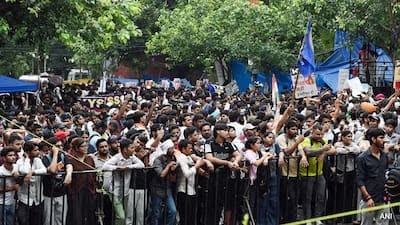
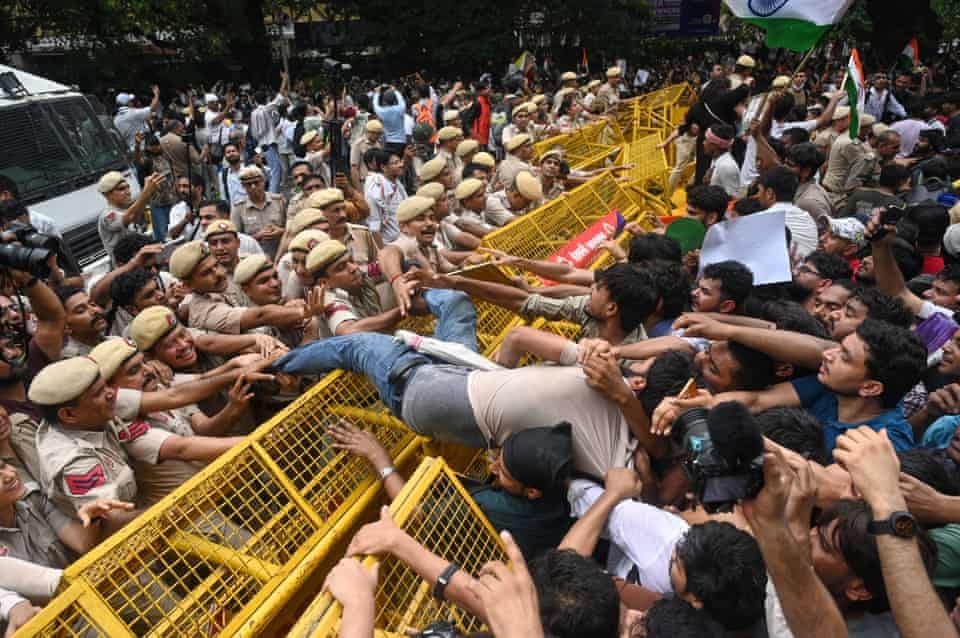
Zee and ANI, appear to have given disproportionate coverage to what was projected as a major student movement, thereby helping create a narrative around a student protest that, in reality, never acquired the character of a broad-based movement. Other television channels subsequently followed the same narrative.
The gathering was not, in any meaningful sense, a movement aimed at educational reform. Not a single concrete educational reform appeared to be central to its demands. The few students who participated seemed to have been misled into believing that the resignation of a Minister or even of an entire Cabinet would somehow resolve the deep-rooted problems facing the education system. But political resignations, by themselves, cannot reform education. What is required is a clearly defined course-correction roadmap, backed by credible solutions capable of convincing people that the proposed reforms can genuinely improve the system.
The episode, therefore, appeared less like a movement for educational transformation and more like an attempt to unsettle a democratically elected government, disrupt its functioning and create political instability without any clear vision for reforming an education system that suffers from a massive gap between policy formulation and actual implementation on the ground.
Whether one looks at skill development or the conventional education system, the shortcomings are evident. Schools, colleges and universities often appear reluctant to genuinely add value to the education and employability of students, even as many private institutions continue to generate substantial profits. Government schools, colleges and universities, meanwhile, suffer from shortages of quality faculty, inadequate research facilities and insufficient funding. The contractual teachers who do the actual work of teaching often perform admirably despite the odds, yet their salaries are routinely delayed and they receive no incentives for their effort a telling symptom of a system that runs on the goodwill of its most poorly treated employees.
The result is that our educational institutions are increasingly producing a semi-educated and inadequately skilled workforce that is often unable to meet the requirements of the employment market. The frustration among the youth is understandable. Grand claims are made about industrial internships, skill-development institutions and employment-oriented education, but on the ground, many programmes seem more focused on generating data, reports and statistics than on delivering tangible solutions.
The education sector is also plagued by rampant and unchecked corruption. It is deeply disturbing that a large number of colleges, universities and professional institutions appear to be controlled or influenced by political interests in collaboration with powerful and well-connected business groups. When education becomes an instrument for political patronage and commercial profit rather than a means of building knowledge, skills and character, the consequences for society are disastrous.
This is the real crisis facing education in India. It requires serious introspection, institutional accountability, transparent governance, investment in quality faculty and research, genuine industry linkages, and a clearly defined roadmap for improving learning outcomes and employability.
What the country does not need is a manufactured protest narrative, political theatrics or the mere demand for resignations. It needs a serious, evidence-based and implementable programme for the comprehensive reform of the education and skill-development ecosystem.

About The Author