Vast petroleum reserves cannot guarantee prosperity when pipelines, ports and airports become pressure points, and economic transformation depends on confidence that military power alone cannot secure.
The Kingdom’s greatest vulnerability is not the depletion of its reserves, but the exposure of the infrastructure on which its prosperity and transformation depend.
Saudi Arabia’s future is often discussed as though it rests on a single question: how long will its oil last? That is the wrong place to begin. The more urgent question is whether the Kingdom can continue turning its underground wealth into dependable revenue in a region where pipelines, airports and shipping routes have become instruments of coercion.
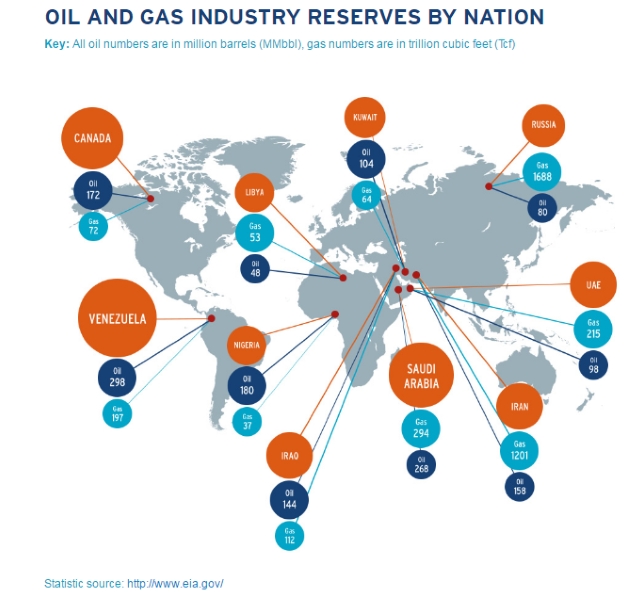
Saudi Arabia possesses approximately 267 billion barrels of proven oil reserves. At production of around 10 million barrels a day, that represents roughly seven decades of output. The calculation is neither a guarantee nor an expiry date. Production levels change, recovery technology improves and commercially recoverable reserves can expand. Demand, meanwhile, may become a greater constraint than physical exhaustion.
But none of these long-term calculations protects a tanker today. Oil acquires economic value through an entire chain of extraction, processing, transport, insurance and delivery. An adversary who disrupts one link can impose costs without capturing a single oilfield.
That is the strategic significance of the Houthi challenge.
Wealth cannot insulate a country from disruption
The Houthis do not need to defeat Saudi Arabia in a conventional war to damage its interests. Threats to shipping, strikes on infrastructure and attacks on airports can interrupt commerce, unsettle investors and force the Kingdom to spend heavily on defence.
This is the uncomfortable arithmetic of asymmetric conflict. The attacker seeks a vulnerable point; the defender must protect a network.
Saudi Arabia’s East–West pipeline illustrates both the value and the limits of adaptation. By carrying crude to the Red Sea, it provides an alternative to exports through the Strait of Hormuz. Yet a pipeline can itself be attacked, and tankers departing from Red Sea terminals face another set of maritime risks. Diversification reduces exposure. It does not make exposure disappear.
The same problem reaches beyond oil. Vision 2030 seeks to develop tourism, logistics, manufacturing and other sources of income. Those ambitions depend on confidence in the Kingdom as a place where people can travel, businesses can operate and capital can remain invested.
An attack on an airport is therefore more than a security incident. It threatens the everyday predictability on which economic diversification rests.
Yemen cannot be reduced to an Iranian operation
Iranian assistance has strengthened the Houthis, but treating the movement solely as an extension of Tehran leads to a defective diagnosis.
The Houthis emerged from northern Yemen’s own political and religious circumstances. Their territorial base, local networks and accumulated military experience help explain why years of Saudi-led operations did not dislodge them from much of the territory they controlled.
External support and domestic roots are not competing explanations. Both matter.
A response that concentrates exclusively on weapons supplies will neglect Yemen’s unresolved political conflict. A response that considers only local grievances will underestimate the regional networks that have increased the Houthis’ reach.
Saudi Arabia requires effective defence, but defence alone cannot produce a settlement. Protecting infrastructure and pursuing a negotiated outcome are complementary tasks, not evidence of contradictory policies.
Reform still depends on legitimacy
The Kingdom’s domestic transformation is equally difficult to capture in simple slogans. Restrictions on the religious police marked a significant transfer of authority towards regular state institutions. They did not erase the place of religion in Saudi society or the monarchy’s association with the custodianship of Mecca and Medina.
The holy cities retain their sacred standing regardless of changes in Saudi foreign policy. Their centrality to Islam, however, cannot provide physical protection for ports, refineries or airports.
The monarchy must sustain several foundations of legitimacy at once: religious responsibility, national security, economic opportunity and competent government. Failure in one can complicate progress in the others.
The appropriate response is neither to declare Saudi Arabia invulnerable nor to predict its collapse. Both positions mistake a complex transformation for a simple verdict.
The Kingdom’s resources remain formidable. Its vulnerabilities are nevertheless real. Its future will depend on credibility: the confidence that it can protect essential services, deliver on reform and contain conflict without allowing that conflict to consume its development agenda.
Saudi Arabia does not need to prove that its oil will last forever. It needs to show that the prosperity built around it can endure disruption,and that a broader economy can take root before the old advantages lose their force.
Image curtsey Wikimedia commons
About The Author