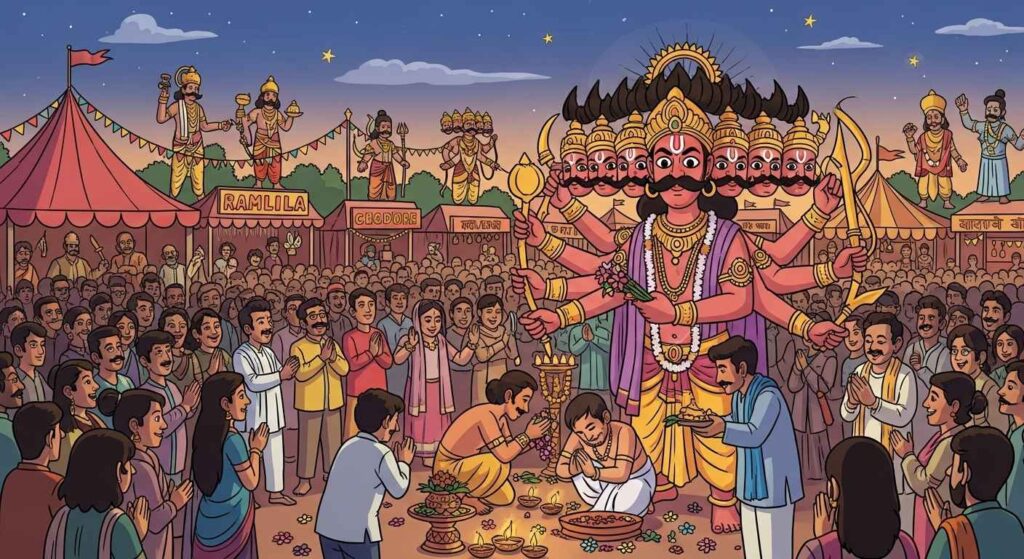
While Delhi and Lal Qila prepare for the fiery Ravana dahan, seven unique Indian towns honour him as a scholar, devotee, and revered ancestor
As the grand stages of Ramlila Maidan in Delhi and Lal Qila gear up for the spectacular burning of Ravana effigies this Dussehra, a familiar concern looms large—untimely rains and waterlogging threatening to dampen the celebrations. Yet, in some corners of India, the story takes an unexpected twist. Here, Ravana is not condemned, but worshipped.
While most of the country marks the triumph of good over evil by destroying the demon king’s effigy, seven regions honour him as a learned scholar, devoted follower of Lord Shiva, and even an ancestral figure.
Why Ravana Is Worshipped
Ravana is widely remembered as the ten-headed villain of the Ramayana, but he was also a master of music, astrology, and Ayurveda, and a devout worshipper of Shiva. Certain communities choose to respect these qualities rather than revile him for abducting Sita.
Seven Places Where Ravana Is Revered
- Bisrakh, Uttar Pradesh – Believed to be Ravana’s birthplace, locals consider him their ancestor and perform rituals in his honour instead of burning effigies.
- Kakinada, Andhra Pradesh – A temple dedicated to Ravana draws devotees who offer special prayers to him as a mighty Shiva devotee.
- Mandore, Rajasthan – Ancient Mandore celebrates Ravana as their son-in-law, as Mandodari, Ravana’s wife, hailed from this region.
- Mandsaur, Madhya Pradesh – Locals honour Ravana as a son-in-law of their soil, offering rituals rather than disdain.
- Kanpur, Uttar Pradesh – Some Brahmin families recognize his scholarship and devotion, performing pujas for his intellect.
- Jodhpur, Rajasthan – Certain communities venerate him for his spiritual knowledge and penance.
- Kolar, Karnataka – Here, Ravana’s connection with Shaivism is remembered, and locals offer prayers in his memory.
So, while Delhiites anxiously monitor the weather, hoping the skies don’t ruin their Dussehra spectacle, these seven towns celebrate the festival with a completely different meaning. In these places, Ravana is not a villain of the Ramayana, he is a figure of respect.
Dussehra, therefore, is not just the triumph of good over evil, it is also a vivid reminder of India’s diverse cultural tapestry, where multiple versions of a story can coexist.
About The Author