
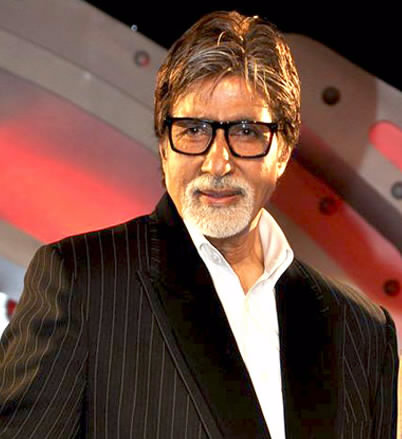
35 Years On, Amitabh Bachchan’s Remark on Stardom, Succession, and Humility Goes Viral
“When we were young, we replaced someone. Tomorrow, someone else will replace us.” Yet Amitabh Bachchan remains the man who has defied this cycle with his unwavering commitment, discipline, and craft.
More than three decades after Amitabh Bachchan uttered those words, they are circulating across social media once again; this time with a force that has little to do with nostalgia and everything to do with timely resonance.
An old BBC interview from 1991, featuring the actor at the very zenith of his stature, is doing the rounds online. It draws attention not because it captures Bachchan at his peak; history is replete with such footage, but because of what he says about the inevitable arrival of the next generation, and the limits of any actor’s right to judge their own importance.
The BBC archive frames the conversation as Bachchan’s meditation on the very idea of rating actors; his contention, delivered without a trace of self-importance, that performers do not enter the film industry to be rated. But it is one line from that exchange that has outlived the interview itself:
“We replaced someone. Tomorrow, someone else will replace us.”
For a man who had already become shorthand for Hindi cinema, it was a startlingly candid observation.
A Superstar Who Understood No Throne Is Permanent
Strip away the specifics, and Bachchan’s line does something rare: it divests stardom of its illusion of permanence.
Every generation believes it stands at the centre of the cultural universe. Every generation before it believed the same. The young displace the established; the established, in time, become the ones who are displaced; and another generation arrives behind them. There is no insult in that. No betrayal. Simply succession, working exactly as it always has.
It is precisely this understanding that makes the clip so resonant in a culture built on rankings, box-office arithmetic, follower counts, and the endless, exhausting business of declaring who is “number one.” Bachchan’s philosophy sits at the opposite pole: do the work, let the audience render the verdict, and understand, without bitterness, that your place will one day belong to someone else.
“It Is Not Our Job To Rate Ourselves”
The second, quieter provocation in the interview is Bachchan’s refusal to accept that actors should be the ones setting their own rank.
An actor performs. The audience watches. The audience decides. It sounds almost too obvious to state; until you notice how thoroughly that boundary has collapsed in an age when public figures wield unprecedented power to construct and promote their own image. Social media has blurred the line between being admired and instructing people on why they should admire you.
Bachchan’s decades-old answer to that problem is a different model of fame altogether: let the work outrun the ego.
Why The Clip Is Landing Now
Perhaps because audiences are hearing something in it that has become genuinely rare: humility from a man who had every reason not to bother with it.
Bachchan was not an outsider offering armchair philosophy about fame. He was, by any measure, one of the largest stars Indian cinema has ever produced. And yet here he was, conceding that his own generation had displaced the one before it, and that the same fate awaited his in turn. That is not a small admission. It is a complete theory of success; one in which success is never ownership, only a temporary position inside a story that keeps moving without you.
A Lesson That Outgrew Bollywood
That may be exactly why a 35-year-old interview has acquired such contemporary weight. The principle scales far beyond cinema; into politics, business, journalism, sport, public life itself.
People rise. People become influential. People calcify into institutions. Then the ground shifts: new ideas surface, new talent arrives, audiences develop new appetites; and someone else quietly occupies the space that once seemed permanently reserved.
Being replaced is not the hard part. Accepting that being replaced is simply part of the process; that is the hard part.
Heard again today, Bachchan’s line sounds less like commentary on the acting profession and more like an instruction manual for how to age, in public, without losing yourself.
The Man Who Beat The Cycle He Described
There is a delicious irony sitting underneath all of this: Bachchan’s own career went on to prove that being challenged by a younger generation does not have to mean disappearing.
He has moved through multiple eras of Indian cinema, reinvented himself more times than can be easily counted, and stayed relevant across generations who were not even born when he said those words. If anything, that history makes the statement more powerful, not less. He did not claim that the arrival of someone new made his own contribution worthless. He simply accepted, decades before it was fashionable to say so, that the future cannot belong to one generation alone.
And that, in the end, may be the real reason the clip refuses to fade. In an age obsessed with staying permanently young, permanently relevant, permanently “number one,” Amitabh Bachchan’s 1991 message sounds almost radical:
“We replaced someone. Tomorrow, someone else will replace us.”
There is no humiliation in that sentence. There is only dignity; the dignity of knowing when it is your turn, and the grace to recognise when it has quietly become someone else’s. Thirty-five years on, the line has aged better than most of the people who have spent those years arguing about who, exactly, is the biggest star.
Image curtsey: Bollywood Hungama
About The Author