
Do we need to revisit History with new scientific methodologies to establish world is one family?
For centuries, modern academia has routinely classified ancient India’s epic poems, the Ramayana and the Mahabharata, as myths. Early Eurocentric Indologists, among the first to study these texts, typically interpreted their monumental narrative architecture, descriptions of celestial weapons, and expansive world maps as exaggerated poetic devices. With the accumulation of evidence from contemporary Earth Sciences, however, it has become increasingly apparent that numerous physical descriptions in ancient Sanskrit literature align with present-day knowledge of the Earth (though not always with conventional models of its past history).
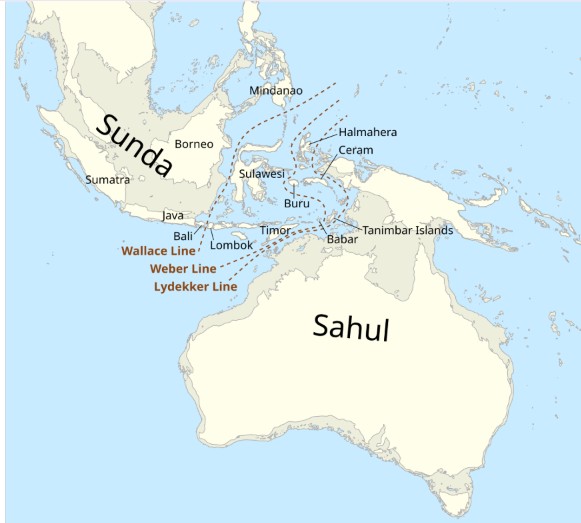
One particularly striking example is found in the eastward search directions given by the Vanara King Sugriva to his army in the Kishkindha Kanda of the Valmiki Ramayana. These instructions trace a route from his vantage point on an island off present-day India, across thousands of kilometres of land and sea, towards the now-submerged palaeocontinent of Sahul (also associated with Gondwana), corresponding to what is now known as Australia. The Ramayana, the oldest surviving work of Indian narrative literature, may be regarded by some as a purely mythical tale; yet it can also be viewed as an early form of scientific writing. While it is often assumed that such narratives were composed solely for entertainment, ongoing advances in Earth Sciences have led many researchers to identify points of convergence between specific aspects of ancient Indian writings and observable physical realities.
A prominent illustration of this convergence is found in the Eastern Search Directions issued by Sugriva in the Kishkindha Kanda of the Valmiki Ramayana. In this passage, Sugriva specifies a sequence of physical locations that lead directly towards the ancient palaeocontinent of Sahul, corresponding to present-day Australia.
Sahul: Ancient Supercontinent
Modern geology defines Sahul as an ancient supercontinent that united mainland Australia, New Guinea, Tasmania, and the Aru Islands into a single continuous landmass. During the Pleistocene Ice Age, global sea levels fell dramatically—by approximately 120 to 150 metres—as vast quantities of water became locked in polar ice caps. As a result, previously submerged coastal areas emerged, and extensive continental shelves formed land bridges across the Indo-Pacific region. What had formerly existed as separate island chains coalesced into a single, expansive landmass. Between roughly 18,000 and 10,000 years ago, rapid post-glacial sea-level rise inundated these shallow connections, isolating New Guinea and Tasmania and producing the geographical configuration recognised today as Australia.
Divine Cartography of Sugriva
In the Valmiki Ramayana (Kishkindha Kanda, Sarga 40), Sugriva instructs his eastern search party, led by Vinata, to cross the great oceans east of India in search of Sita, who had been abducted. These directions follow a coherent sequence of maritime waypoints. Sugriva first directs them through the island groups of Southeast Asia, explicitly naming Rupyaka Dvipa (traditionally associated with Java and Sumatra, sometimes referred to as the “silver island”).
Beyond the Indonesian archipelago, Sugriva describes traversing the Lohita Sagara (literally “red ocean” or blood-coloured sea), which corresponds closely to periodic red algal bloom events observed in the Arafura and Timor Seas. Beyond this reddened sea, the epic narrates an island continent distinguished by a monumental natural landmark: an enormous tree known as Kuta-Shalmali.
Scriptural Evidence
The scriptural references to this geographic sequence are explicitly stated in several verses of the Valmiki Ramayana:
ततः समुद्रम् द्वीपान् च विविधान् उपतस्थुषः ।
तत्र शाल्मलि द्वीपम् विशालम् परियन्ति च ॥
स च रत्नमयः श्रीमान् कूट शाल्मलि संज्ञितः ।
तत्र गृहम् च दैत्येन्द्रम् विहितम् विश्वकर्मणा ॥
(Translation): “Then there will be seas and islands; there you should carefully seek the vast Shalmali Dvipa. There, on this glorious island adorned with jewels, stands the renowned tree Kuta-Shalmali. There, too, is the palace of the demon king, constructed according to plans drawn up by Vishvakarma.”
Bridge Between Old World Literature and Modern Science: Shalmali and Sahul
The convergence between old-world literature and modern science becomes evident on two fronts: linguistics and botany. Vedic scholars propose that the term Shalmali refers to the Red Silk Cotton Tree (Bombax ceiba), and note that biogeographic distribution maps show this species occurring natively across India, Southeast Asia, and the northern Australian tropics. These scholars argue that early travellers often named large regions and landmasses after distinctive botanical features, thereby encoding environmental observations in toponyms.
From a linguistic perspective, philologists suggest that the shift from Sanskrit Shalmali to the modern term Sahul can be understood as a gradual softening of consonantal sounds, a process commonly associated with language drift in Austronesian and Indo-Pacific dialects. Consequently, when European explorers charted the extensive underwater shelf in this region during the nineteenth and twentieth centuries, they may, unwittingly, have adopted a term ultimately derived from an older “Vedic” name for the area.
About The Author