
When a constitutional majority isn’t enough and political bundling becomes legislative suicide
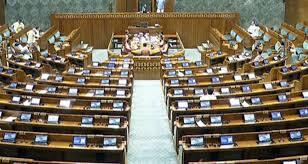
On April 16–17, 2026, the Indian Parliament staged one of its more instructive contradictions. A bill to reserve one-third of Lok Sabha seats for women received 298 votes in favour against 230 opposed a clear majority by any ordinary democratic measure. Yet the bill failed. Decisively. Constitutionally.
This was not a clerical error. It was the architecture working exactly as designed.
India’s Constitution demands that any amendment clear a two-thirds majority of members present and voting. With 528 MPs in the House, the threshold stood at 352. The government mustered only 298 falling 54 votes short of a bar that democratic systems rarely make this steep. The margin of defeat was not narrow indifference; it was structural impossibility.
What compounds the irony is that this fight had already been fought and ostensibly won. The 106th Constitutional Amendment of 2023 did enshrine women’s reservation. It is, on paper, the law of the land. But Parliament embedded a self-defeating clause: the reservation would activate only after a fresh census and subsequent delimitation a wholesale redrawing of constituency boundaries. With the census reference date set for March 2027, the arithmetic is unforgiving. The 2029 general elections will almost certainly proceed without a single reserved seat for women. Parliament legislated empowerment and deferred it simultaneously, an act of constitutional bad faith dressed in progressive language.
The 2026 bills were the government’s surgical attempt to resolve this contradiction to trigger delimitation using the 2011 census data, unlock reservation before 2029, and simultaneously expand the Lok Sabha from 543 to 850 seats. That expansion proved fatal.
Southern states : Kerala, Tamil Nadu, Andhra Pradesh, Telangana, Karnataka have spent decades investing in population control and fertility reduction. A population-proportional seat redistribution rewards states that did not. Under the proposed delimitation, their decades of policy discipline would translate into diminished parliamentary voice. This was not a peripheral concern. It was an existential one.
Rahul Gandhi articulated the opposition’s position with rare precision: his party supported women’s reservation entirely, but would not support the delimitation mechanism carrying it. The result was the peculiar spectacle of women’s reservation being defeated not by its opponents, but by its supporters MPs who wanted the destination but rejected the route.
Following the vote, Parliamentary Affairs Minister Kiren Rijiju withdrew the companion Delimitation Bill and the Union Territories Laws Amendment Bill altogether. The political theatre protests, blame cycles, press conferences followed dutifully. But the structural deadlock did not move.
The episode offers a clean lesson in legislative design: when two politically combustible questions are fused into a single vote, you do not aggregate support you aggregate opposition. India’s women have a constitutional guarantee, a deferred activation clause, and no clear timeline. That is not empowerment. That is a promissory note with no maturity date.
About The Author



Here are a few short variations you can use:
Option 1:
The bill deserved support as it sought to make women’s reservation in the Lok Sabha a reality, not a delayed promise under the 106th Constitutional Amendment.
It aimed to balance representation with necessary reforms.
Rejecting it only postpones meaningful change.