
As floods and extreme rainfall once again disrupt lives across India, these five Hindi films remind us that cinema has long used rising waters to tell stories of loss, inequality, survival and human resilience.
ndia’s monsoon is once again testing the country. In August 2026, heavy rainfall and flood risks have affected several regions, with the India Meteorological Department warning of intense rain across parts of northern, eastern and northeastern India. Assam has faced a particularly severe flood situation, with more than 78,000 people affected across seven districts as of August 14.
For millions living through flooded homes, stranded roads and disrupted livelihoods, water is not a cinematic metaphor. It is an immediate reality.
Yet Hindi cinema has repeatedly turned floods into powerful storytelling devices. Sometimes the flood destroys a village. Sometimes it tears families apart. At other times, it becomes the ultimate test of love and survival. Here are five films that show how Bollywood has used water to tell stories that go far beyond disaster.
1. Mother India (1957): When nature deepens poverty
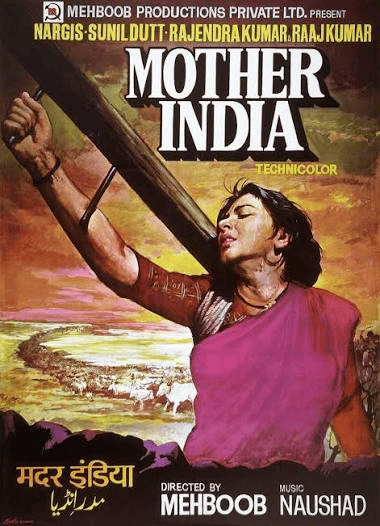
Mehboob Khan’s Mother India is not a disaster film, but its flood sequence remains one of the most memorable depictions of rural devastation in Hindi cinema.
Radha, played by Nargis, is already struggling with poverty, debt and an unforgiving moneylender when a severe storm and resulting flood destroy houses and the harvest. Radha also loses her youngest child during the catastrophe. Although villagers initially consider leaving, they eventually stay and rebuild, encouraged by Radha’s determination.
The flood therefore becomes more than a spectacle. It magnifies the vulnerability of people who already possess very little. In Mother India, nature does not create inequality; it exposes it.
2. Satyam Shivam Sundaram (1978): When the dam breaks

Raj Kapoor’s Satyam Shivam Sundaram places a major dam at the centre of its story. Rajeev, played by Shashi Kapoor, arrives as an engineer overseeing the project. In the climax, a terrible storm causes the dam to break, sending floodwaters through the village as residents attempt to evacuate.
The disaster also becomes the moment of personal revelation for Rajeev. Amid the flood, he finally recognises the woman he has rejected and saves Roopa from drowning.
Here, water becomes both destructive force and dramatic turning point,a catastrophe that physically threatens the village while forcing the protagonist to confront his own prejudice.
3. Coolie (1983): A flood engineered for revenge
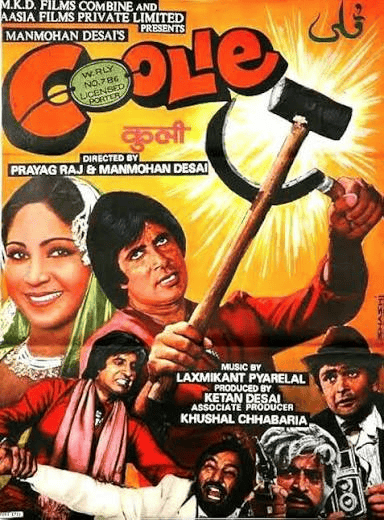
Manmohan Desai’s Coolie offers one of the most unusual flood narratives in mainstream Hindi cinema because its disaster is deliberately caused.
The villain Zafar Khan floods the region where Salma lives as an act of revenge. The catastrophe injures Salma, separates her from her young son Iqbal and causes her to lose her memory. Iqbal is subsequently raised by his uncle and eventually becomes a railway coolie.
The flood thus becomes the event that shapes the entire trajectory of the film. A single act of destruction creates years of separation, lost identities and eventual reunion.
4. Tum Mile (2009): Mumbai disappears under water

Kunal Deshmukh’s Tum Mile brought a very different kind of flood story to Hindi cinema. Starring Emraan Hashmi and Soha Ali Khan, the film is set against the backdrop of the devastating July 2005 Mumbai floods.
As Mumbai is overwhelmed by rain and floodwater, former lovers Akshay and Sanjana find themselves fighting to survive together. The familiar urban landscape becomes almost unrecognisable.
The film captures an important reality of modern disasters: floods do not spare cities simply because they are technologically advanced. When infrastructure fails and streets become waterways, social status and everyday routines can suddenly lose their meaning.
5. Kedarnath (2018): Love in the path of a flash flood

Perhaps the most direct recent Hindi film about a real flood disaster, Kedarnath uses the devastating 2013 Uttarakhand floods as the backdrop for an interfaith love story.
The film follows Mansoor, a Muslim porter, and Mukku, whose family runs a lodge and shops near Kedarnath Temple. Their relationship unfolds against the increasingly dangerous weather before the 2013 disaster turns their journey into a fight for survival.
The real disaster was catastrophic: the June 2013 flash floods caused widespread destruction in Uttarakhand, including around Kedarnath. Government records describe the devastation caused by the June 16–17 flash floods.
When cinema meets the monsoon
Across these five films, the flood plays five different roles: a destroyer in Mother India, a climax in Satyam Shivam Sundaram, a weapon in Coolie, an urban equaliser in Tum Mile and a force of fate in Kedarnath.
But beneath these differences lies one common truth. Floods are never only about water.
They expose fragile homes, fragile infrastructure and fragile human relationships. They separate families, erase livelihoods and force strangers to depend on one another. And sometimes, as these films remind us, they also reveal extraordinary courage.
As India confronts another difficult monsoon, these stories acquire a new relevance. On screen, the flood eventually recedes. For those living through one, recovery can take months or years.
The water may disappear. Its consequences rarely do.
About The Author