
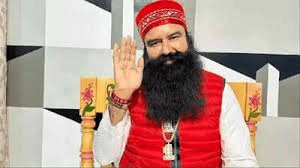

The Supreme Court has agreed to examine a challenge to the Punjab and Haryana High Court’s decision acquitting Dera Sacha Sauda chief Gurmeet Ram Rahim Singh in the murder case of journalist Ram Chander Chhatrapati.
On 10 August 2026, the court issued notice on a petition filed by Chhatrapati’s son, according to legal news service LawBeat. The matter was listed for final hearing in the week beginning 16 November. Issuing notice means the court has sought a response and will consider the challenge; it does not reverse the acquittal or decide the merits of the appeal.
What the High Court decided
The Punjab and Haryana High Court acquitted Ram Rahim on 7 March 2026 after considering his appeal against a 2019 conviction by a special Central Bureau of Investigation court. The High Court judgment questioned whether the prosecution had proved the alleged conspiracy against him beyond reasonable doubt.
The court’s ruling did not erase the entire case. It upheld the convictions of three co-accused. Any summary saying that only two convictions remained would therefore be incomplete.
Until the Supreme Court passes a further order, Ram Rahim’s acquittal in this case remains legally effective. The pending appeal concerns that acquittal; it should not be described as a fresh conviction or a final Supreme Court finding.
The 2002 murder case
Ram Chander Chhatrapati, editor of the Hindi newspaper Poora Sach, was shot outside his home in Sirsa, Haryana, in October 2002 and later died from his injuries. The investigation was transferred to the CBI. Prosecutors alleged that the killing was linked to Chhatrapati’s reporting about the Dera.
A special CBI court convicted Ram Rahim and four others in January 2019. The court later sentenced them to life imprisonment. The High Court appeal resulted in Ram Rahim’s acquittal in March 2026 while leaving the convictions of three co-accused undisturbed.
The full procedural history matters because criminal appeals turn on the evidence attributed to each accused, the admissibility and reliability of that evidence, and whether the prosecution met the standard of proof beyond reasonable doubt. A decision concerning one accused does not necessarily determine the result for every other accused.
What happens next
At the final hearing, the Supreme Court may consider the High Court’s assessment of the evidence, the trial court record and the arguments presented by the parties. It could uphold the acquittal, set it aside, or issue another legally appropriate direction. Predicting the outcome before the hearing would be speculative.
Ram Rahim has separate convictions in other cases. Those matters are legally distinct and are not automatically altered by the acquittal or appeal in the Chhatrapati case. News reports should make that distinction clear rather than combining unrelated proceedings.
For other court developments, see News Trust India’s report on the Supreme Court’s directions concerning digital-arrest fraud.
This article will be updated after the Supreme Court’s next substantive order. Until then, the accurate position is that the High Court acquitted Ram Rahim, three co-accused remain convicted, and the challenge to his acquittal is pending before the Supreme Court.
Sources: Punjab and Haryana High Court judgment; LawBeat report on the Supreme Court notice
This report was prepared with AI assistance and reviewed, fact-checked and approved by the News Trust India editorial team.
About The Author