Guest Author: Ananya Tiwari
Growth, inequality, and the informal workers holding up a modern township
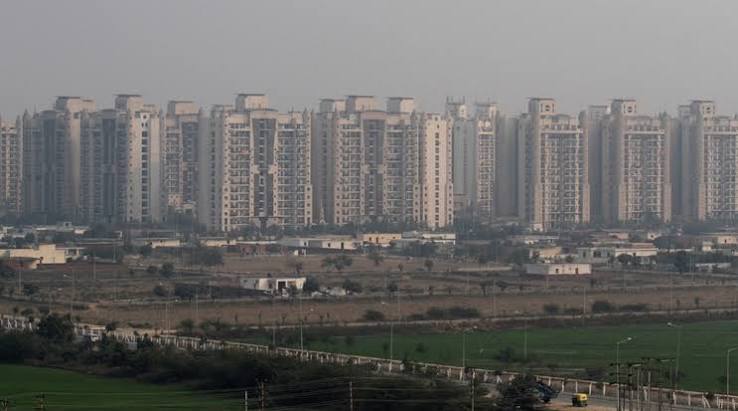
Standing on the main roads of Gaur City today, surrounded by malls, high-rise apartments and Metro construction. It’s hard to imagine that this very ground once grew wheat and sugarcane. Four decades ago, this patch of land on the Eastern edge of Noida was a cluster of small villages, Shahberi Roza, Yakubpur, Patwari, where life moved to the rhythm of harvest and not traffic lights. Yet here it stands, one of the fastest-growing urban townships in the national capital region. Does this development represent genuine progress or does it merely repackage inequality in a modern form? This is where the tour of Rostow and Karl Marx offers a lens to decode the paradox.
The Forgotten Fields – Gaur City’s agrarian roots
Before Noida became a corporate hub, the area known as Gaur City was a part of Western Uttar Pradesh. Gautam Buddh Nagar’s fertile belt is nestled between the Ganga and Yamuna rivers. The soil was rich, the air was slow, and the economy was entirely dependent on agriculture. This was as Rostow described the stage of “traditional society”: static, subsistence-based, and shaped by local culture and land, in addition to social structures for largely agrarian and hierarchical farmers measured in acres, not income. The idea of selling land for real estate development was unimaginable. However, change was already approaching quietly from a decision made in Lucknow in 1976, which was based on the policies of the state rather than the ambition of the people.
NOIDA – The spark that lit the plains (1974 to 1991)
In 1976, the Uttar Pradesh Industrial Area Development Act led to the creation of Noida (the Okhla Industrial Development Authority). The goal was straightforward but ambitious: decongest Delhi and build a modern plant satellite city to attract industries, jobs, and housing. This decision transformed not just Noida, but the entire region; factories followed – Honda, LG, HCL, along with a new urban class of engineers, managers and workers. What Rostow would call “the precondition for takeoff” was being laid: investment infrastructure and a growing belief that urban development for the future- the establishment of Noida created the infrastructure and confidence that later allowed Greater Noida and Gaur City to emerge. Notes from a planning document from Greater Noida Industrial Development Area (GNDIA). Marx would see another layer: this was also when the commodification of land began, when farmers became sellers. The commodification of land meant that those who once tilled it now became labourers on their own soil, symbolising the first fracture between capital and labour in the region.
The Leap – From Greater Noida to Gaur City (1991-2011)
In the event of India’s economic liberalisation in 1991, the Greater Noida industrial development area GNIDA was established to extend Noida’s success to the East. Consequently, Greater Noida became a canvas for large-scale urban planning. Industries relocated, expressways were laid, and residential projects multiplied between 1977 and 2011. The built-up area of Greater Noida expanded from 3,131 hectares to nearly 14, 780 hectares. This was the physical manifestation of the Rostow “takeoff”, the stage of a period of self-sustaining economic growth driven by industrialisation and urban migration. Furthermore, this phase, with the rise of private developers as new agents of progress, among them was the Gaurs group, which launched Gaur City in the late 2000s as a self-contained urban township. In fact, Gaur City became a textbook case of aspirational urbanisation; middle-class families from Delhi NCR sought affordable luxury living, and the narrative seemed to align with Rostow’s ideal of modernity. Yet Marx’s critique again looms large; many Local farmers sold their land under pressure, receiving compensation that soon lost value in the inflated urban economy, thus unable to transition to new jobs, which were pushed into informal labour, construction, domestic work and the state. Therefore, while the skyline, the social foundation cracked
The Twin city phenomenon – Noida and Greater Noida converge (2011 – present)
By 2011, the two cities now operated as twin engines of NCR’s growth, connected by Expressway, Metro lines and industrial corridors. The city matured economically with diverse sectors in IT, education, logistics, and manufacturing. Accordingly, this marks Rostow’s “drive to maturity” when a society diversifies its industrial base and sustains growth independently. On the other hand, the cost of this development: Air pollution has reached alarming levels; Greater Noida now ranks among the world’s top 20 most polluted cities (World Air Quality Report 2024). Even though Greater Noida generates over 25% of Uttar Pradesh’s total revenue, many of its workers live without basic urban amenities; economic maturity has not translated into social equity. A contradiction mark would call the inevitable crisis of capitalism.
Today, Gaur City stands on the edge of Rostow’s final phase, the age of “high mass consumption”, with cafes, malls, multiplexes and fitness changing shape to a lifestyle that mirrors global middle-class aspirations. Moreover, proximity to Jewar airport and the new Noida plan ensures that this township will soon serve as a residential and service hub for thousands of professionals as a matter of consumerism; however, the reality beneath remains uneven: informal workers. Although their labour modernises the city, their presence is treated as temporary or invisible; for this reason, Gaur City exemplifies both the success and shortfall of India’s development journey. It embodies the economic optimism of Rostow’s model while revealing the class contradiction, as said by Karl Marx.
The Urban Paradox- Growth without inclusion
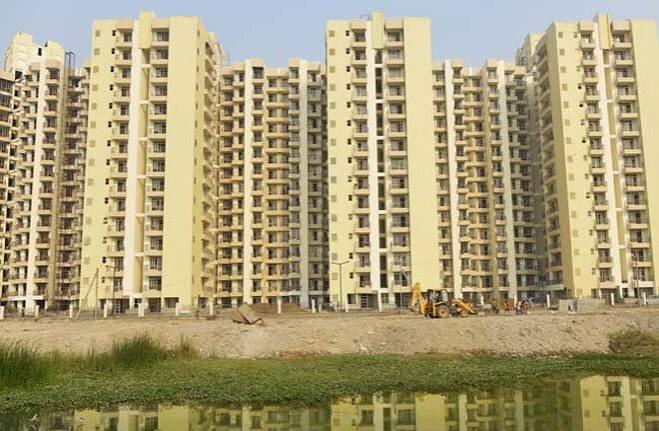
Gaur City is more than an architectural success. It is a symbol of India’s developmental dilemma. The story of Gaur City is about how India understands the development model and gives us a comforting narrative. Every society can move step-by-step from agriculture to affluence. Both planned urbanisation and private investment can transform a ruler area into a modern Township, but it also reflects how transformation reproduces inequality between those who own, and those who are between those who build and those who are built over. Rostow’s View – India is advancing economically, technologically and materially. Marx’s View – that every advancement is built on uneven foundations. Therefore, urban development must go beyond concrete and consumption. It must include inclusive planning; local voices, especially those displaced, must have a role in urban decision-making. The question is not whether India should build more but how it builds them. If development continues to prioritise capital over community. If India can align optimism with marks of realism, investing not only in growth, but in fairness, it can build cities that are not smart, but human. In conclusion, the towers of Gaur City may rise higher every year, but their true strength will be measured, not by their height, but by how evenly the shadow falls across the society.

Note: Ananya Tiwari is a final-year undergraduate in Economics and Political Science. Her work explores how human behaviour, markets, and governance shape socio-economic outcomes, with a focus on public policy’s role in development.
About The Author